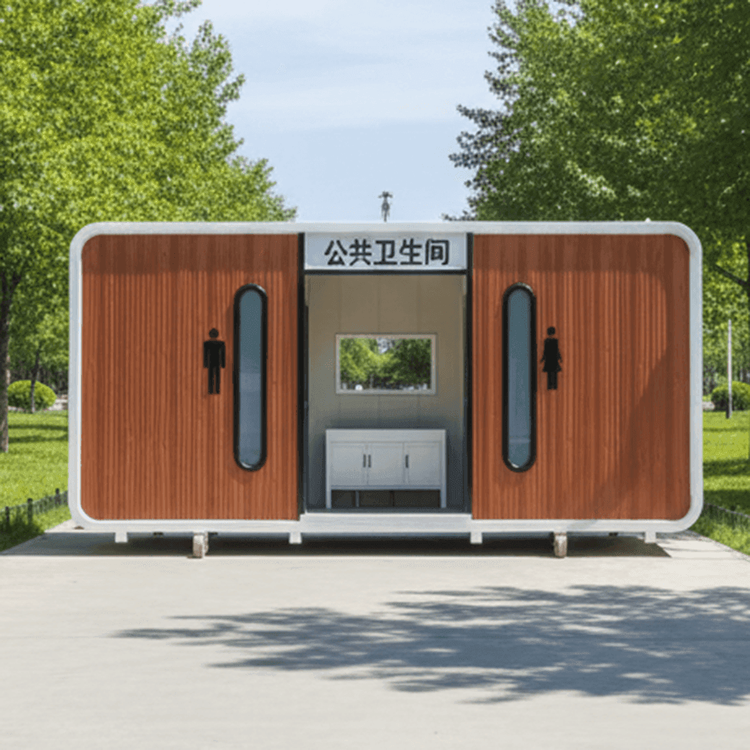
Container House Waterproof and Insulation
Waterproof and insulation of container houses can be achieved through reasonable material selection, optimized processes, and attention to detail.

Waterproof Treatment: The waterproofing of container houses should focus on the joints of the panels, the sealing around doors and windows, and the roof拼接 (joint) positions. Standard processes use waterproof membranes and full sealing with sealant to ensure continuous, unbroken seals at joints; the roof is designed with a proper drainage slope, and panels are overlapped in the direction of water flow to prevent water accumulation and leakage. In rainy southern regions or island environments, enhanced waterproofing of the roof and edge seals is necessary, such as increasing the thickness of the waterproof layer or using more weather-resistant sealant materials. A water spray test should be conducted before delivery to verify waterproof performance and ensure no leakage risks.
Insulation Treatment: The thin panels of container houses can lead to cold winters and hot summers, so improving thermal insulation performance through the use of insulation materials and optimized structural design is essential. High-density insulation rock wool is filled inside, combined with thermal break technology to block heat transfer; doors and windows use thermal-break aluminum double-glazed units to reduce heat exchange. Internal insulation layers are added to walls and roofs, such as polyurethane sandwich panels or glass wool, which can significantly improve insulation effects, even surpassing traditional brick walls. For long-term use scenarios, such as cultural tourism homestays, it is important to ensure that insulation materials also have fire-resistant properties (e.g., Class A fire-resistant sandwich panels).
Material and Process Selection:
- Main Structure: Preferably use thickened galvanized square tube frames for corrosion and rust resistance, suitable for outdoor environments; welding processes should be full-penetration welds to enhance overall stability.
- Enclosure Panels: For exterior wall decoration, options like metal carved panels or real stone paint offer strong weather resistance; for roofs, avoid relying solely on sealant and instead use multi-layer waterproofing, such as reinforced sealing at screw points.
- Supporting Systems: Water and electricity pipelines should be pre-embedded in the factory, with wires protected in conduits to avoid safety hazards from on-site temporary wiring; confirm whether the quote includes hoisting, transportation, and basic supporting services to prevent budget overruns.
Long-Term Use Recommendations: If container houses are to be used long-term (e.g., for more than 5 years), it is recommended to choose light steel frame houses or modular packing container houses, which offer better structural stability and waterproof performance. For example, the packing container houses manufactured by Nanjing Changyou Zhizao feature a top-and-bottom integrated welded structure with a built-in drainage system, fundamentally solving leakage issues and being suitable for large-scale projects or humid environments.
You may also like
Portable Toilet Furnishing Buying Guide: Options & Tips
Read More
Portable Toilet In Stock Custom & OEM: Design & Bulk Production Guide
Read More
How to Source Portable Toilet Rental Wholesale from China
Read More