
Top Portable Toilet Conversion Manufacturers: How to Choose a Factory Partner
When selecting a high-quality portable toilet conversion manufacturer as a factory partner, it is essential to focus on the following key points:
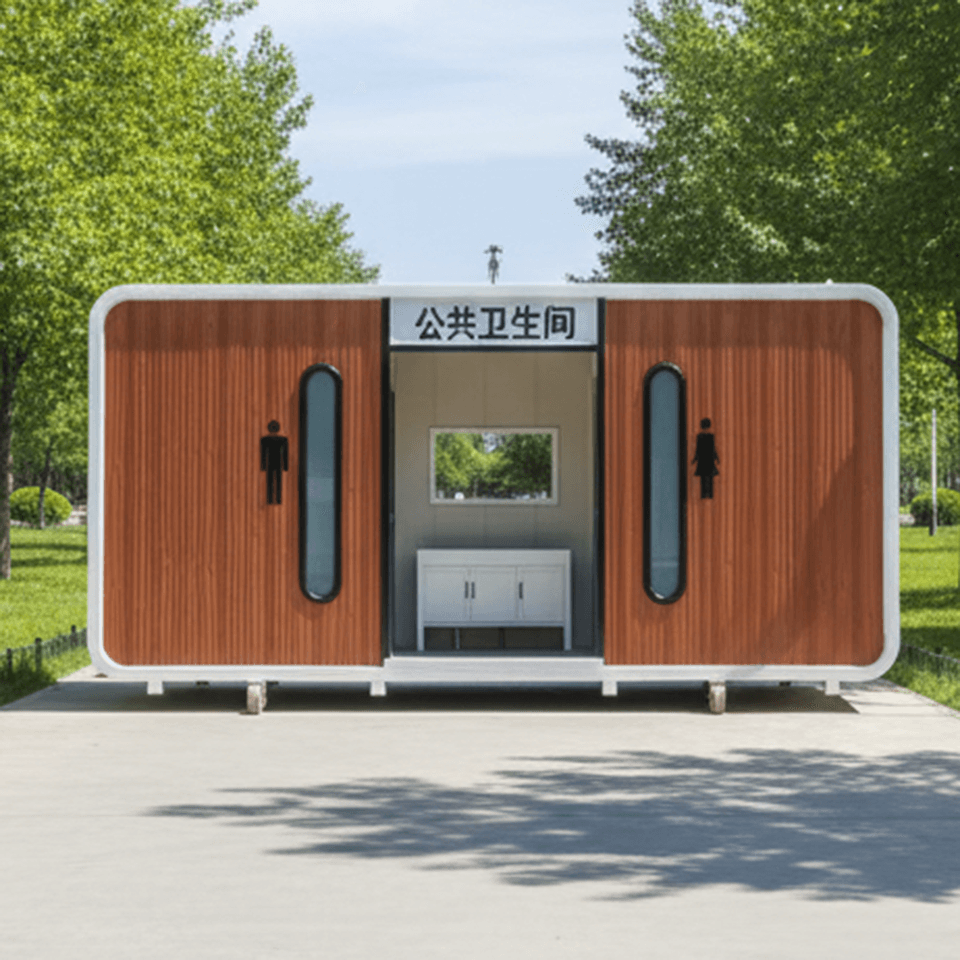
1. Customization Capabilities Manufacturers should offer flexible customization services, including exterior color, size, internal layout, and material selection. For example, metal carved panel exteriors combine lightweight properties with sound insulation and heat insulation, making them suitable for scenarios with high aesthetic and durability requirements. Color-coated steel panels are cost-effective and easy to install, ideal for temporary construction sites. Stainless steel panels are highly corrosion-resistant, suitable for humid or coastal areas. Internal materials should prioritize moisture and corrosion resistance, especially the sealing of joints between floors and walls.
2. Comprehensive Production Process and Product Applicability High-quality manufacturers should cover the entire process from panel processing and structural assembly to internal configuration installation, ensuring products are suitable for temporary events, construction sites, parks, emergency rescue, and other scenarios. For example, standard configurations should include squat or sit toilets, flushing systems, sinks, lighting, and exhaust fans; special scenarios can add accessibility handrails, baby changing stations, makeup mirrors, and other additional facilities.
3. Flushing Methods and Environmental Friendliness Choose flushing methods based on the usage environment: water-flush toilets require an external water source or a built-in water tank, suitable for fixed temporary sites with water supply; packaged or microbial degradation toilets do not require plumbing connections, ideal for wilderness environments without water sources. Microbial degradation technology reduces pollution by biologically decomposing waste, aligning with environmental trends.
4. Standardized Customization Process
- Requirement Communication: Users should provide information such as the number of users, site dimensions, transportation routes, and water and electricity conditions. Based on this, manufacturers determine toilet size, layout, and material grades.
- Design Proposal: Clearly specify door orientation, window positions, ventilation openings, and sewage outlet locations in drawings to ensure functionality and practicality.
- Production and Quality Inspection: Strictly follow drawings for cutting, welding, insulation filling, and interior and exterior decoration, with pre-installed water and electricity lines; conduct waterproof tests, circuit inspections, and structural stability checks before delivery.
- Installation and Delivery: Manufacturers should guide hoisting or towing, complete fixation, power connection, and commissioning to ensure “ready-to-use” upon arrival.
5. Product Durability and Reusability The base structure and lifting points should be reasonably designed to ensure no deformation after multiple relocations, reducing long-term usage costs. For example, modular design facilitates quick disassembly and assembly, adapting to frequent movement needs.
6. After-Sales Service Coverage Focus on service response in remote areas, including parts supply cycles, repair timelines, and technical support methods. For example, some companies offer video guidance or online support to quickly resolve unexpected issues.


