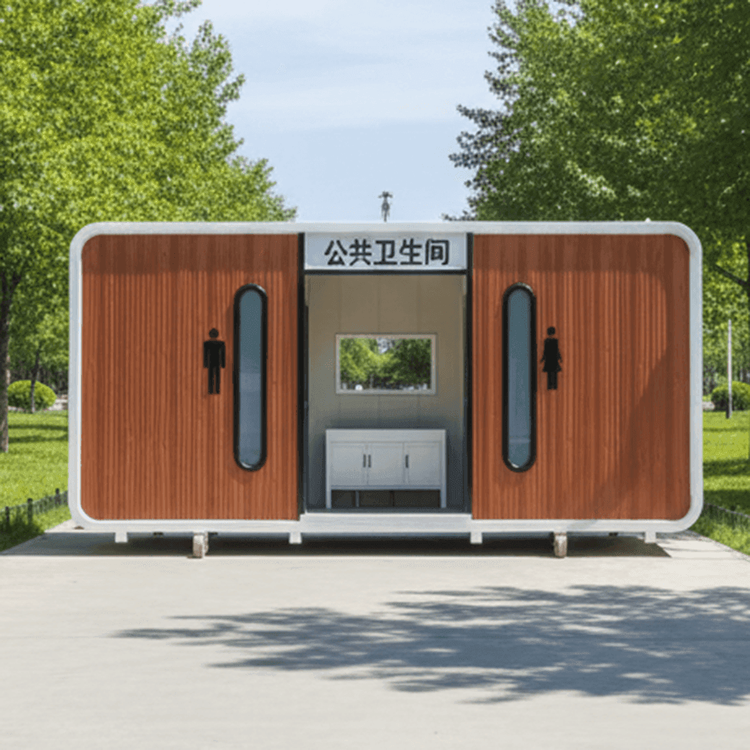
Container House Transportation Methods
The transportation methods for container houses mainly include sea freight and railway transportation.

Sea freight is the core method for cross-regional transportation of container houses. International standard containers have uniform specifications, with a width of 8 feet, a height of 8 feet, and lengths mainly including 20 feet, 30 feet, and 40 feet. This standardized design enables container houses to efficiently utilize sea freight space. Sea freight container transportation offers numerous advantages. It facilitates direct communication among shippers, carriers, and consignees, reducing transfer links in the logistics chain, improving transportation efficiency, and lowering transportation costs. Meanwhile, the standardization of containers enhances packaging, protects the integrity of goods, and reduces the risks of cargo damage and loss. For modular foldable container houses, their folded dimensions fully comply with the loading specifications of standard sea freight containers, eliminating the need for additional customized transportation carriers. Their overall structure is stable, capable of withstanding the bumps, vibrations, and salt spray corrosion during sea freight. Moreover, the installation process is simple, allowing for rapid deployment and use upon arrival at the destination, making them highly suitable for sea freight. For example, the modular houses built by China Construction Integration Building Intelligent Manufacturing (Shenzhen) Co., Ltd. are transported by sea freight and are expected to arrive in Australia after about 20 days of sailing.
Railway transportation is also an important method for transporting container houses. Especially for some inland areas or international regions that are relatively close, railway transportation has unique advantages. It can provide a stable transportation environment and relatively fast transportation speed, and is less affected by natural factors such as weather. For example, the export of mobile houses and prefabricated temporary buildings from Shandong and Xinjiang to the markets in the five Central Asian countries and Russian-speaking regions adopts international railway transportation, using China-Europe freight trains as well as the railways and truck transportation of the five Central Asian countries to deliver container houses to their destinations. Railway transportation stations are widely distributed and can cover many inland areas that are difficult to reach directly by sea freight, further expanding the transportation range of container houses.
You may also like
Portable Toilet Furnishing Buying Guide: Options & Tips
Read More
Portable Toilet In Stock Custom & OEM: Design & Bulk Production Guide
Read More
How to Source Portable Toilet Rental Wholesale from China
Read More