
Container House Transportation Design
The design of container house transportation plans should focus on standardization, lightweight construction, modularization, secure fastening, and transportation optimization to achieve efficient and convenient logistics goals. The specific plan is as follows:
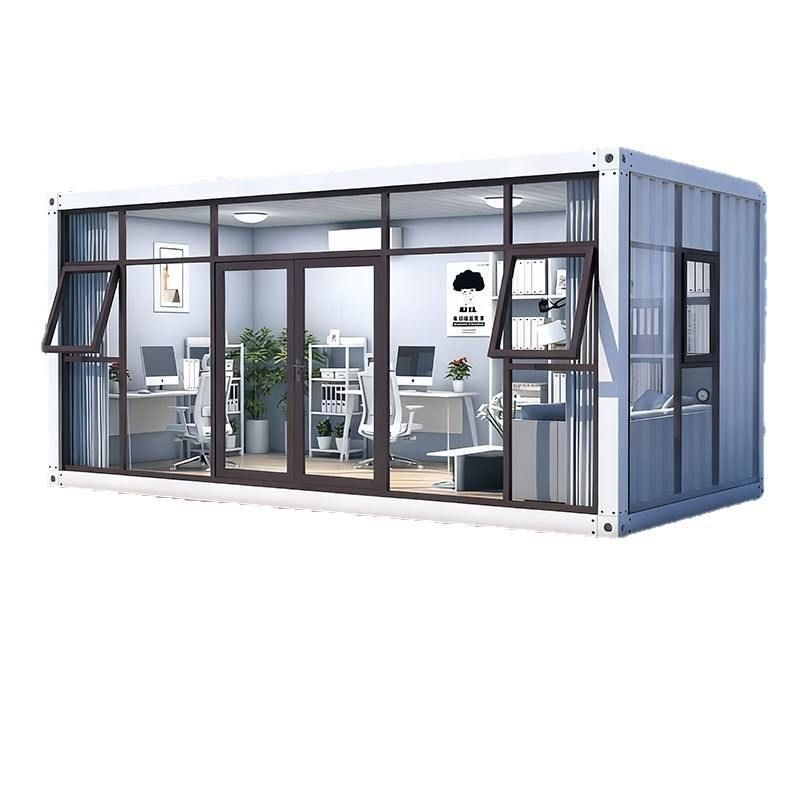
1. Standardized Design for Compatibility with Transportation Tools
Adopt internationally standardized 20-foot or 40-foot container dimensions to ensure that the house structure perfectly matches standard transportation tools such as container trucks, flatbed trucks, and dedicated railway container trains. During the design process, optimize the overall weight distribution to avoid transportation risks caused by center-of-gravity shifts. For example, a 40-foot container can carry two 20-foot container houses, and uniform load distribution is required to ensure vehicle stability during travel.
2. Lightweight Materials to Reduce Transportation Costs
Prioritize the use of lightweight yet sturdy building materials such as aluminum alloys and high-strength plastic composites. For instance, an aluminum alloy-framed packing-box container house is 30%-40% lighter than traditional steel-structured ones, significantly reducing fuel consumption and making it suitable for transportation by smaller trucks. Material selection should balance structural strength with transportation economy to avoid additional costs or transportation restrictions due to overweight.
3. Modular Assembly to Improve Space Utilization
Divide the container house into detachable modular structures (such as walls, roofs, and floors). Each module is prefabricated in the factory and then transported to the site for rapid assembly. Standardized connection methods (such as bolts or quick-release clamps) are used between modules to shorten on-site construction time. During transportation, modules can be compactly arranged, such as stacking multiple flattened wall modules to maximize the use of truck or container space.
4. Efficient Packaging and Secure Fastening for Safety
Wrap the container house with moisture-proof and shock-resistant materials (such as bubble wrap and foam boards). Internal items should be secured with straps or fillers to prevent movement. During transportation, use professional fastening devices:
- Rope Lashing: Secure the house to the transportation tool using a cross-lashing method to prevent lateral displacement;
- Corner Fitting Positioning: Utilize standard container corner fittings to connect with vehicle locks, enhancing stability;
- Anti-slip Mats: Lay anti-slip materials on contact surfaces to reduce friction damage caused by transportation vibrations.
5. Optimized Transportation Plan to Reduce Comprehensive Costs
Choose the appropriate transportation method based on distance and quantity:
- Short-distance Transportation: Recommend using a 4.2-meter box truck to carry a single 20-foot container house, providing flexibility to meet urban height and width restrictions;
- Long-distance Transportation: Use a 40-foot container to carry two 20-foot container houses, reducing unit costs through sea or rail transportation;
- Route Planning: Utilize GPS navigation to avoid congested roads, reducing travel time; adjust the itinerary based on weather forecasts to avoid safety risks caused by adverse weather conditions.
Through the above design, container house transportation can achieve efficient full-process management from factory prefabrication to modular transportation and rapid on-site assembly, balancing cost, safety, and timeliness.



