
Container House Roof Waterproofing
Waterproofing of container house roofs can be achieved through measures such as selecting qualified waterproof materials, standardizing construction operations, reasonably designing drainage systems, and conducting regular maintenance inspections.
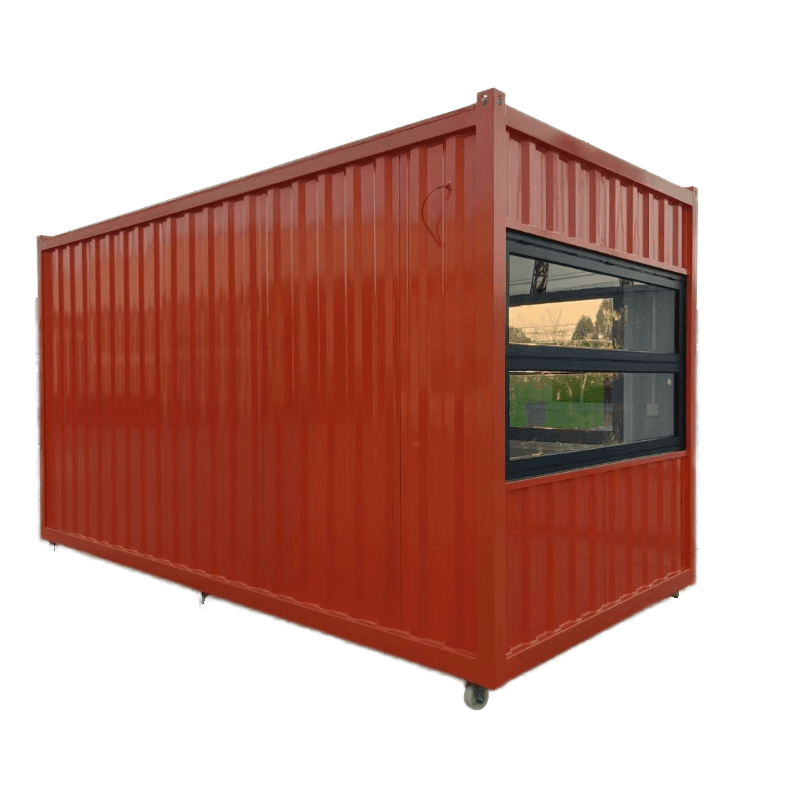
Selecting Qualified Waterproof Materials
The choice of materials is crucial for waterproofing container house roofs. Waterproof membranes are one of the commonly used materials. During construction, the base layer should be cleaned thoroughly, adhesive should be applied to the back of the membrane and the base layer, and the membrane should be pasted and rolled according to the reference line. Seam treatment and inspection should be carried out properly, and a water storage test should be conducted after completion. For waterproof coatings, the "one fabric, two coats" process yields good results. This involves applying a full coat of coating after cleaning the base layer, laying fiberglass fabric as reinforcement material after the coating dries and forms a film, and then applying another full coat of coating to fix it. After drying, the next construction step can be carried out. Additionally, steel structure roof waterproofing systems are also a good choice. They consist of a base layer waterproof coating, a top layer waterproof coating, and woven polyester fabric. Based on high-quality 100% pure acrylic emulsion from the United States, they can solve water leakage problems on metal roofs in one go, featuring super strong tensile strength, UV resistance, and other characteristics. They have a service life of up to 25 years and a 10-year quality guarantee.
Standardizing Construction Operations
The standardization of operations during the construction process directly affects the waterproofing effect. For example, when opening holes in the roof panels to install fans, exhaust pipes, etc., ensure that the waterproofing treatment of the surrounding cracks is good. Avoid treading on the roof during the use of the house to prevent loosening of fasteners and resulting water leakage. For the gutters of movable houses, ensure that there is a slope in the transverse direction and that the outlet is reasonably designed. During construction, pay attention to the anti-corrosion treatment of the gutters.
Reasonably Designing Drainage Systems
A reasonable drainage system can effectively prevent water accumulation and leakage. Some box-type movable packing container houses have drainage channels set around the top, which belong to internal drainage structures. Downspouts are installed inside the columns to direct rainwater into the ground.
Conducting Regular Maintenance Inspections
Regularly inspect and maintain the roof of the container house to promptly detect and address potential problems. For example, check whether the structural adhesive has aged and cracked, and whether the moisture-proof film is properly sealed. Promptly repair any problems that arise to extend the service life of the house and maintain good waterproofing performance.
You may also like

Container House Installation Guide: A Complete Walkthrough
Read More
Portable Toilet Eco-Friendly Custom & OEM: Design & Bulk Production Guide
Read More
How to Assemble & Install Container House Step by Step
Read More