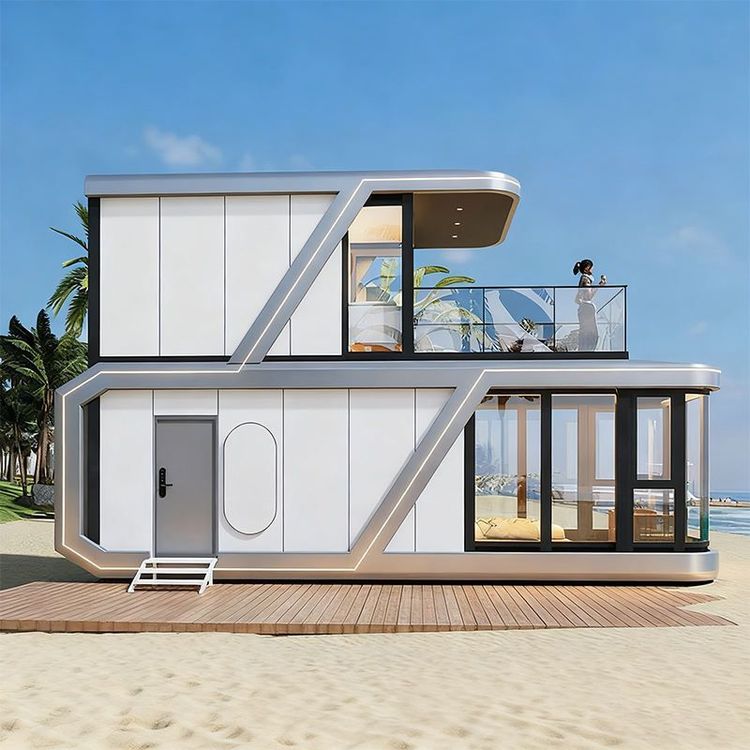
Container House For Sale: A Practical Buyer's Guide
When purchasing container houses, it is necessary to comprehensively consider factors such as price, functionality, usage scenarios, and supplier qualifications. Here are the key points of a practical guide:

I. Price and Procurement Strategies The unit price of basic container houses is significantly influenced by the order quantity: approximately $2,500 per unit for 1-4 units, $2,450 per unit for 5-9 units, and customizable for orders of 20 units or more. Some suppliers offer tiered pricing of $1,900 per unit for orders of 10 units or more. For high-end models, such as a luxury version from a Chinese supplier, the price starts at $1,650 per unit for orders of 18 units or more, including customization options. Bulk purchasing is the core strategy for reducing costs, but it is essential to confirm the minimum order quantity (MOQ) and whether additional services such as export packaging and on-site installation are included.
II. Functionality and Design Adaptability Modular design supports rapid assembly and disassembly, catering to scenarios such as post-disaster relief and temporary shops. The lightweight structure, featuring hot-dip galvanized steel frames and rock wool sandwich panels, combines durability (with a lifespan of up to 20 years) and thermal insulation, while being resistant to earthquakes up to magnitude 8, strong winds, and fires. Customizability is a key advantage, including options for logos, interior layouts (doors, windows, partitions, electrical and water systems), and material choices (such as PVC/aluminum alloy doors and windows). For example, large glass doors and windows can optimize natural lighting and reduce energy consumption, while foldable models can be compressed for easier transportation and storage.
III. Scenario-Based Selection Recommendations For residential purposes (family homes, dormitories), priority should be given to sound insulation, thermal insulation, and the availability of electrical and water connections. For commercial purposes (offices, warehouses), standard 20ft or 40ft sizes with strong load-bearing capacity and high space utilization should be selected. For special scenarios (post-disaster relief, mobile offices), portability and rapid deployment capabilities are crucial. Technical parameters should match actual needs, such as rock wool sandwich panels meeting environmental standards (some certified by ISO and CE), and accessories like sliding doors and automatic roller shutters enhancing convenience.
IV. Supplier Selection and Risk Mitigation Prioritize suppliers certified by ISO 9001 and CE, such as Qingyun Xinmao Steel Structure Co., Ltd. (for industrial applications) or Dongguan Vanhe Modular House Co., Ltd. (for luxury residences). Directly contact suppliers for the latest quotes and samples, and confirm responsibilities for transportation, installation services, and long-term maintenance costs. For example, some suppliers support shipping 16-18 units per 40HQ container, reducing logistics costs.
V. Long-Term Costs and Sustainability Steel structural materials are recyclable, aligning with sustainable living principles, but it is necessary to evaluate the impact of anti-corrosion treatments (such as hot-dip galvanizing) on lifespan. Energy-efficient designs (such as natural lighting) can reduce operational costs in the long run, while customization options for high-end models may increase initial investment, requiring budget considerations. It is advisable to comprehensively assess the total cost over a 20-year usage cycle rather than focusing solely on the unit price.