
Construction Site Mobile Toilet Energy Saving
Mobile toilets at construction sites have significant advantages in energy saving, mainly reflected in water-saving technologies, eco-friendly technological solutions, material and structural optimization, and flexible adaptation to application scenarios.
1. Water-saving technologies: Efficient utilization of water resources Mobile toilets significantly reduce water consumption through innovative designs. For example, some products employ technology that automatically collects hand-washing water and adds special agents, achieving a flushing effect with only 0.46 liters of water per person, saving over 80% of water compared to traditional toilets. Additionally, the combination of rainwater collection and filtration systems with secondary toilet flushing using hand-washing water further reduces reliance on municipal water supplies. These technologies not only lower water consumption but also reduce sewage discharge, aligning with green construction principles.
2. Eco-friendly technological solutions: Diverse options to reduce energy consumption Mobile toilets offer various eco-friendly solutions, including waterless, foam-sealing, and water-flushing types. Among them, waterless toilets do not require connection to water supply and drainage pipes, treating excreta through biodegradation or physical sealing technologies, completely avoiding water waste and the cost of pipe installation. Foam-sealing toilets use foaming agents to cover the surface of excreta, forming a seal to suppress odors, requiring only a small amount of water for flushing, making them suitable for water-scarce areas. These solutions can be flexibly selected based on actual needs, effectively reducing energy and resource consumption.
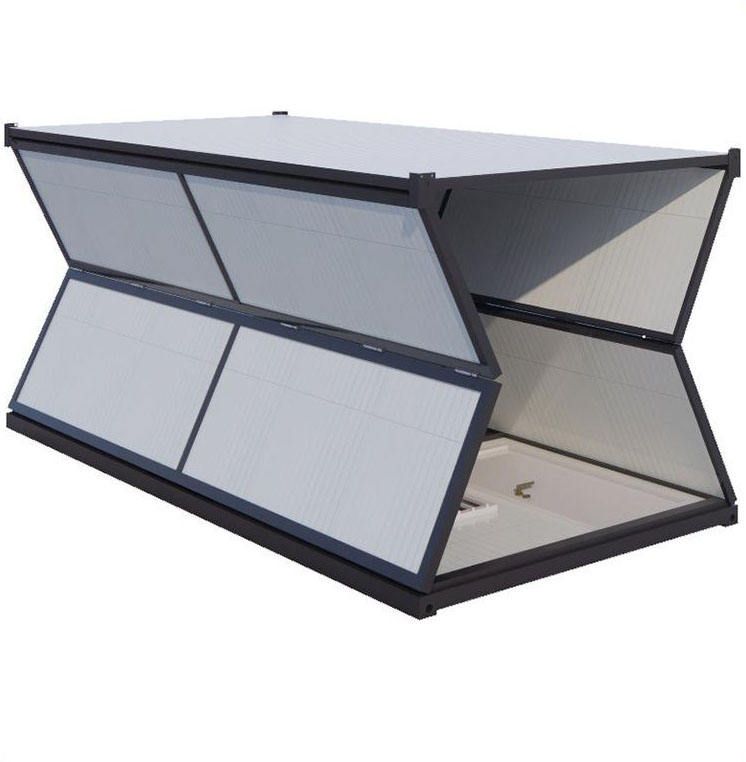
3. Materials and structure: Balancing durability and reusability The toilet frames are welded using national standard steel, with surfaces covered with anti-corrosion and fire-resistant materials such as color-coated steel plates or carved panels, offering a service life of over 20 years. This design reduces frequent replacements due to facility aging, lowering resource waste. Meanwhile, the frame structure facilitates disassembly, movement, and reinstallation, allowing for multiple cycles of use at different construction sites, further saving construction costs and energy consumption.
4. Adaptation to application scenarios: Precise design to avoid redundant investments Mobile toilets can be customized with design solutions based on factors such as site terrain, temperature, electricity, water supply and drainage conditions, and budget. For example, waterless toilets are prioritized in areas without municipal water supply; solar power systems can be paired in areas with sufficient electricity; and compact structures are used in limited spaces. This precise adaptation avoids overconstruction or functional redundancy, reducing energy and material waste from the source and achieving dual benefits of energy saving and cost-effectiveness.
You may also like

Container House Installation Guide: A Complete Walkthrough
Read More
Portable Toilet Eco-Friendly Custom & OEM: Design & Bulk Production Guide
Read More
How to Assemble & Install Container House Step by Step
Read More