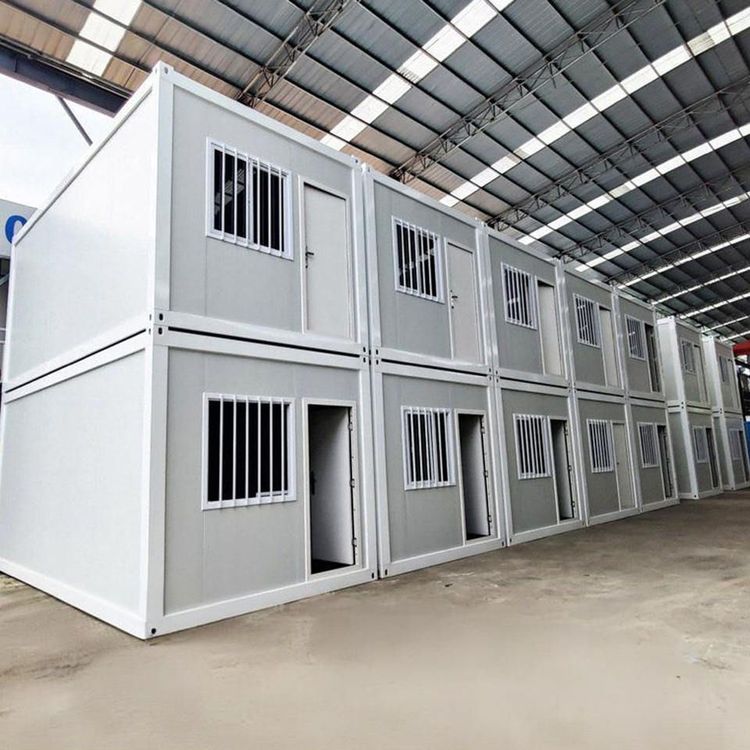
Demolition of Concrete Prefabricated Houses
The demolition of concrete prefabricated houses (prefabricated panel houses) should be carried out based on the housing safety conditions, seismic capacity, and urban planning requirements, following the principle of 'adapting measures to local conditions and implementing differentiated strategies,' rather than a blanket demolition approach. Details are as follows:

I. Scope and Conditions for Demolition
- Grade D Dangerous Houses: Prefabricated panel houses identified by professional institutions as Grade D dangerous houses (where the structural load-bearing capacity does not meet safety requirements and the overall structure is at risk) must be demolished and rebuilt. For example, houses with foundation settlement exceeding 5 centimeters, cracks in load-bearing walls wider than 1 millimeter, or seismic resistance levels less than 70% of the current standards fall into this category.
- Houses with Insufficient Seismic Capacity: Even if they do not meet the criteria for Grade D dangerous houses, houses with seismic capacity below 70% of the current standards may also be prioritized for demolition.
- Houses Affecting Urban Planning: Prefabricated panel houses located within the planning scope of major infrastructure projects such as subways and elevated highways need to be demolished in accordance with urban planning requirements.
II. Demolition Ratio and Policy Restrictions According to the '15th Five-Year Plan for Urban Renewal' issued by the State Council in 2026, demolition should follow the principle of 'steadily advancing governance and renovation.' Within the same urban renewal unit, the demolished floor area should not exceed 20% of the total existing floor area in principle, and the demolition-to-construction ratio should not exceed 2. Among the newly started renovation projects for old urban residential communities nationwide, only about 17% (approximately 26,000 communities) involve demolition and reconstruction, with the rest focusing on repair and reinforcement.
III. Compensation and Resettlement Methods
- Monetary Compensation: Not less than 110% of the market price of surrounding commercial housing (e.g., the assessed price in Dong'an No.1 Village, Shanghai, reached 135,000 yuan/㎡, 15% higher than the second-hand housing price in the same area).
- Property Rights Exchange: Replacement of new houses at a ratio of 1:1.1 or higher (e.g., residential buildings in Handan are replaced at a ratio of 1:1.1, and homestead houses can be replaced at a maximum ratio of 1:1.2).
- Housing Voucher Resettlement: Residents can purchase commercial housing in designated areas using housing vouchers.
- Shared Ownership Housing: Some regions offer shared ownership housing as a resettlement option (e.g., the case of Banjieta Village in Beijing).
IV. Governance and Renovation Directions For houses that do not meet the demolition criteria, Grade C dangerous houses should be addressed through repair and reinforcement, reconstruction, renovation, or original-site reconstruction; non-dangerous houses should focus on repair, improving sound and thermal insulation performance, and optimizing floor plan design. For example, 237 households in Banjieta Village, Beijing, were relocated to shared ownership housing, with compensation amounts 20% higher than the assessed value; the compensation standard in Dong'an No.1 Village, Shanghai, was higher than the market price.