
Company Restructuring Mobile Environmental Toilet
When restructuring a company's mobile environmental toilets, it is necessary to comprehensively consider materials, technology, types, functions, and customized needs, and select an appropriate solution based on the application scenario.
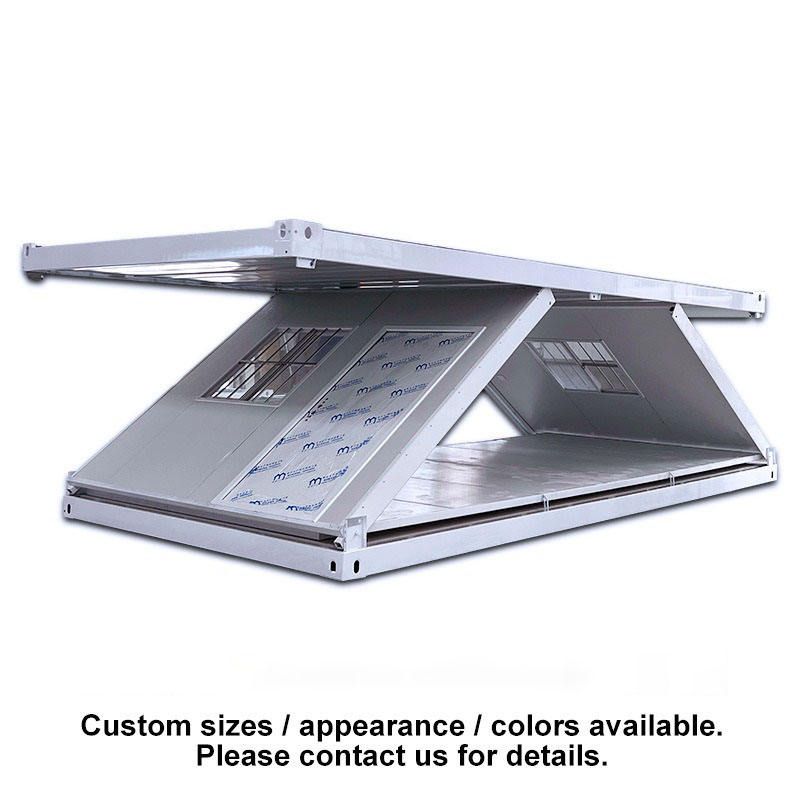
1. Materials and Structural Design
The frame of the mobile environmental toilet is welded using national standard steel, with a surface covered in anti-corrosion and fire-resistant materials, ensuring a sturdy structure with strong weather resistance and a service life of over 20 years. Inside, it is equipped with an independent toilet pit partition treatment system, a non-slip floor design, an automatic flushing function for the toilet bowl, and ventilation and lighting systems that comply with the GBLT18091-92 standard, ensuring safety and hygiene during use.
2. Technological Routes and Product Forms
The technological routes cover three mainstream types: waterless flushing, foam sealing, and water flushing:
- Waterless flushing: Suitable for water-scarce areas, it treats excreta through packaged toilets or microbial degradation technology without the need for an external water source.
- Foam sealing: Uses foaming liquid to cover the surface of excreta, reducing odors and conserving water, making it suitable for scenarios without municipal sewage pipes.
- Water flushing: Requires connection to a water source and sewage pipes, suitable for areas with well-developed infrastructure.
Product forms extend to trailer-mounted, box-type substation cabinet-style, stainless steel booth-style, etc., allowing flexible design adjustments based on site conditions. For example, trailer-mounted types are preferred in scenic areas for easy mobility, while box-type options can reduce construction costs in rural areas.
3. Functional Expansion and Intelligence
Some products are equipped with smart systems, including face recognition paper dispensing, automatic sensor flushing, environmental monitoring (such as temperature, humidity, and air quality), enhancing user experience and management efficiency. Modular design supports rapid deployment, such as solar-powered mobile toilets that achieve energy self-sufficiency through integrated photovoltaic panels, suitable for remote areas or emergency scenarios.
4. Customized Services and Adaptability
Enterprises like Henan Qiantong Environmental Protection Equipment Co., Ltd. can provide customized services, adjusting designs based on site conditions:
- Waterless packaged toilets are used in water-scarce areas;
- Integrated sewage treatment equipment is equipped in areas without municipal sewage pipes;
- Spatial layout and functional configurations are optimized based on usage scenarios (such as scenic areas, service areas, and rural areas).
By comprehensively considering materials, technology, functions, and scenario needs, companies can efficiently complete the restructuring of mobile environmental toilets, achieving a balance between environmental protection, economy, and practicality.



