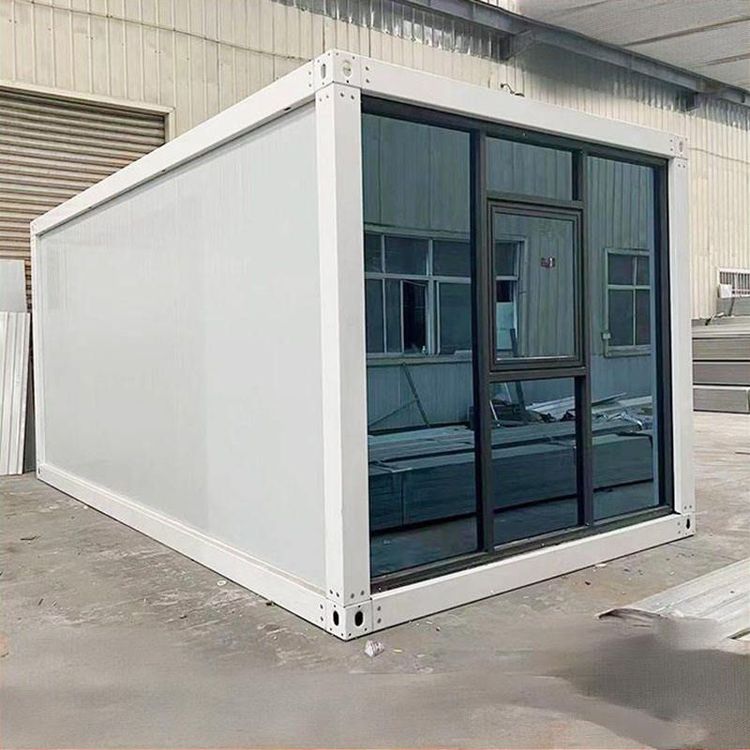
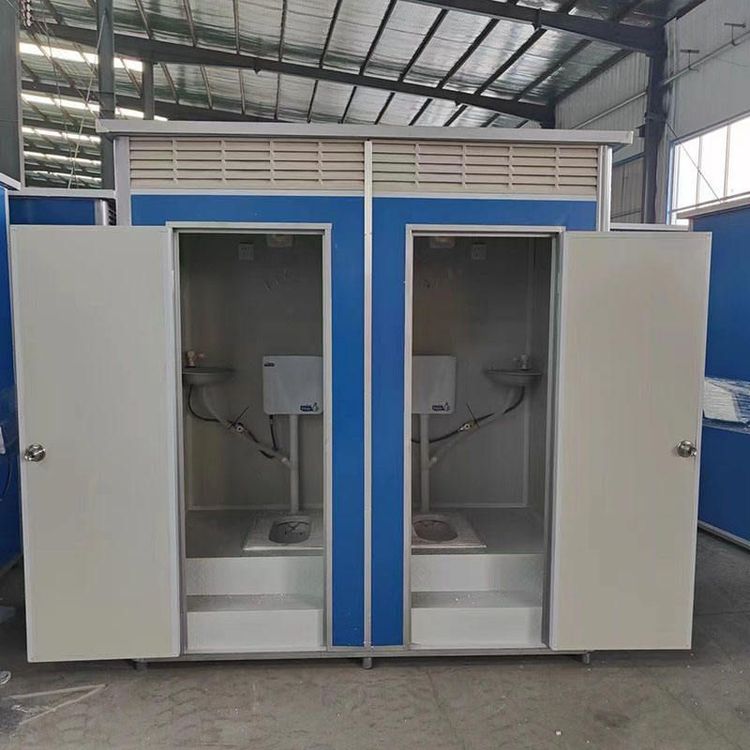
Color Steel Mobile Toilet Construction
The construction of color-steel mobile toilets should follow the following key steps and specifications:
Installation Scenario Adaptability Analysis and Foundation Construction
Before construction, a systematic assessment of the environment is required, including surface bearing capacity, depth of the underground permafrost layer, and seasonal wind variations. The thermal expansion and contraction coefficient of the color-steel material should be accurately calculated to ensure long-term structural stability. Foundation construction is divided into two categories: concrete floors and steel structure platforms. It is necessary to ensure that the levelness and bearing capacity meet standards or guarantee firmness through welding/bolt connections. When selecting color-steel panels, a comprehensive evaluation of weather resistance, wind pressure resistance, and fire rating should be conducted, with priority given to materials that comply with national standards.Modular Assembly and Sealing Treatment
The main structure adopts a modular assembly method, with high-strength galvanized bolts and sealing gaskets used at connection points. During assembly, strict adherence to torque control standards is required. The electrical wiring and water supply and drainage pipes between modules use quick-connect interfaces with anti-leakage and anti-freeze designs. The connection between wall panels and roof panels uses dedicated aluminum profiles or steel structure connectors, with sealing glue filled at the joints for waterproof reinforcement. The integrated installation of the water and electricity system should conform to prefabrication characteristics. PPR or PE pipes are selected for the water supply pipes, and the drainage system is designed for gravity flow or pressure discharge according to the scenario. The electrical circuit installation must meet waterproof and moisture-proof specifications.Insulation Layer Compositing and Sewage System Design
The wall adopts a multi-layer composite structure, with an outer layer of color-steel profiled panels and an inner layer filled with polyurethane foam. The pouring of the insulation material should be carried out in a constant-temperature and constant-humidity environment, and the inner and outer panels should be fixed through a combination of physical anchoring and chemical bonding to prevent cold bridges. Some areas of the sewage system are equipped with self-circulating or negative-pressure collection systems. Negative-pressure sewage disposal relies on a micro vacuum pump to maintain a constant negative pressure. The key control points are the system's airtightness and the precise regulation of the negative-pressure value to ensure the directional transportation of waste to the collection container.Energy System Integration and Intelligent Monitoring
Most solutions integrate a photovoltaic power generation system. The photovoltaic panels are installed in close contact with the roof surface through custom brackets. The energy storage device uses low-temperature lithium battery packs equipped with an intelligent charge-discharge controller that can automatically adjust the power supply strategy according to the frequency of use. After installation, a multi-parameter sensor network should be deployed, including odor concentration detectors, liquid level sensors, and temperature and humidity monitors. These sensors are networked through low-power IoT modules to collect real-time operational data for optimized management.Installation Accuracy Inspection and Internal Facility Adjustment
After construction is completed, three-dimensional laser scanning inspection should be carried out to obtain point cloud data and compare it with the design model, focusing on detecting verticality deviations, joint flatness, and equipment installation positioning accuracy. At the same time, a dedicated airtightness inspection should be conducted. The installation base of sanitary ware should be rigidly connected to the box structure, and the fixing points of the partition panels should avoid the weak areas of the color-steel panels. After the box is hoisted into place, it should be calibrated in multiple directions using a level. After all connections are completed, a systematic inspection should be carried out, including water pressure testing, power-on testing, and closed-water testing. Finally, secondary sealing treatment should be carried out at the joints and openings.