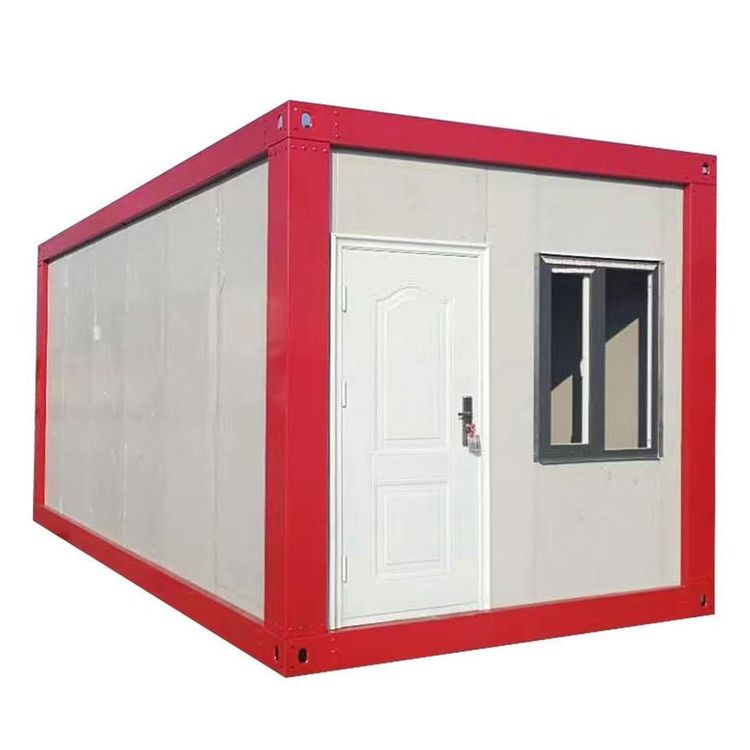
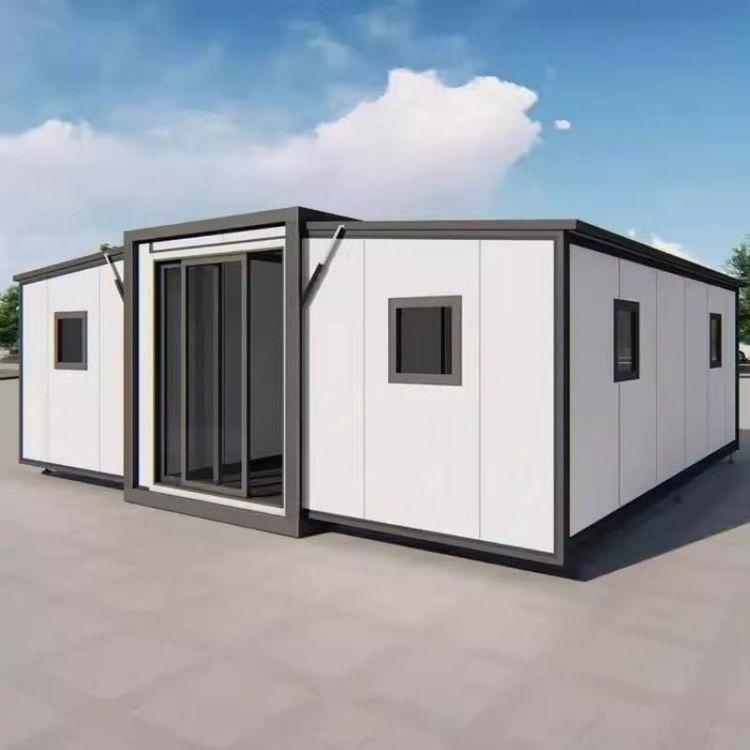
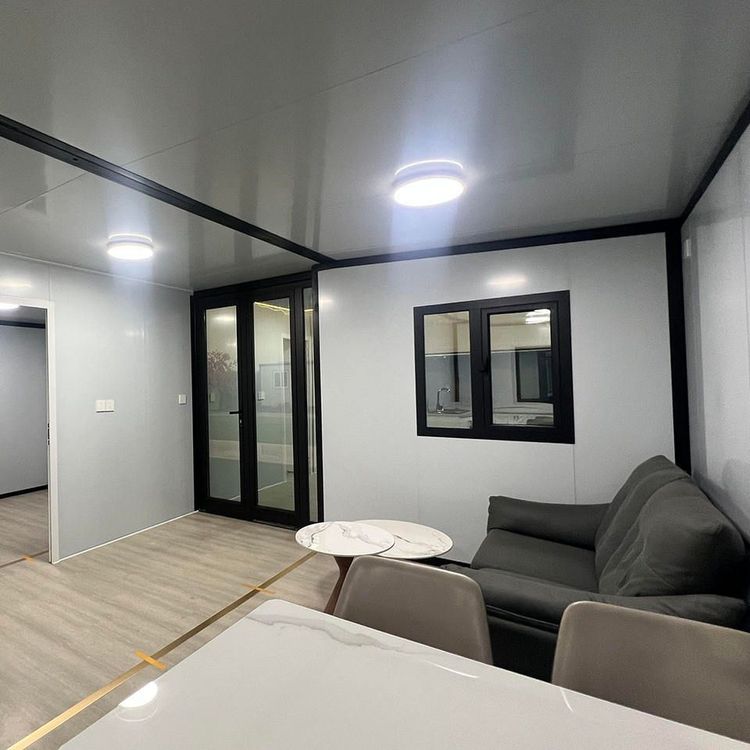
Can Construction Site Container Houses Be Lived In?
Container houses at construction sites can be inhabited under certain conditions, but a cautious assessment considering multiple factors is necessary.

I. Architectural Design and Safety Standards
Container houses must undergo formal design and modification to ensure structural stability. Their frames need to withstand natural forces such as wind and earthquakes to prevent deformation or collapse, which could endanger occupants. Fire resistance is a critical metric. Flame-retardant materials (e.g., rock wool boards, glass wool boards) should replace flammable polystyrene foam boards. Fire extinguishers, smoke detectors, and other firefighting equipment should be installed, along with clearly planned evacuation routes. Additionally, ventilation and lighting designs should meet human health requirements, such as incorporating cross-ventilation windows, skylights, or mechanical ventilation systems to prevent respiratory issues or mold growth caused by stale or humid air.
II. Planning Approval and Land Use Nature
As temporary accommodation facilities, container houses require prior approval from local construction and planning authorities. Key steps include: verifying whether the land use nature permits temporary structures (e.g., industrial land, construction land), obtaining temporary land use permits or construction project planning permits; if located in urban built-up areas, compliance with fire safety spacing, building density, and other planning requirements is also necessary. Unauthorized construction may result in forced demolition or fines, making compliance a prerequisite for habitation.
III. Living Conditions and Hygiene Standards
Container houses must meet basic living needs: internally, they should be equipped with sanitary facilities (e.g., portable toilets, simple shower rooms), safe electrical systems (using explosion-proof sockets, leakage protectors), and storage space; in terms of environmental comfort, insulation layers (e.g., polyurethane foam) or double-wall designs should maintain indoor temperatures to avoid discomfort in extreme weather; hygiene management requires regular garbage disposal and disinfection of public areas to prevent mosquito infestation or disease transmission. Note that container houses may suffer from being too cold in winter and too hot in summer due to material properties (e.g., fast metal heat conduction), necessitating additional measures for improvement.
IV. Specificity of Fire Safety Hazards
The fire risk of container houses is higher than that of traditional buildings: material flammability (if using polystyrene sandwich panels) can cause rapid fire spread; spatial confinement may hinder smoke evacuation, increasing escape difficulty; rescue challenges arise from compact structures and narrow passageways. Therefore, strict selection of fire-resistant materials, prohibition of storing flammable materials inside, and regular fire drills are essential.