
Building a Shed on a Container House
When building a shed on a container house, it is necessary to comprehensively consider structural safety, compliance of usage, and local policies. Generally, it is advisable to avoid hardening the ground or constructing permanent foundations, and it is not suitable for business operations or residential purposes.
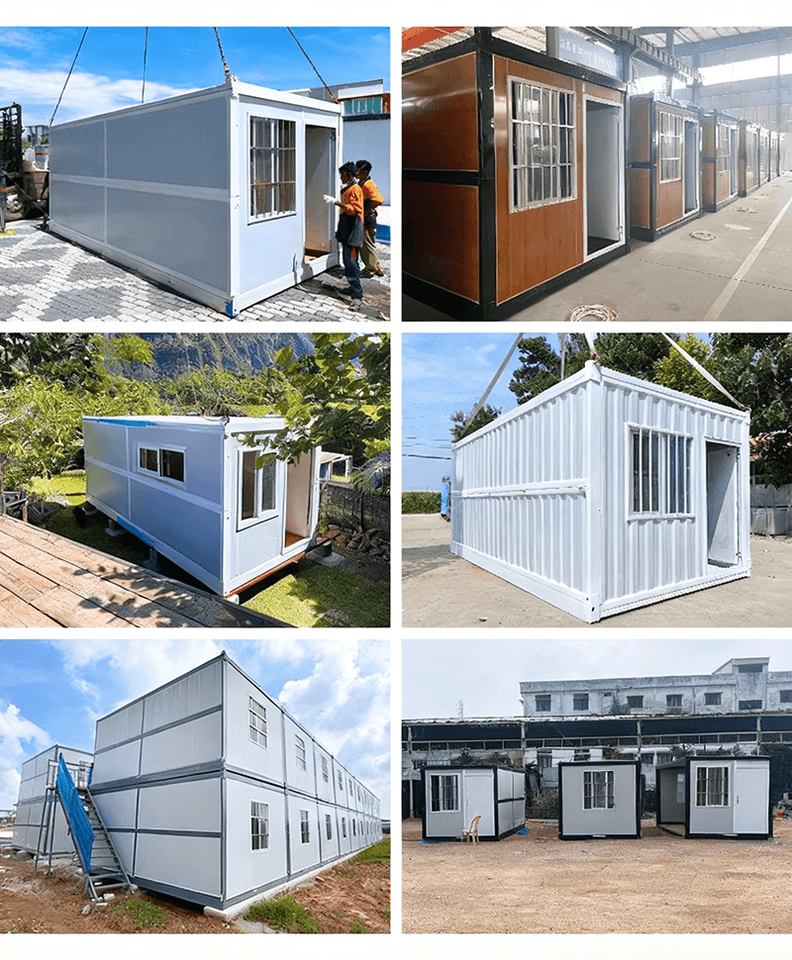
Structural Safety and Load-Bearing Capacity
Container houses inherently possess a certain load-bearing capacity, but adding a shed on top requires an assessment of the overall structural stability. If the original container design did not account for additional loads on the roof, directly adding a shed could lead to deformation or even collapse. It is recommended to prioritize lightweight materials (such as color-coated steel sheets or aluminum alloys) for constructing the shed roof and ensure that the shed is securely connected to the container to avoid concentrated loads. For example, the Guangxi Jiacheng color-coated steel shed uses Q235 steel with a steel consumption of 23kg per square meter, and such lightweight designs can be referenced.
Usage and Compliance
According to local policies, the intended use of adding a shed to a container house directly affects its compliance. If it is solely used for temporary storage of agricultural supplies or tools (such as farm watchhouses) and the ground is not hardened, and there is no access to water or electricity, it is generally not considered an illegal structure. However, if it is used for business operations (such as mahjong parlors or shops) or long-term residence, it may be deemed illegal due to "substantially altering the land use." For instance, a resident in Changzhou, Jiangsu, added a container on the rooftop for use as a mahjong parlor and was reported due to business involvement.
Regional Policy Differences
Different regions have varying regulations regarding container houses and additional sheds. Some cities classify them as temporary structures that do not require planning permission, while others may require approval or outright prohibit them. For example, Shenzhen has strict restrictions on the use of container houses, whereas rural areas may be more lenient. It is advisable to consult local urban management and planning departments before construction to clarify whether permission is required and the duration of use.
Operational Recommendations
- Material Selection: Prioritize lightweight materials such as color-coated steel sheets or aluminum alloys to avoid increasing the load on the container roof.
- Structural Design: Reinforce the connection points between the shed and the container to prevent collapse due to strong winds or snow accumulation.
- Usage Restrictions: Clearly define the shed's purpose as temporary storage or shading and avoid using it for business operations or residence.
- Ground Treatment: Maintain the original ground condition and avoid hardening or constructing permanent foundations.
- Policy Consultation: Confirm compliance with local authorities in advance and apply for temporary building permits if necessary.



