Bengbu Mobile Toilet Customization
Mobile toilets in Bengbu can be customized to meet the personalized needs of different scenarios.

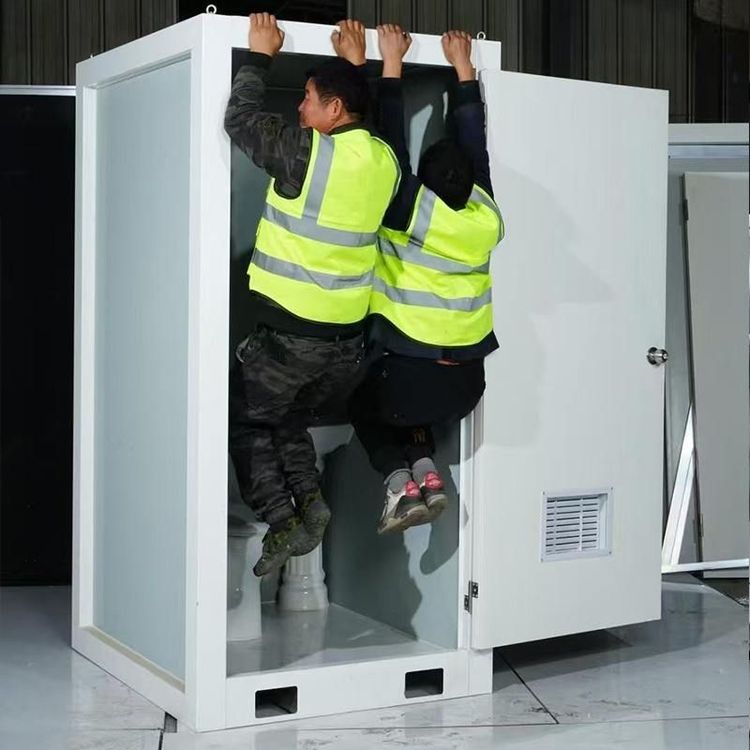
In Bengbu, the commonly used prefabricated eco-friendly mobile toilets for outdoor venues are characterized by safety and durability, and also support customization services. For long-term use scenarios such as scenic spots, parks, and construction sites, local merchants can offer a variety of material options, such as stainless steel and fiberglass. Stainless steel is corrosion-resistant and easy to clean, making it suitable for humid or rainy environments; fiberglass is lightweight, strong, easy to transport and install, and relatively low in cost.
Customization covers multiple dimensions:
- Size and exterior design: Merchants can adjust the length, width, and height of the mobile toilets according to the space limitations of the venue or usage requirements to ensure harmony with the surrounding environment. For example, scenic spots may require the toilet's exterior to blend into the natural landscape, using wood-grain or stone-texture designs; construction sites, on the other hand, focus more on practicality and choose simple geometric shapes.
- Functional configuration upgrades: Ventilation systems are a common requirement in customization. By installing exhaust fans or natural vents, the internal air quality can be effectively improved; anti-slip floors use anti-slip tiles or rubber materials to reduce the risk of slipping in rainy or humid conditions; intelligent deodorization systems use photocatalyst or activated carbon filtration technology to continuously decompose odor molecules and enhance the user experience.
- Detail-oriented personalized adjustments: Some merchants support color customization, such as choosing an exterior that matches the theme of an event or the main color scheme of the venue; logo customization includes logos, signage, etc., to facilitate user identification or strengthen brand promotion. For example, parks may require the addition of guide maps or environmental slogans on the toilet's exterior walls, while construction sites need to display safety warning information.
The customization process typically includes three stages: requirement communication, plan design, and production and installation. Users need to clarify the usage scenario, budget, and core requirements (such as material and functional priorities), and the merchant will provide a preliminary plan accordingly; after both parties confirm the details, the production phase begins, usually with a cycle of 15-30 days; finally, a professional team completes on-site installation and commissioning to ensure the stable operation of the toilet.
It should be noted that customization costs vary depending on the material, functional complexity, and scale. It is recommended to communicate the budget range with the merchant in advance to optimize the design plan.