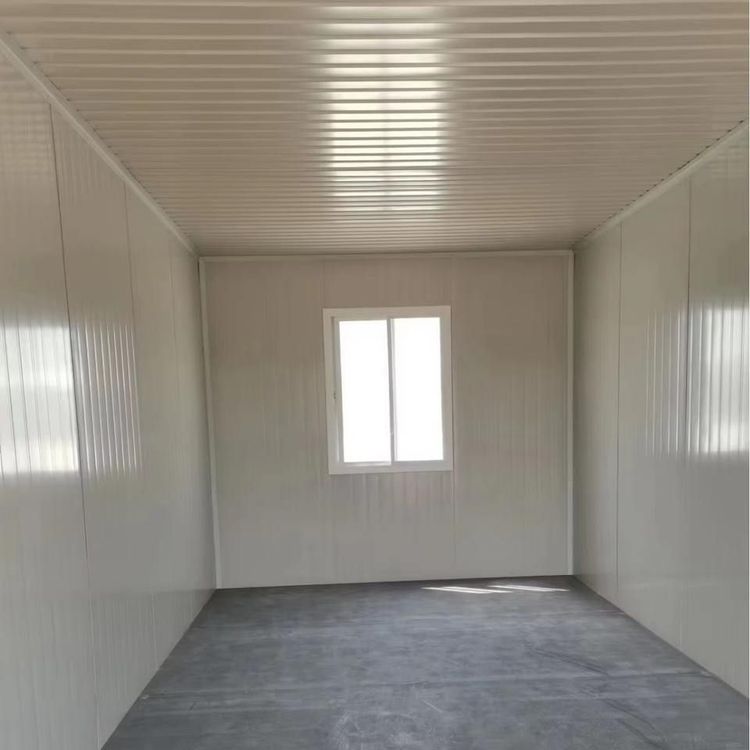
Quality Inspection of Prefabricated Houses in Australia
In the quality inspection of prefabricated houses in Australia, asbestos-free testing is a core component. It requires a standardized process to confirm that building materials do not contain asbestos, meeting Australia's stringent regulatory requirements.

Inspection Background and Regulatory Requirements
Australia has comprehensively banned the import, use, and sale of asbestos since 2003. All imported building materials must provide asbestos-free certification. Before entering the market, prefabricated houses must undergo asbestos-free certification from laboratories accredited by the National Association of Testing Authorities (NATA) in Australia to ensure compliance with standards. This requirement aims to eliminate health risks associated with asbestos, such as lung cancer and mesothelioma, ensuring building safety.
Inspection Process
- Sample Collection: Samples are collected by NATA-accredited laboratory personnel or designated professionals from the production line or finished products of prefabricated houses, covering key components such as wall panels, roof panels, and insulation materials. Sampling must follow standardized procedures to avoid damaging the material structure, and samples are sealed and labeled before being sent for testing.
- Laboratory Analysis: Polarized light microscopy is used to initially identify suspected asbestos fibers, followed by electron microscopy with energy-dispersive spectroscopy to confirm elemental composition and distinguish asbestos types (e.g., chrysotile, crocidolite). The focus of the analysis is to detect the presence or absence of fibers and their specific types, providing a basis for risk assessment.
- Report Generation: If no asbestos is detected in all samples, the laboratory issues an asbestos-free certification document compliant with Australian Standard AS 4964, clearly indicating sample information, testing methods, results, and the laboratory's accreditation number. The report has legal validity and is a key basis for product market access; if asbestos is detected, the content and location must be noted.
Inspection Characteristics
- Full Supply Chain Traceability: The inspection covers the entire process from raw material procurement to assembly completion, ensuring all components meet standards and avoiding the limitations of single-material testing.
- Long Time Cycle: The process from sampling to report generation typically takes several weeks, influenced by sample quantity, laboratory scheduling, and document review speed. Early planning is necessary to avoid delays in transportation or customs clearance.
Inspection Value
Asbestos-free testing, through a pre-screening mechanism, eliminates asbestos risks at the source, reducing post-rectification costs and uncertainties. It promotes transparency in building material production, encourages manufacturers to strictly control raw material sources, and enhances overall industry safety standards.