
Aesthetic Effect of Mobile Toilets
The aesthetic effect of mobile toilets is primarily reflected in design innovation, color coordination, and environmental harmony, enabling them to meet aesthetic needs in various scenarios through diverse shapes and color schemes.
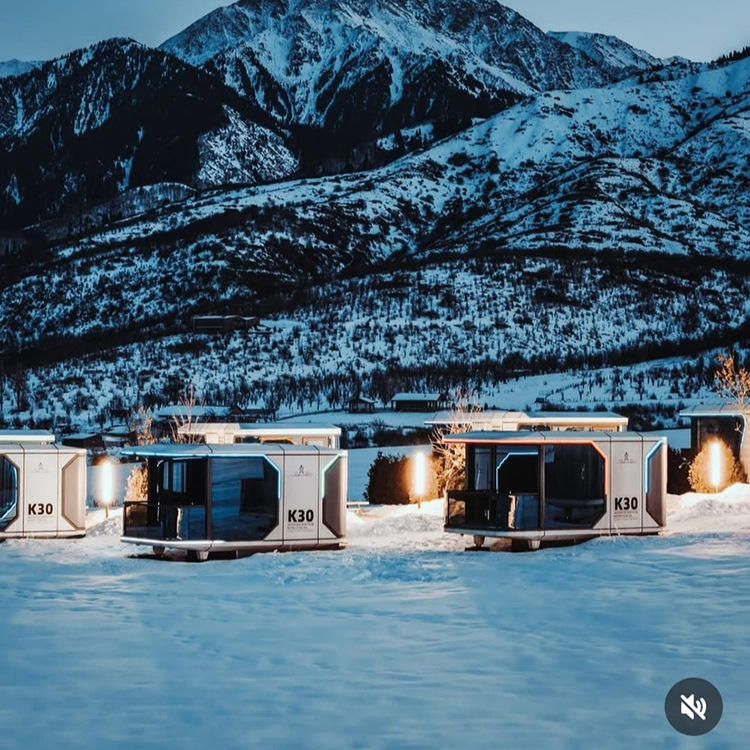
Firstly, design innovation is the core means of enhancing the aesthetic appeal of mobile toilets. Some scenic spots adopt an overall container design, achieving a neat and modern appearance through modular structures. For example, the exterior walls are spliced with real stone paint and Great Wall panels, preserving the texture of natural stone while enhancing visual layers through the linearity of metal panels. This design not only breaks away from the monolithic form of traditional mobile toilets but also forms a unique architectural language through the combination of different materials. Additionally, mobile toilets with special shapes employ galvanized steel frame structures paired with orange brick-patterned exterior walls, ensuring structural stability while creating a lively yet textured appearance with bright colors and imitation brick textures, suitable for scenarios such as children's parks or theme parks.
Secondly, color coordination is a key factor in enhancing visual effects. Upgraded mobile public toilets generally use soft tones as a base, such as light beige and light brown, which convey a warm and natural atmosphere, reducing the coldness of public facilities. At the same time, deep blue is used to outline borders or accentuate local areas, creating color contrasts that avoid monotony and highlight architectural contours. For example, the roof of a mobile toilet in a scenic spot uses deep blue metal tiles, forming a stable composition of 'dark top and light bottom' with light beige walls, while the deep blue lines of the door frames and ventilation openings reinforce details like brushstrokes, making the overall appearance rich in harmony and variation.
Finally, environmental harmony is an important manifestation of aesthetic effects. The design of modern mobile toilets no longer pursues 'standing out' but achieves 'blending into the environment' through adjustments in color and shape. For example, in forest or wetland scenic spots, mobile toilets may adopt gray-green exterior walls to mimic the color of leaves; by the seaside, light blue may be used to echo the sky and ocean. This design strategy not only reduces visual conflicts but also extends public facilities as part of the natural landscape, enhancing the overall environmental coordination.



