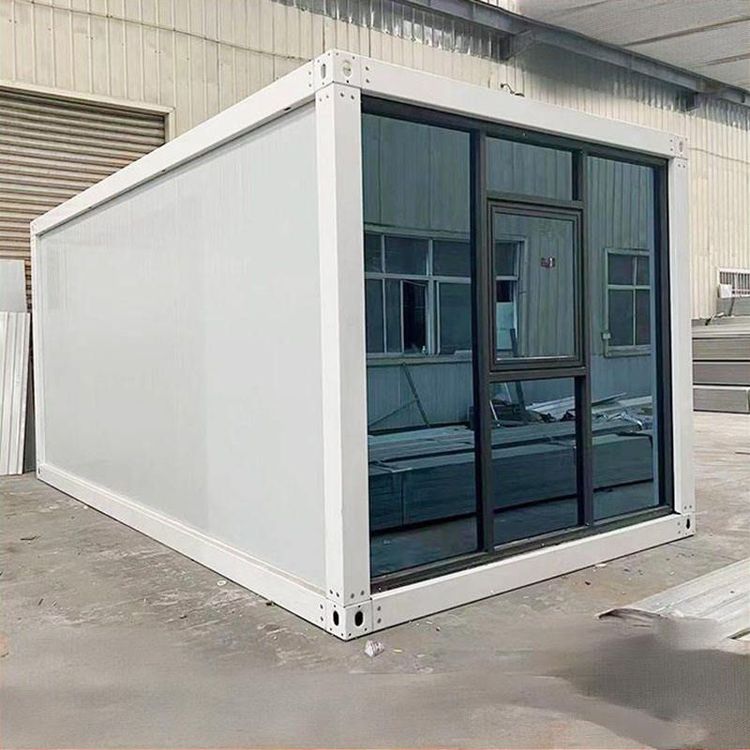
Advantages of Expandable Container Houses
Expandable container houses offer core advantages such as structural stability, flexible expansion, rapid deployment, cost-effectiveness, environmental protection, safety protection, and high customization levels. Details are as follows:

1. Structurally Stable and Durable, Adaptable to Complex Environments
Container houses utilize high-strength light steel frames with anti-corrosion treatment processes. The hinge and track designs are mature, ensuring a seamless and flat finish when expanded. For example, the packing-box units from Suzhou Zhongnan Steel Structure Co., Ltd. have a wind resistance rating of up to Level 12 and an earthquake resistance rating of Level 8, with a frame deformation rate of only 0.18%, well below the industry's acceptable threshold of 0.3%. This structure ensures stability under extreme conditions (such as coastal typhoons and high-intensity earthquakes), making it suitable for long-term residence or scenarios with high safety requirements.
2. Flexible Space Expansion to Meet Diverse Needs
Dual-wing expandable container houses can be expanded instantly by 2-3 times through hydraulic or mechanical means. For example, a certain model of container has combined dimensions of 3×6×3 meters and expands to 5.5×6×3 meters, increasing the indoor area from 18 square meters to 33 square meters. This design supports horizontal splicing and vertical stacking (up to 3 floors), allowing for free combination into functional spaces such as office areas and dormitory areas. It is suitable for scenarios with significant changes in space requirements, such as temporary exhibitions and emergency rescue operations.
3. Rapid Deployment and Retrieval, Shortening Project Cycles
Container houses adopt a factory-prefabricated and on-site assembly model, with the entire lifting and expansion process completed within 1 hour, requiring no wet work. For example, products from Zhejiang Hangxing Green Building Materials Technology Co., Ltd. complete over 90% of the construction processes in the factory and only require foundation leveling upon arrival at the site for lifting and use, achieving "installation and occupancy on the same day." This efficiency reduces the project cycle by over 60% compared to traditional construction, making it particularly suitable for emergency projects and scenarios with tight deadlines.
4. Cost-Effective and Environmentally Friendly, Reducing Lifecycle Costs
Container houses have a steel recycling rate of over 95%, generating 80% less construction waste during relocation compared to traditional construction sites. For example, the packing-box units from Shandong Jinda Green Building Integrated Housing Co., Ltd. are recyclable, reducing lifecycle costs by approximately 40% compared to traditional temporary buildings. Additionally, their folded volume is only 1/4 of their expanded state, significantly reducing transportation costs and making them suitable for export scenarios requiring long-distance transportation.
5. Integrated Safety Protection, Adaptable to Various Outdoor Environments
Container houses offer comprehensive performance in fire prevention, thermal insulation, heat insulation, waterproof sealing, wind resistance, earthquake resistance, and anti-corrosion and rust prevention. For example, Baotou Camp Container House Co., Ltd. reduces the heat exchange efficiency between the interior and exterior of the container by approximately 40% through a broken-bridge lining structure and rubber thermal insulation pads, keeping the indoor temperature 8 to 10 degrees Celsius higher than the outside in winter and reducing reliance on heating equipment.
6. Highly Customizable to Meet Personalized Needs
The size, interior decoration, functions, and intelligent systems of container houses can be customized according to needs. For example, container houses from Qinghai Guangzan Light Steel can be equipped with solar power generation systems, sewage treatment systems, etc., to meet the needs of different regions and scenarios. Their exterior design adopts simple lines and a modern style, blending with the surrounding environment while supporting the addition of personalized facilities such as study rooms and gyms.