
20 Mobile Public Toilets
20 mobile public toilets are a collection of facilities that can be moved as a whole and provide toilet services to the public, featuring flexible deployment, various structures, and treatment methods.
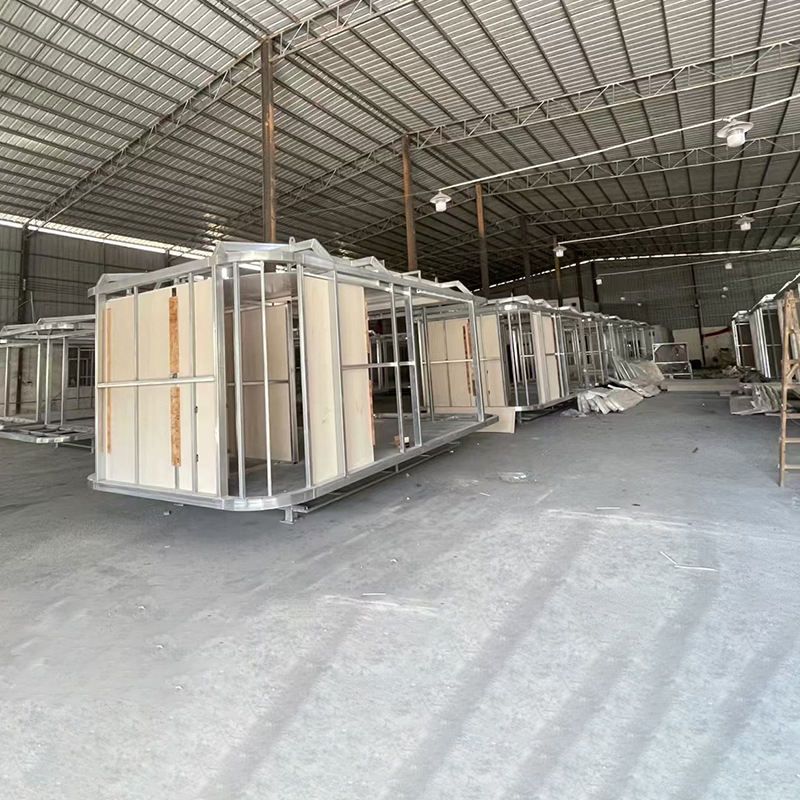
Overall Characteristics
Mobile public toilets can be moved as a whole and can be set up at different locations or venues according to fixed or temporary needs to provide toilet services to the public and clients. As a holistic concept, 20 mobile public toilets mean they can be uniformly allocated, transported, and deployed to meet the toilet needs of large-scale or multiple locations.
Structural Composition
Each mobile public toilet generally consists of a fecal sewage storage tank (or fecal sewage treatment device), floor slab, sanitary ware, walls, washing equipment, water tank, roof, and mobile device. The 20 mobile public toilets include 20 complete sets of such structural systems, which work together to ensure the normal functioning of the toilets.
Classification by Structure and Mobility Method
- Structural Form: They can be divided into single-structure mobile toilets and composite-structure mobile toilets. Among the 20 mobile public toilets, there may be single-structure ones that are convenient for independent setup and use, as well as composite-structure ones that can meet more complex usage scenarios and functional requirements.
- Mobility Method: They are classified into hoisting and handling mobile toilets, and powered and towed mobile toilets. For the 20 mobile public toilets, an appropriate mobility method can be selected according to the actual transportation conditions and deployment site requirements. For example, in open and easily accessible locations, powered and towed mobile toilets can be used to improve transportation efficiency.
Classification by Sewage Treatment Method
They include flush and non-flush suction-type mobile toilets, circulating flush mobile toilets, and dry-packing mobile toilets. The 20 mobile public toilets can choose the corresponding sewage treatment method according to different usage environments and environmental protection requirements. For example, in water-scarce areas, dry-packing mobile toilets can be used to avoid water waste; in areas with a complete sewage treatment system, flush-type mobile toilets can be used.
Advantages and Design Principles
Mobile public toilets have the advantages of mobility, combinability, and convenient transportation. The 20 mobile public toilets can be easily transported to any location where toilets need to be deployed and can be used repeatedly. Their design follows the principles of mobility and convenience, economic durability, environmental protection and ecology, and improving efficiency and promoting humanity. The overall planning and design of the 20 mobile public toilets will also fully consider these factors to better serve the public.



