
Back to blog
Article
How to Install Mobile Toilets in Ziyang
Admin October 08, 2026
The installation of mobile toilets in Ziyang requires flexible adjustments based on site conditions and toilet types. The specific steps are as follows:
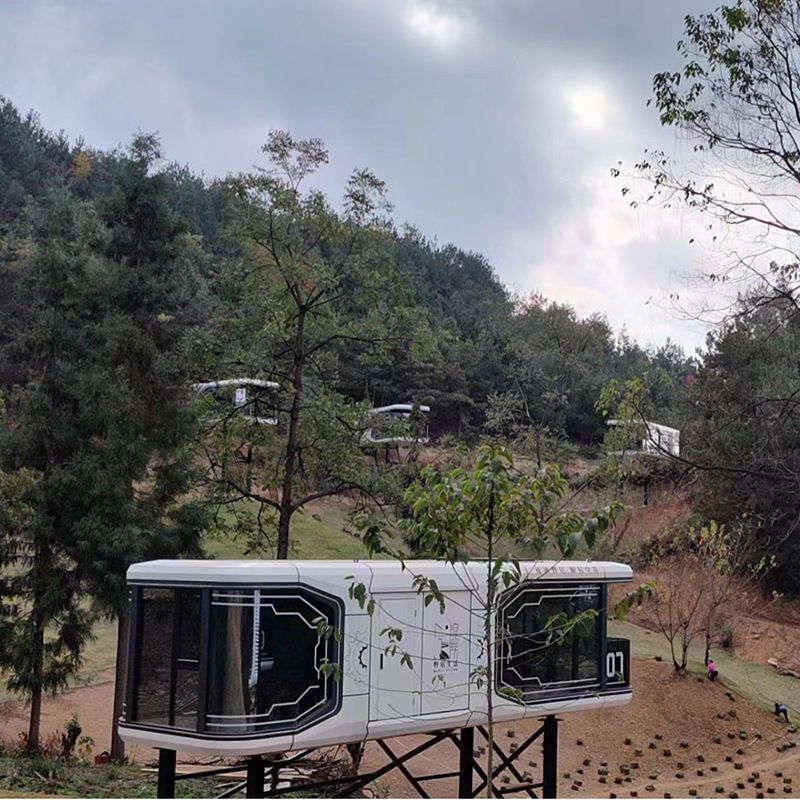
1. Site Assessment and Preparation
- Basic Condition Inspection: Measure the levelness of the predetermined area, soil bearing capacity, distribution of underground pipelines, and surrounding spatial dimensions. The levelness error must be controlled within a minimal range to avoid uneven structural stress; if the soil bearing capacity is insufficient, a concrete foundation must be poured to distribute the load.
- Access Reservation: Reserve clearance access space according to the toilet type to ensure the convenience of septic tank clearance vehicles or sewage pipeline connections. For example, for flush toilets, the direction of sewage pipelines should be planned in advance to avoid rework later.
2. Confirm Sewage Disposal Method and Position the Main Structure
- Environmentally Friendly Toilets (No Need to Connect to Underground Sewage Pipelines): Place the toilet body steadily on a prefabricated foundation or adjustable legs, achieving rigid connection through bolts or welding to withstand wind loads. When handling, find the balance point of the force: the balance point of a pointed-roof toilet is near the top, while a flat-roof toilet can be lifted using the hooks preset by the manufacturer.
- Toilets Connected to Municipal Sewage Networks or Septic Tanks: Lay and seal the sewage pipelines before positioning the toilet body. The pipeline slope must meet fluid discharge requirements (usually not less than 2%) to prevent blockages.
3. Connect Internal Functional Systems
- Pipeline and Circuit Connections:
- The water supply pipeline should be equipped with anti-freezing and pressure-reducing devices to prevent damage caused by low temperatures or water pressure fluctuations;
- The electrical circuit must comply with waterproof safety standards and be reliably grounded to prevent electric shock risks;
- The ventilation pipeline should remain unobstructed to ensure internal air circulation.
- Wastewater Treatment Unit Debugging: If the toilet is equipped with a biochemical or physical filtration device, debug its operating parameters separately to ensure its ability to independently treat wastewater.
4. On-Site Debugging and Inspection
- Component Fastness Verification: Check whether internal supporting facilities such as toilets and sinks are installed firmly, without looseness or damage, and perform cleaning and disinfection.
- Function Testing: Test the functions of all movable parts and electrical components such as door locks, flushing devices, lighting fixtures, and exhaust fans to ensure normal operation. For example, observe whether the water flow of the flushing device is uniform and detect whether the noise of the exhaust fan is within a reasonable range.
5. Adaptive Fine-Tuning and Acceptance
- Internal Structure Stability: Adjust internal structures such as handrails and shelves according to the actual environment to ensure usage safety.
- External Facility Compliance: Confirm that the slope of the toilet's external ramp complies with accessibility standards (usually not exceeding 1:12) and that warning signs are clearly visible.
- Final Verification: Simulate usage scenarios to check whether the facilities meet specific environmental requirements, such as whether the wind and rain resistance performance is up to standard.
Precautions: Packaged or microbial degradation toilets can be directly moved into place, while flush toilets require priority handling of sewage pipeline issues; for handling large toilets (such as those with more than 4 seats), it is recommended to use cranes and other tools to save labor costs and reduce safety risks.
Related



