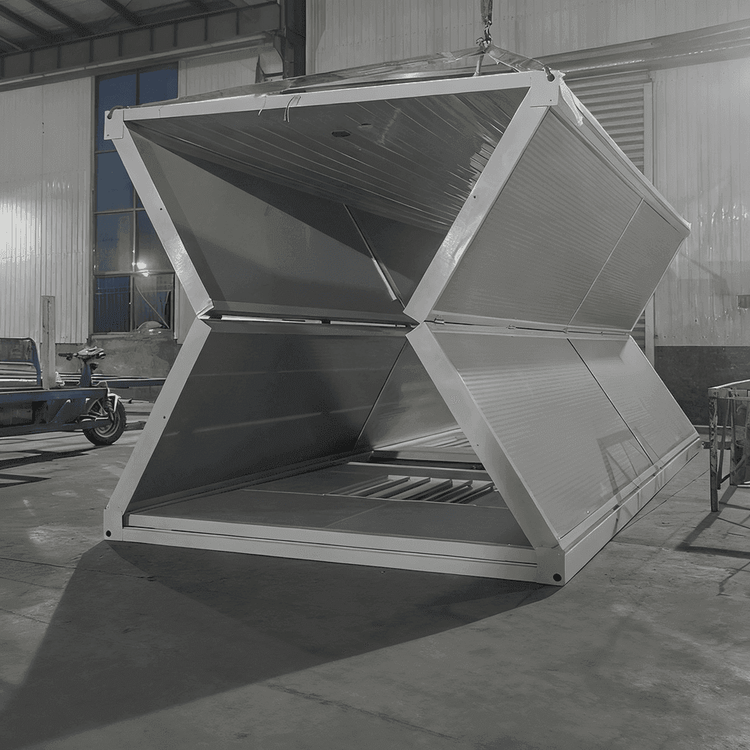
Zhiqiang Residential Container House
Currently, there is no direct detailed information about 'Zhiqiang Residential Container House', but a general introduction can be provided based on the common knowledge of residential container houses.

Residential container houses are a form of habitable architecture transformed from containers, which have gained certain applications in the construction field in recent years.
Structural Features
Residential container houses typically use standard containers as the main structural framework. The containers themselves are constructed with high-strength steel, enabling them to withstand significant external forces such as wind and seismic forces, ensuring structural stability in various environments. Their regular box-like structure facilitates transportation and installation. They can be quickly transported to designated locations using cranes and other equipment and then assembled to form residential spaces of different scales and layouts.
Interior Space
The interior space can be flexibly divided and decorated according to actual needs. Generally, functional areas such as bedrooms, living rooms, kitchens, and bathrooms can be set up. Although the interior space of a single container is relatively limited, it can meet basic living needs through reasonable design and layout. For example, using foldable furniture and built-in storage solutions can improve space utilization. Additionally, doors and windows can be installed to ensure indoor ventilation and natural light.
Advantages
Residential container houses offer numerous advantages. Lower Cost: Compared to traditional brick-and-mortar houses, their construction costs are significantly reduced, not only due to relatively lower material costs but also because of shorter construction periods and lower labor costs. Environmentally Friendly and Energy-Efficient: Containers can be recycled and reused, reducing the generation of construction waste. Moreover, during the use of the house, energy-saving equipment and technologies such as solar water heaters and energy-efficient lighting can be adopted to reduce energy consumption. High Flexibility: They can be relocated and reorganized at any time according to different usage scenarios and needs, making them suitable for various places such as temporary buildings, construction site dormitories, and tourist resorts.
Limitations
However, residential container houses also have some limitations. Poor Thermal Insulation: Steel has high thermal conductivity, so indoor temperatures are easily affected by the external environment in hot summers and cold winters, requiring additional thermal insulation measures such as installing thermal insulation panels. Limited Living Comfort: Due to relatively small space and potentially inferior sound insulation compared to traditional houses, living comfort may be affected.