
Zhejiang Sanitation Mobile Toilet Design
The design of Zhejiang sanitation mobile toilets focuses on modularity, functional integration, and humanization, while also considering flexible deployment and efficient maintenance to meet the needs of outdoor events, peak tourist seasons, and temporary work scenarios.
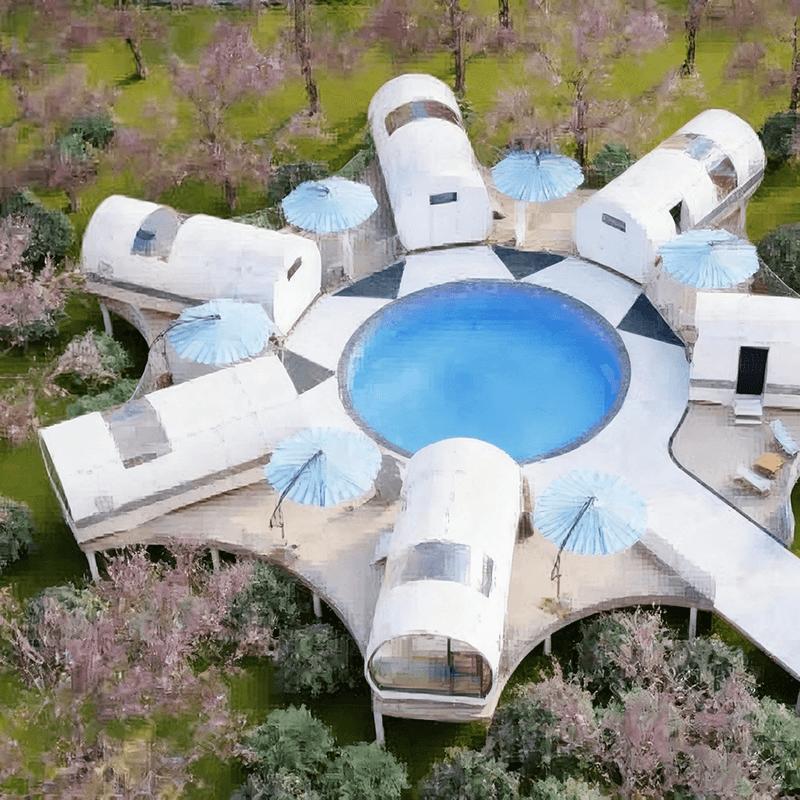
Modular Structure and Rapid Deployment
Zhejiang sanitation mobile toilets adopt an independent modular unit design. The main structure is standardized and produced in factories before being transported to the site. They can be put into use after simple site leveling and connection of pipes or electricity. This design significantly shortens the construction cycle, making it particularly suitable for temporary events or emergency scenarios. After the event, the toilets can be moved away as a whole, enabling efficient space reuse and avoiding resource waste. For example, in Shaoxing, during peak tourist seasons or large-scale outdoor events, the rapid deployment of mobile toilets helps alleviate the pressure on fixed public toilets and improves public sanitation service efficiency.
Functional Module Design
- Toilet Area: Equipped with water-saving toilets, paper towel holders, handrails, and hooks, with a focus on privacy and safety. Some models include barrier-free facilities for special groups (such as the elderly or disabled), reflecting humanistic considerations.
- Handwashing and Cleaning Area: Integrated with small handwashing basins and water-saving faucets. Some models are supplied with water from built-in tanks, with independent waste water recovery or separate treatment from fecal waste to reduce water consumption.
- Ventilation and Lighting System: Translucent but opaque panels are used on the top or sides to introduce natural light, reducing reliance on artificial lighting. Ventilation combines natural ventilation (openable skylights and side windows) with mechanical ventilation (forced exhaust systems and ventilation fans). In Shaoxing, materials such as honeycomb aluminum panels are also used to enhance air permeability and ensure air circulation.
- Waste Treatment System: Depending on the usage scenario, options include circulating water flushing (connected to municipal networks or septic tanks), waterless packaging (encapsulated with biodegradable films), or biodegradation (decomposed by microbial agents), balancing environmental protection and practicality.
Technological Integration and Humanistic Considerations
- Odor Treatment: Deodorization systems are installed to expel odors through ventilation ducts, complemented by air fresheners or deodorants. Some models feature timed ventilation to ensure fresh air.
- Material Selection: The outer shell is made of high-strength fiberglass, aluminum alloy, or composite materials, which are corrosion-resistant, rust-proof, and thermally insulating, suitable for Zhejiang's rainy and humid climate. The wall surface is treated for breathability (such as with honeycomb aluminum panels) to enhance ventilation.
- Daily Maintenance: Regularly clean dust from skylights and side windows, inspect the operation of ventilation fans, and thoroughly clean to prevent stains from blocking ventilation openings, ensuring long-term ventilation effectiveness.
Social Significance and Design Intent
The design of Zhejiang sanitation mobile toilets centers on "flexibility" and "rapid response," addressing the limitations of fixed public toilet layouts, improving public sanitation service efficiency, and meeting the increased demand for toilets during outdoor events, peak tourist seasons, and temporary work areas.



