
Mobile Toilet Construction in Zhejiang
Zhejiang has various practices in the construction and use of mobile toilets, covering customized, imported and built, and leasing service models.
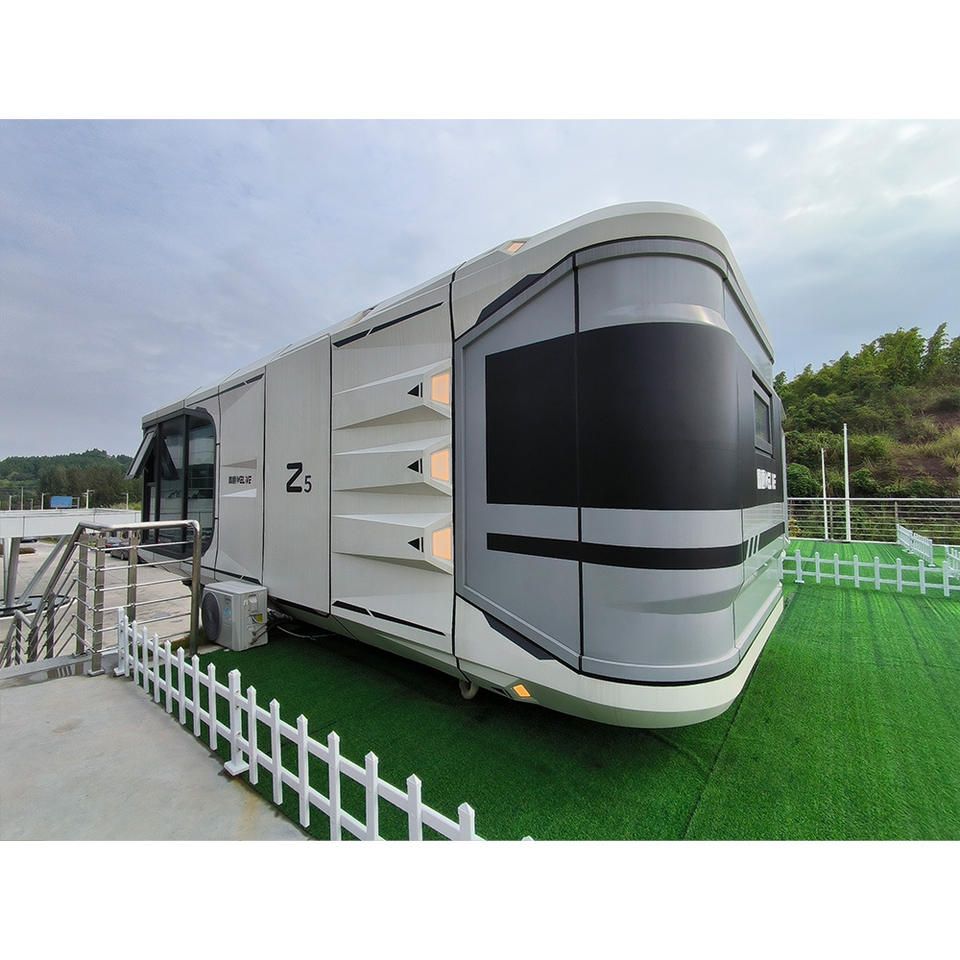
Customized Model: Customers in Zhejiang can customize mobile toilets according to their actual needs. For example, a factory with more male employees than female ones customized a toilet with one squat position for women and seven for men, and the construction was completed in an expedited four-day period. This customized model can precisely meet the usage needs of specific locations and specific groups of people, improve toilet usage efficiency, and avoid resource waste.
Imported and Built Model: The mobile landscape public toilet at the intersection of Qianchao Road and Sanxin Road on the Qiantang River embankment in Hangzhou, Zhejiang Province, is the first movable landscape public toilet in Hangzhou, jointly built by the Jianggan District Urban Management Bureau under the guidance of the Municipal Urban Management Bureau, imported from Xiamen, and in collaboration with Sijiqing Street. This public toilet is manufactured in its entirety at the factory and then transported to the site for hoisting and installation. It can be used once connected to pipelines, and its location can be adjusted later to save construction costs. It is equipped with urinals, squat toilets, sinks, and features such as music playback when the door is closed, automatic flushing when the door is opened, and deodorization and sterilization functions. There are signs around it, and during the pilot period, it is open from 6 a.m. to 10 p.m. Relevant departments plan to add more mobile public toilets near the Qiantang River embankment based on the pilot results. This model not only enhances the landscape and functionality of public toilets but also provides new ideas for urban public toilet construction.
Leasing Service Model: Zhejiang offers mobile toilet leasing services, providing a rapidly deployable and easily manageable sanitation solution for situations where the population density at specific times and locations is significantly higher than usual, resulting in temporary and high-intensity demand for basic sanitation facilities. This service system consists of sanitation units and support and maintenance subsystems, with application scenarios including large-scale cultural and sports events, municipal engineering or road construction periods, peak tourist seasons, and emergency public health event reserves. From an economic perspective, this model avoids the high capital expenditures for fixed facilities by event organizers or municipal units, converting them into operational costs that can be purchased on demand. Its social utility lies in meeting the basic physiological needs of the population, maintaining public sanitation order and public health in public places, and improving the feasibility and management level of large-scale events.



