
Zero-Carbon Mobile Toilet
A zero-carbon mobile toilet is a self-contained, continuously cycling, movable, containerized, and modular ecological toilet that is self-sufficient in power and water. Its core features are achieving 'zero-carbon' emissions and full closed-loop water recycling.
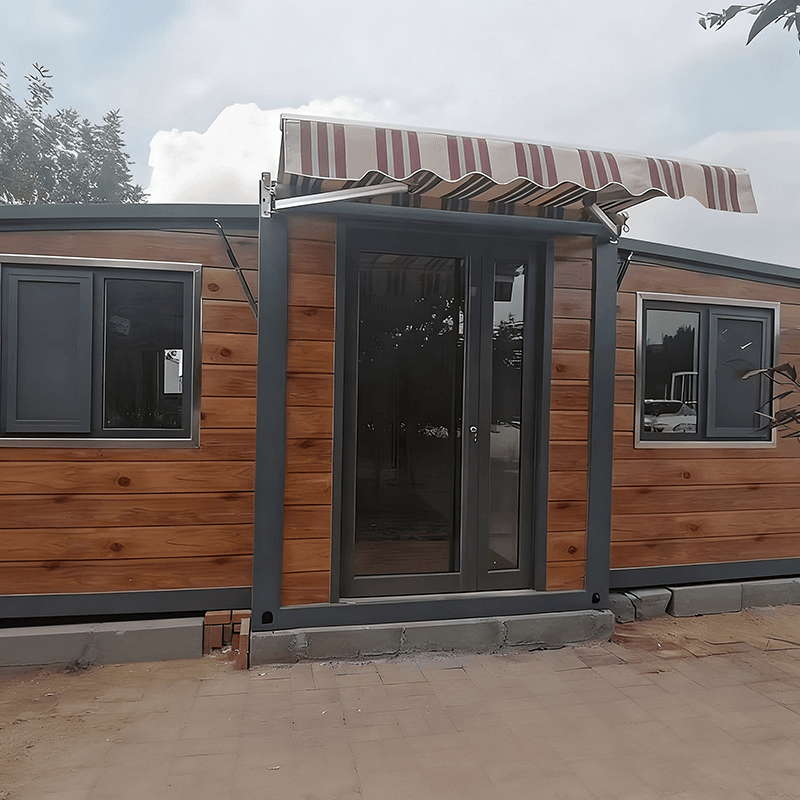
In terms of power and energy supply, zero-carbon mobile toilets employ clean energy-driven systems. Taking the 'zero-carbon toilet' developed by Yixing Aikesen Environmental Protection as an example, this product is not connected to external power sources or water pipes and relies entirely on solar energy. Solar panels convert light energy into electrical energy, providing power for the operation of equipment inside the toilet, such as electrocatalytic oxidation treatment devices and lighting systems. This approach avoids carbon emissions associated with traditional energy use from the energy source, achieving the 'zero-carbon' goal.
Regarding water resource recycling, zero-carbon mobile toilets have established an efficient water treatment and reuse system. Again, using the 'zero-carbon toilet' from Yixing Aikesen Environmental Protection as an example, fecal and urinary excreta undergo a multi-stage treatment process through pre-treatment reactors and electrode reactors. In the pre-treatment reactor, excreta are initially separated and settled; after entering the electrode reactor, electrocatalytic oxidation technology is used to deeply decompose and oxidize organic matter, with the final water produced meeting flushing standards. The entire system requires only an initial water replenishment, with no additional water needed subsequently, achieving 100% full closed-loop water recycling and significantly reducing water consumption and sewage discharge.
Additionally, products from Chongqing mobile environmental protection toilet manufacturers, while not explicitly mentioning the 'zero-carbon' concept, possess environmental protection features. Their technological approaches fall into two categories: one is microbial degradation technology, which decomposes excreta by adding specific bacterial strains, converting them into harmless carbon dioxide and water vapor, achieving 'zero emissions'; the other is vacuum adsorption and circulation systems, which use negative pressure to quickly collect excreta and, in conjunction with small-scale sewage treatment devices, purify the sewage into reusable reclaimed water for toilet flushing or green irrigation. Although these technologies do not directly focus on 'zero-carbon', they align with the concept of zero-carbon mobile toilets in terms of reducing environmental pollution and improving resource utilization.



