Back to blog
Article
Advantages and Disadvantages of Yuanda Prefabricated Houses
Admin September 18, 2026
The advantages of Yuanda prefabricated houses are mainly reflected in rapid construction, stable quality, controllable costs, and environmental protection and energy efficiency, while the disadvantages include low design flexibility, transportation and installation risks, and limited adaptability.
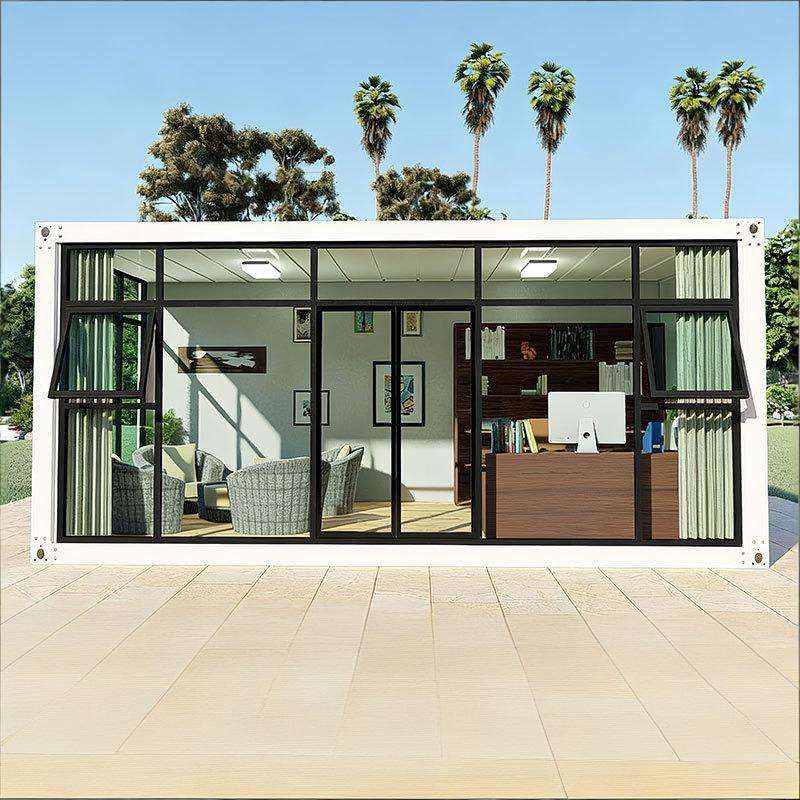
Advantages
- Rapid Construction: Yuanda prefabricated houses adopt prefabricated concrete component (PC) integration technology. Components are prefabricated in factories and then transported to the site for assembly, shortening the construction period by more than 50% compared to traditional buildings. For example, the construction time for a multi-story residential building can be compressed from about one year using traditional methods to 3-6 months, significantly improving construction efficiency.
- Stable Quality: The factory production environment is strict, and components are produced through automated equipment and standardized processes, ensuring high dimensional accuracy and strong quality stability. Compared to on-site construction, it reduces common quality issues such as uneven concrete pouring and wall cracking, enhancing the overall structural safety.
- Controllable Costs: Mass production optimizes material and labor costs, with construction costs typically ranging from 1,000 to 3,000 yuan per square meter, lower than those of traditional high-end residences. Additionally, the shortened construction period indirectly reduces hidden costs such as capital occupation and loan interest.
- Environmental Protection and Energy Efficiency: On-site construction dust, noise, and waste emissions are significantly reduced, meeting green building standards. Some products integrate energy-saving systems such as solar panels and ground-source heat pumps, further reducing long-term energy consumption and aligning with sustainable development needs.
Disadvantages
- Low Design Flexibility: The size and shape of prefabricated components need to be designed and fixed in advance, making later adjustments difficult and potentially limiting the diversity of building exteriors and interior spaces. For example, irregular structures or complex facade designs require additional custom components, increasing costs and time.
- Transportation and Installation Risks: During long-distance transportation or in complex terrain conditions, large components may be damaged due to bumps or collisions, affecting construction progress. The installation process requires high standards for lifting equipment and site flatness, and improper operation can easily lead to safety accidents.
- Limited Adaptability: In areas with complex geological conditions (such as soft soil foundations or earthquake zones) or extreme climates (such as cold or strong wind regions), the seismic and wind resistance of prefabricated houses may be inferior to that of traditional buildings, requiring additional reinforcement or design adjustments, increasing technical difficulty.
In conclusion, Yuanda prefabricated houses are suitable for standardized and large-scale projects but require careful evaluation in scenarios with personalized needs or special environmental conditions.
Related