
Yichun Hunan Mobile Toilet
The rental and sales business of mobile toilets in the Yichun area reflects an innovation in the allocation of urban infrastructure, with its core being to address the limitations of fixed public toilets through flexible deployment, and featuring environmental protection and human-centered design.
Business Model and Core Value
The rise of mobile toilets in Yichun stems from the city's need for flexible infrastructure. Traditional fixed public toilets have issues such as long construction periods, fixed locations, and difficulty in handling short-term surges in foot traffic. In contrast, mobile toilets can be rapidly deployed through rental or sales models. The rental model is suitable for short-term large-scale events, construction sites, or temporary gathering areas. The service provider is responsible for transportation, installation, maintenance, and retrieval, avoiding large one-time investments. The sales model targets long-term demand locations such as scenic spots and transportation hubs, supporting customized modifications to meet specific scenario requirements. The core value of this model lies in enhancing the responsiveness of public services through dynamic resource allocation adjustments.
Technical Configuration and Environmental Design
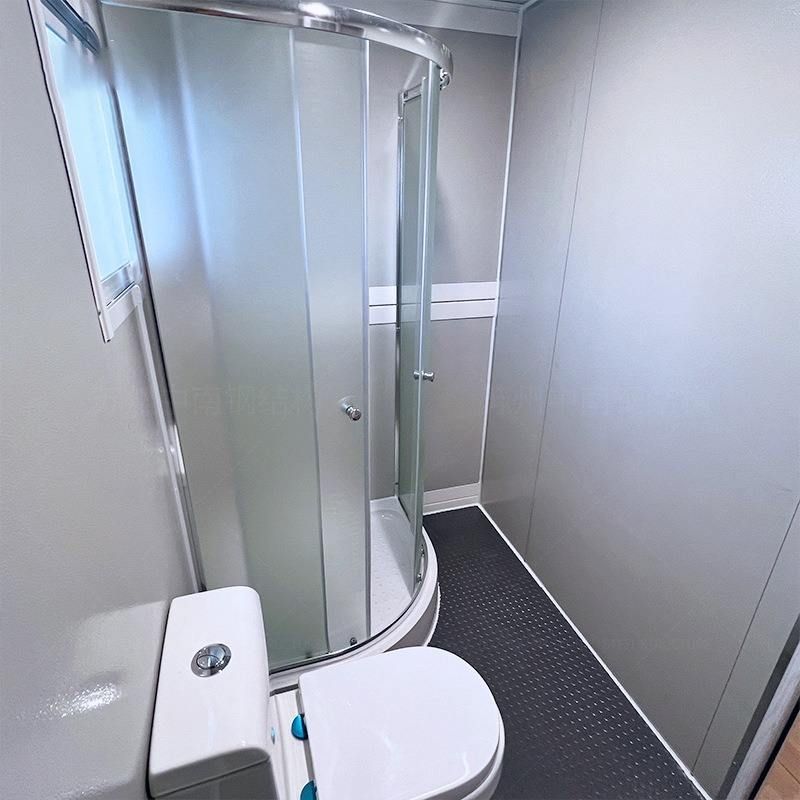
The technical configuration of mobile toilets focuses on functionality and environmental protection. The water storage system adopts a split-tank design, supporting independent water supply or connection to municipal water networks. Waste treatment relies on biodegradation or chemical decomposition technologies, with some high-end models equipped with independent treatment equipment for harmless discharge. The ventilation system reduces odors through efficient air circulation. In terms of material selection, the toilet body uses corrosion-resistant composite materials or metal panels, with interior decoration considering moisture resistance and ease of cleaning. Insulation design is particularly important in Yichun's cold climate. Additionally, human-centered details such as non-slip floors and barrier-free access have become standard features, reflecting care for special groups.
Environmental Value and Urban Application
The environmental value of mobile toilets is reflected in their full lifecycle management. Modular production reduces material waste, high-recyclability materials lower resource consumption, and biodegradation technologies reduce chemical pollution. In Yichun, their application scenarios have expanded from temporary events to the norm in urban construction. For example, during the peak winter tourism season, scenic spots quickly supplement capacity by renting mobile toilets; during construction projects, sites use the sales model to meet long-term needs. This flexibility not only alleviates the pressure on fixed public toilets but also enhances the精细化 (meticulous) level of urban management through scientific planning.
In conclusion, mobile toilets in Yichun have become an important supplement to urban infrastructure upgrades through technological optimization and model innovation. Their environmentally friendly, efficient, and human-centered characteristics provide new ideas for public space management.



