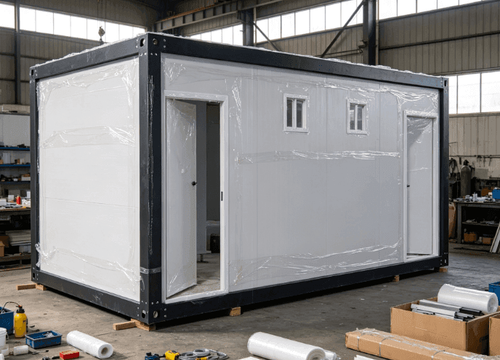
Yangquan Trailer-mounted Mobile Toilet
Yangquan trailer-mounted mobile toilets are an integrated temporary sanitation solution that modularly packages fixed sewage discharge functions and can be flexibly deployed. Their core features and leasing considerations are as follows:

1. Structural and Functional Design
Trailer-mounted mobile toilets integrate frame structures, water storage and flushing systems, waste collection devices, ventilation components, and internal facilities (such as toilets, sinks, and lighting equipment) through modular design. They rely on pre-loaded freshwater tanks for flushing water and sewage tanks for collecting waste, eliminating the need for connection to professional water supply and drainage networks, making them suitable for scenarios without fixed sewage discharge conditions. The equipment materials must be weather-resistant; for example, anti-freezing measures for water tanks are required in winter to cope with seasonal temperature variations. The trailer structure must consider terrain adaptability to ensure stability when parked on undulating surfaces.
2. Classification and Scenario Adaptation
Yangquan mobile toilets are classified into standard, luxury, and eco-friendly energy-saving types based on function:
- Standard Type: Meets basic sanitation needs and is suitable for short-term outdoor events (such as music festivals and sports events), emphasizing portability and rapid deployment capabilities.
- Luxury Type: Equipped with additional features such as independent compartments, air conditioning, and intelligent lighting, suitable for high-end events or long-term construction sites, requiring consideration of structural robustness and service cycle arrangements.
- Eco-friendly Energy-saving Type: Adopts water-saving flushing systems, solar power supply, and biodegradation technology to reduce resource consumption, meeting the needs of green construction or eco-tourism scenarios.
Additionally, lessees can customize internal configurations (such as toilet types and the presence or absence of handwashing facilities) and exterior logos according to actual needs to match foot traffic and usage habits.
3. Core Value of Leasing Services
Leasing services not only provide equipment placement but also include full-cycle maintenance support:
- Regular Cleaning and Consumable Replenishment: Ensures an adequate supply of toilet paper, hand soap, and other materials to avoid affecting the user experience due to shortages.
- Sewage Removal and Disposal: Professional teams remove and dispose of sewage tanks according to the frequency specified in the contract to prevent odor diffusion or environmental pollution.
- Emergency Response Standards: The contract must specify the response time after fault reporting (such as arrival within 2 hours) to ensure continuous equipment availability.
Service frequency and response standards are key implicit clauses in leasing contracts, and their importance is no less than that of the initial equipment functions. It is necessary to focus on evaluating the service provider's localized service capabilities (such as terrain adaptation plans and winter anti-freezing measures).
4. Leasing Decision-making Points
When selecting a service provider, comprehensive consideration should be given to the following aspects:
- Equipment Adaptability: Choose the corresponding model based on the usage scenario (short-term/long-term, foot traffic volume).
- Technical Parameter Matching: Confirm whether the equipment material weather resistance, water tank capacity, and removal cycle meet local climate and usage intensity requirements.
- Service Transparency: Clarify maintenance content, cost composition, and liability for breach of contract to avoid hidden charges.