
Portable Toilets in Yangquan Mountain Area
The configuration of portable toilets in the Yangquan mountain area requires comprehensive consideration of various factors such as geography, climate, soil, and materials to ensure their functionality, stability, and environmental friendliness.
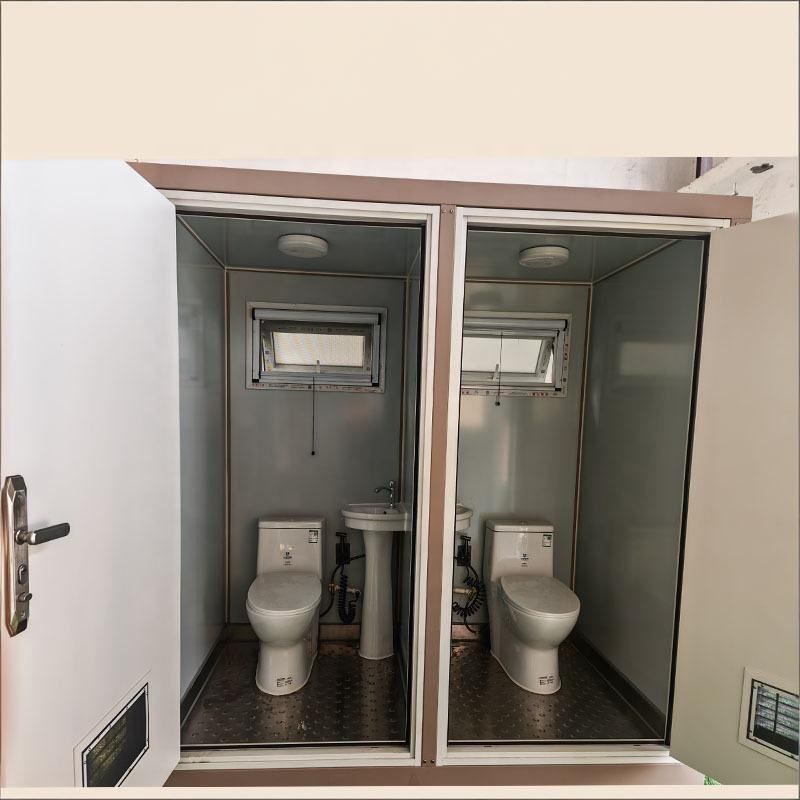
1. Demountable Design for Terrain Challenges
The terrain in the Yangquan mountain area is complex, and transportation routes may be restricted. Portable toilets need to adopt a demountable structure. This design allows the equipment to be transported in modules to the installation site and then assembled, reducing transportation difficulty and preventing equipment damage caused by rugged terrain. For example, the main frame, fecal storage tank, and sewage treatment unit can be disassembled independently and transported to designated locations in the mountains by small vehicles or manpower, enhancing construction flexibility.
2. Insulation Materials for Diurnal Temperature Variations
The region experiences significant diurnal temperature variations, making the insulation performance of portable toilets crucial. Insulation materials with good thermal stability, such as polyurethane foam or rock wool, should be selected to minimize the impact of temperature fluctuations on the internal environment. These materials can effectively maintain the toilet's internal temperature, preventing equipment aging or user discomfort caused by extreme temperature differences, while also reducing energy consumption, meeting the energy-saving needs of mountainous areas.
3. Site Selection Assessment for Soil and Groundwater Level
Before installation, a professional assessment of soil bearing capacity should be conducted to prevent settlement due to unstable foundations. For example, soft soil or backfill areas require reinforcement, such as laying concrete foundations or using pile foundation technology. Additionally, the placement of sewage treatment units should avoid areas with high groundwater levels, and reasonable drainage paths should be planned to prevent sewage leakage from contaminating soil or groundwater. Site selection should also keep away from drinking water source protection zones to ensure environmental compliance.
4. Corrosion-Resistant Materials for Long-Term Use
The harsh outdoor environment in mountainous areas requires that the body structure of portable toilets be made of corrosion-resistant and UV-resistant materials. Fiberglass-reinforced plastic (FRP) and polyethylene are common choices: FRP is strong, lightweight, and chemically resistant; polyethylene has excellent UV resistance and can withstand long-term sun exposure and aging. Both materials can extend the service life of the equipment, reduce maintenance costs, and are suitable for long-term deployment in mountainous areas.
5. Environmentally Friendly Design of Sewage Treatment Units
Given the ecological sensitivity of mountainous areas, sewage treatment units should adopt low-pollution, easy-to-maintain technologies. For example, biodegradation technology can reduce the use of chemical agents and avoid secondary pollution; sealed fecal storage tanks require regular cleaning and transportation to prevent odor diffusion. Additionally, an anti-seepage layer should be installed at the bottom of the equipment to further reduce leakage risks and protect the soil and water sources in mountainous areas.



