
Advantages of Mobile Toilets in Yangpu District
The advantages of mobile toilets in Yangpu District are mainly reflected in their flexibility and convenience, environmental protection and energy efficiency, economic efficiency and high-efficiency maintenance, aesthetic and user-friendly design, significant social benefits, and various other advantages.
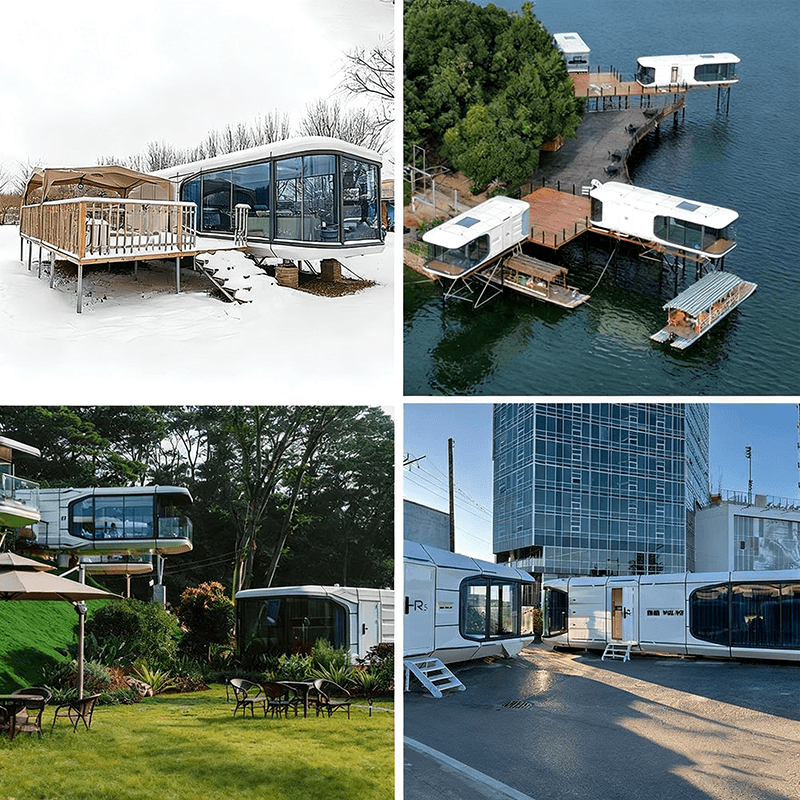
Flexibility and Convenience: Mobile toilets are highly movable, requiring no fixed foundation. They can be quickly installed, disassembled, and transported, making them suitable for temporary events such as construction sites and music festivals, or for situations where venue changes are needed. This avoids resource waste and allows for repeated lifting and reuse, enhancing resource utilization.
Environmental Protection and Energy Efficiency: They employ water-saving technologies such as high-pressure soda water flushing, foam sealing, and microbial degradation, saving 80%-90% of water resources compared to traditional toilets, with some models not even requiring flushing. Innovative waste treatment methods, like microbial degradation technology, can break down excrement into harmless substances, reducing pollution. The use of recyclable, corrosion-resistant lightweight materials, such as metal carved panels and fiberglass, reduces environmental burdens.
Economic Efficiency and High-Efficiency Maintenance: The initial investment is significantly lower than that of fixed toilets, saving on costs for civil engineering and pipeline installation. The rental model further reduces short-term usage costs. Most models support automated cleaning, have low failure rates, and require long cleaning intervals, such as degradation-type toilets which only need cleaning once every 1-2 years.
Aesthetic and User-Friendly Design: They offer a variety of colors and material options for their exteriors, allowing them to blend in with the surrounding environment. Equipped with ventilation systems, anti-slip floors, and barrier-free facilities, some high-end models integrate lighting and sinks, enhancing user comfort. The sturdy design of the compartments increases user security.
Social Benefits: They reduce the unsanitary conditions of traditional dry toilets, lowering the risk of disease transmission, especially in disaster areas and densely populated venues. They occupy a small area, alleviating the problem of limited urban land. Through modern design and management, they promote the development of public facilities towards greater hygiene and user-friendliness.
Other Advantages: The overall framework is made of steel materials, which are recyclable and environmentally friendly. The construction process simplifies approval procedures, has low costs, and short construction periods, taking about a month to complete and put into use, while the construction of civil engineering toilets generally takes 3-6 months. On-site construction is free from dust and other unsanitary conditions, and they are highly adaptable, suitable for areas where civil engineering toilets cannot reach or be constructed due to terrain and conditions limitations.



