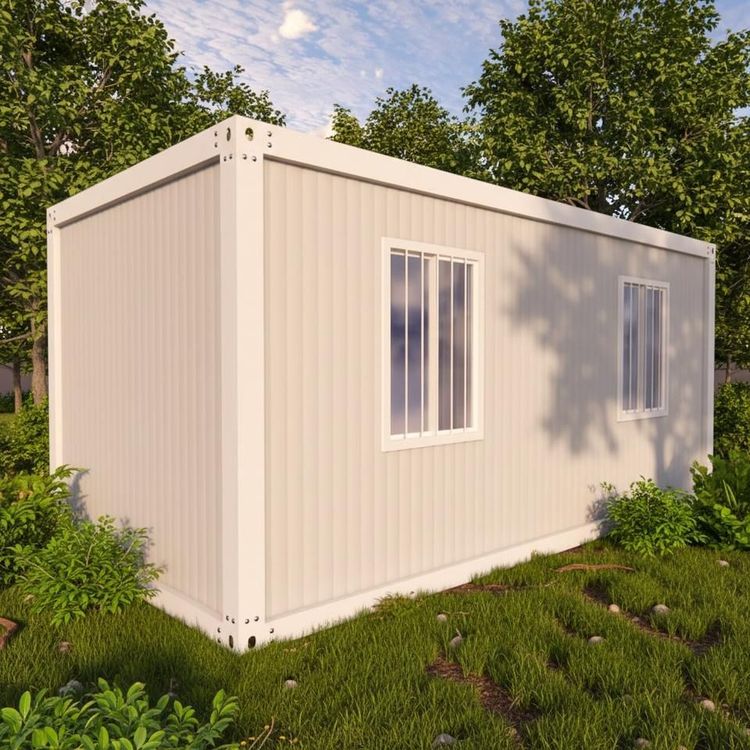
Xuzhou Outdoor Mobile Toilet Design
The design of outdoor mobile toilets in Xuzhou is centered around a modular concept, integrating functional requirements, scenario adaptation, and environmental protection technologies to form a solution that combines standardization and customization. The key design points can be elaborated from the following aspects:

1. Modular Core Components
Mobile toilets consist of three main units:
- Treatment Unit: This includes water storage and wastewater collection tanks, with some integrating biodegradation or chemical treatment technologies. For example, an environmentally friendly design employs microbial degradation technology, using a feces-urine separation device to direct waste into a fermentation chamber. Specific bacterial strains are utilized to decompose organic matter, achieving harmless treatment while reducing odors and water consumption.
- Frame Enclosure Unit: Supported by a metal frame (such as galvanized steel pipes), it is paired with composite panels (such as color-coated steel sheets, metal carved panels, or decay-resistant wood) to form the toilet body. These materials offer wind, rain, and corrosion resistance, ensuring structural stability and adaptability to different climatic conditions.
- Auxiliary Unit: This includes ventilation openings (natural or forced air exhaust), lighting equipment (optional solar power supply), handrails, shelves, etc., enhancing safety and convenience in use. For instance, nighttime event scenarios require enhanced lighting design, while scenic area toilets may incorporate barrier-free handrails to meet the needs of special populations.
2. Scenario-Based Adaptation Design
Equipment specifications and functional configurations are adjusted according to the application scenario:
- Long-term outdoor work sites (such as construction sites): Models with large capacity and sturdy structure are required, equipped with large-capacity water storage and wastewater collection tanks to reduce frequent maintenance. The frame adopts thickened metal materials to enhance impact resistance.
- Short-term event scenarios (such as celebrations, exhibitions): Emphasis is placed on lightweight and rapid deployment capabilities, utilizing foldable frames or modular拼接 (modular assembly) designs to shorten installation time. Auxiliary units are simplified, retaining only basic ventilation and lighting functions.
- Scenic areas or parks: Focus is on aesthetic integration and environmental performance. Materials such as decay-resistant wood or stone-like composite panels can be chosen to harmonize with the natural landscape. The treatment unit prioritizes microbial degradation technology to minimize the environmental impact of sewage discharge.
3. Environmental Protection and Resource Optimization Technologies
Some designs reduce reliance on infrastructure through technological innovation:
- Microbial degradation technology: Enables on-site treatment of feces and urine without the need for connection to sewer systems, suitable for remote areas without municipal sewer networks.
- Solar integration system: Solar panels are configured in the auxiliary unit to supply power to lighting, ventilation, and other equipment, reducing energy consumption.
- Water-saving design: Vacuum suction or foam sealing technologies are adopted to reduce flushing water volume and extend the service life of water storage tanks.
4. Customized Extended Functions
Additional modules are integrated according to user needs:
- Small water storage tank: An independent water storage module is added in water-scarce areas to ensure water supply.
- Smart monitoring system: Sensors are used to monitor parameters such as water level and bacterial strain activity in real-time, enabling remote maintenance reminders.
- Emergency power outlet: Provides backup power support for nighttime or emergency situations.
The design of outdoor mobile toilets in Xuzhou balances functionality, economy, and ecology through modular assembly, scenario adaptation, and integration of environmental protection technologies, providing efficient and sustainable sanitation solutions for various scenarios.