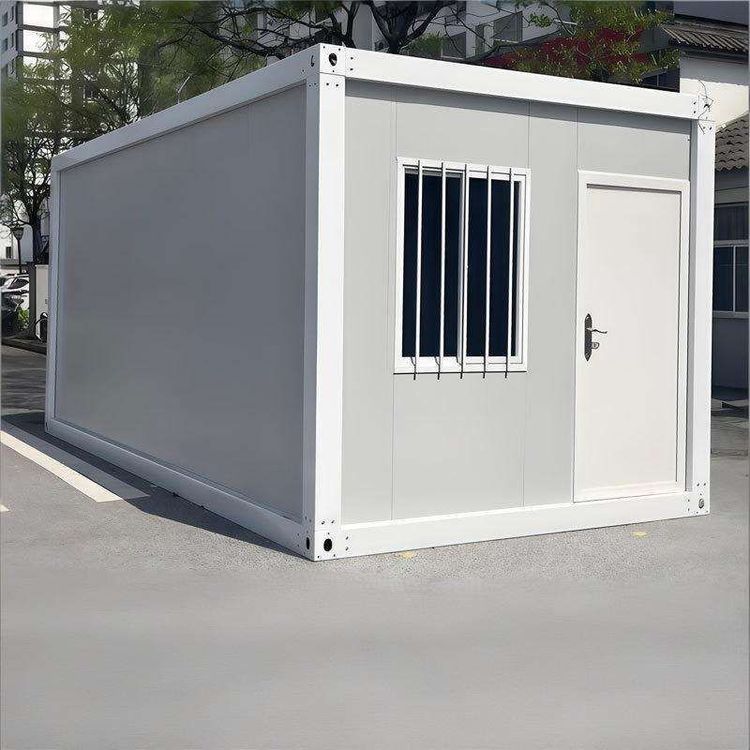
Xushui Construction Site Portable Toilet
For the rental of portable toilets at construction sites in Xushui, reference can be made to general standards and the service model in the Xuzhou area for selection. Although specific information for the Xushui area has not been found yet, considering industry general requirements and service cases in the Xuzhou area, the following aspects can be comprehensively considered:

I. Equipment Type and Specification Matching
The structural form and parameters should be selected according to the actual needs of the construction site. For example, box-type portable toilets are suitable for areas with open space and stable pedestrian traffic, while trailer-mounted types are convenient for flexible movement. The user capacity should be estimated based on the number of people during peak hours at the construction site to avoid queuing. The internal space dimensions should meet the comfort requirements of workers, with a general single toilet cubicle being no less than 1.2m × 1.2m. Ventilation and lighting should be equipped with exhaust fans and LED lights to ensure air circulation and safety during nighttime use. For material durability, shock-resistant and corrosion-resistant materials such as stainless steel or high-density polyethylene should be selected to adapt to the complex environment of the construction site.
II. Completeness of Supporting Services
The rental service should cover the entire process of transportation and placement, cleaning and maintenance, and emergency response. For example, the service provider should be responsible for transporting the equipment to the designated location at the construction site and completing installation and commissioning. The cleaning frequency should be clearly defined (e.g., twice a day), and professional cleaning personnel and disinfectants should be provided. For emergency response, the time limit for arriving at the site after a fault report (e.g., within 2 hours) should be agreed upon, and backup equipment should be provided to prevent service interruptions.
III. Cost Transparency
The cost composition should clearly include equipment rental fees, transportation fees, cleaning fees, and sewage treatment fees, among others, to avoid hidden charges. For example, in the service model in the Xuzhou area, flexible combinations such as daily, monthly, and annual rentals can reduce long-term usage costs, but it is necessary to confirm whether consumables (e.g., packing bags, disinfectants) and maintenance fees are included.
IV. Environmental Protection and Hygiene Standards
Attention should be paid to the design of the sewage treatment system. For example, waterless packing toilets require regular collection and disposal of feces, while foam-sealing toilets require replenishment of foaming agents. The odor control system should adopt biodegradation or activated carbon filtration technology to reduce odors. For disinfection and cleaning, environmentally friendly agents should be used to avoid pollution to the soil and water sources.
V. Long-term Usage Stability
Priority should be given to service providers who have been operating locally for more than 3 years, have a short equipment update cycle (e.g., every 2 years), and have a large maintenance team to ensure a low equipment failure rate and timely maintenance. For example, some service providers in the Xuzhou area offer customized high-end portable toilets to meet the long-term usage needs of construction sites.
VI. Detailed Contract Terms
The contract should clearly define the equipment fault handling time limit (e.g., repair within 48 hours), service interruption remedy plan (e.g., providing a backup toilet free of charge), and renewal adjustment mechanism (e.g., a cap on rental increases) to avoid later disputes. In addition, it is necessary to confirm whether special requirements for the construction site, such as waterproof and impact-resistant performance, are included in the contract terms.