
Installation of Mobile Toilets in Xinjiang Scenic Areas
The installation of mobile toilets in Xinjiang scenic areas requires comprehensive consideration of geological conditions, climatic characteristics, and ecological protection requirements, achieving efficient deployment through modular design and standardized construction.
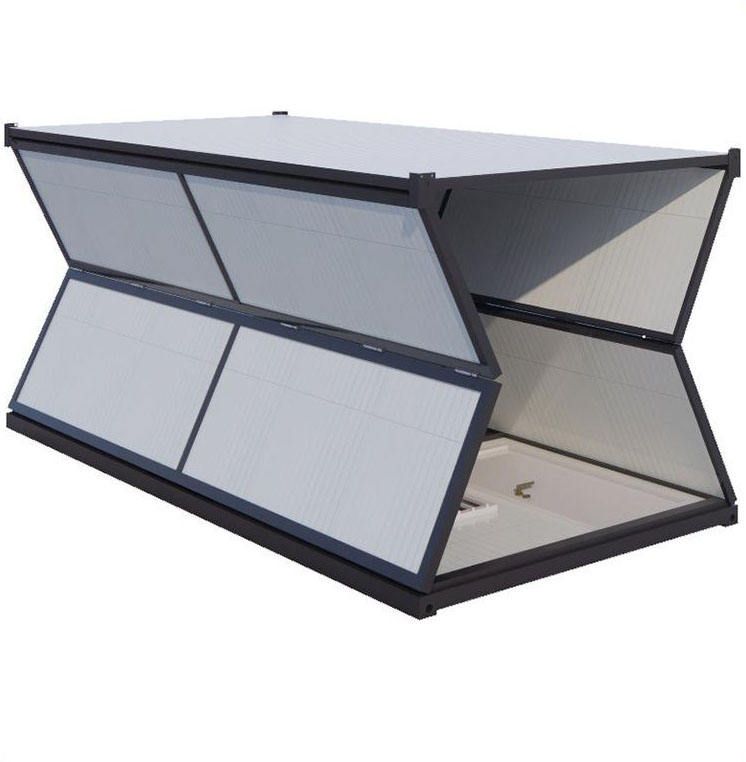
Pre-installation Preparation: Foundation Treatment is Key
Xinjiang has complex geological conditions, necessitating tailored foundation treatments. In sandy soil areas, a combination of concrete bases and ground anchors should be used to prevent structural displacement due to wind, sand, or tourist activities. In permafrost zones, foundations should be deepened below the permafrost limit to avoid instability caused by freeze-thaw cycles. In saline-alkali lands, the foundation platform should be elevated, and non-metallic isolation pads or aluminum-magnesium-zinc-coated steel plates should be used to prevent salt corrosion. For example, some scenic areas in Yili have adopted concrete bases with pre-embedded ground anchors in sandy soil, effectively enhancing the toilet's wind resistance.
Installation Process: Emphasis on Modular and Adaptive Design
- Structural Assembly: Wall panels utilize tongue-and-groove connections and concealed fastening techniques, achieving waterproofing through internal slots and sealing strips while reducing internal and external heat transfer through staggered multi-layer materials forming a thermal break. Roof panels are designed with a slight curve to enhance load-bearing capacity and direct rain and snow flow; areas with heavy rain and snow require increased slopes and snow guards.
- Piping System: Sewage, ventilation, and water supply pipes adopt a split design, prefabricated into independent modules in the factory and connected on-site using high-density polyethylene interfaces to prevent leaks caused by thermal expansion and contraction. For example, the piping system of mobile toilets in Kurdingning scenic area, through modular installation, shortened the construction period and reduced maintenance difficulty.
- Ventilation System: Leveraging Xinjiang's wind resources, adjustable louvers are installed high on wall panels to achieve natural ventilation through negative pressure principles. Exhaust ducts are equipped with sand-proof filters and reserved cleaning and maintenance access to ensure long-term stable operation.
- Internal Facilities: The flushing system utilizes pressure differential principles to reduce water consumption; sinks are equipped with sensor-based flow limiters, controlling single-use water volume to within 0.5 liters. Waste treatment combines biological degradation with physical separation, with solid waste accelerated by microbial agents and liquid waste filtered through multiple stages for non-potable use.
Installation Principle: Ecological Protection First
In ecologically fragile areas, construction machinery should be restricted to specific routes to avoid crushing vegetation; on-site concrete mixing should be avoided, with all prefabricated components directly assembled to minimize environmental interference. For example, during the installation of mobile toilets in the Xiata scenic area, by delineating construction zones and using prefabricated components, "zero vegetation damage" was achieved.
Policy Support and Practical Applications
This year, Xinjiang has allocated 17.1 million yuan in special funds to plan the construction of 171 new toilets, the renovation of 510 existing ones, and the addition of 280 mobile toilets. The Ili Kazakh Autonomous Prefecture has stockpiled mobile toilets along routes such as the Duku Highway and Yizhao Highway, while Kuqa City has deployed 100 mobile public toilets in batches, effectively addressing the shortage of toilets during peak tourist seasons.



