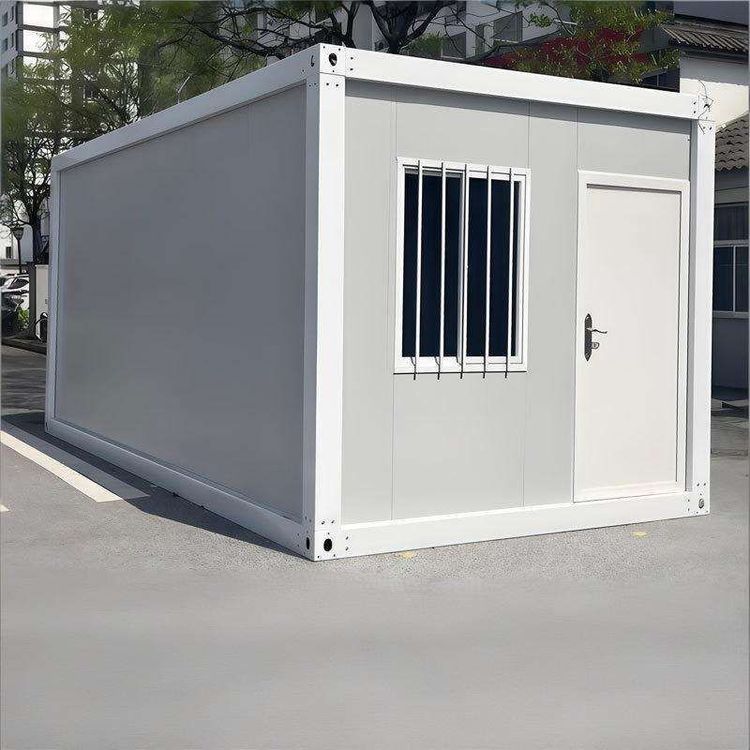
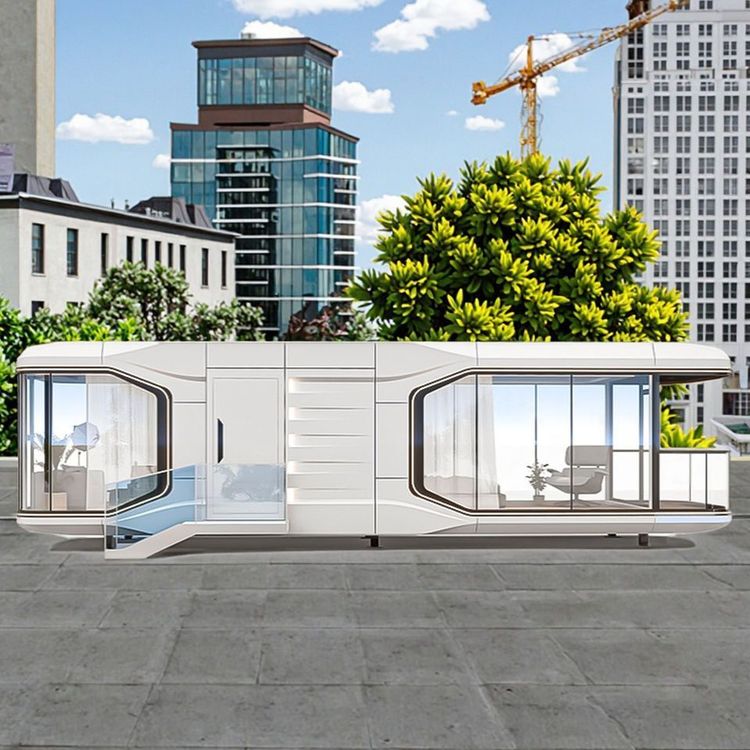
Xinjiang Prefabricated Assembled Houses
Xinjiang prefabricated assembled houses are temporary or semi-permanent buildings that adopt modular design, factory prefabrication, and on-site rapid assembly, featuring high efficiency, flexibility, and durability.

1. Significant Advantages in Transportation and Installation
Based on standardized modules, Xinjiang prefabricated assembled houses offer convenient transportation and much faster installation compared to traditional buildings. For example, constructing a standard 20-foot container-sized portable house takes over 30 days with traditional methods, while the assembled product can be completed in just 3-5 days, reducing labor costs by about 60%. Its components are connected with bolts, eliminating the need for welding. For a 100-square-meter house, four workers can complete the main installation in one day, and it can be disassembled and reassembled 6-8 times without affecting structural strength, making it suitable for frequent relocation or temporary use scenarios.
2. Flexible Sizes to Meet Diverse Needs
These buildings support multi-dimensional size adjustments in length, width, and height, precisely matching customer requirements. From small construction site offices (e.g., 20 square meters) to large temporary dormitory areas (e.g., 200 square meters), they can be realized through module combinations. For instance, for a mining project in Kazakhstan, local manufacturers provided a non-standard size solution with a length of 12 meters, a width of 6 meters, and a floor height of 2.8 meters, demonstrating their customization capabilities.
3. Resistant to Extreme Climates with Long Service Life
Xinjiang prefabricated assembled houses generally adopt a galvanized steel frame + double-layer insulated sandwich panel structure, capable of withstanding -30°C cold and force-10 strong winds. They have been field-tested in the Siberian region of Russia and the desert areas of the Middle East, with a service life of over 10 years. This design enables them to maintain structural stability and living comfort under extreme climate conditions.
4. Low Transportation Costs and High Logistics Efficiency
Xinjiang has multiple land ports and China-Europe Railway Express hubs. It takes only 5 days to transport goods from Urumqi to Almaty, and the logistics cost is about 35% lower than that of coastal cities. This advantage reduces cross-border transportation costs and enhances the market competitiveness of the products in countries along the Belt and Road.
5. Compliant with International Standards and Environmentally Friendly
These buildings use fire-resistant rock wool or glass wool as filling materials, achieving a Class A fire rating and passing the ISO 9001 quality management system and CE certification. Their materials are non-toxic, odorless, and have a recyclability rate of over 90%, fully meeting the green building requirements of European, American, and Belt and Road countries, making them suitable for projects with high environmental protection requirements.
6. Variable Prices with High Cost-Effectiveness
The prices of Xinjiang prefabricated assembled houses vary by region and type. For example, the price of assembled concrete houses in Hotan is 1100 yuan per square meter, while the prices of EPS line-equipped concrete prefabricated houses in Karamay and galvanized steel sandwich panel concrete prefabricated houses in Urumqi are both 1000 yuan per square meter. Compared to traditional buildings, they have lower overall costs and shorter construction periods, offering high cost-effectiveness.