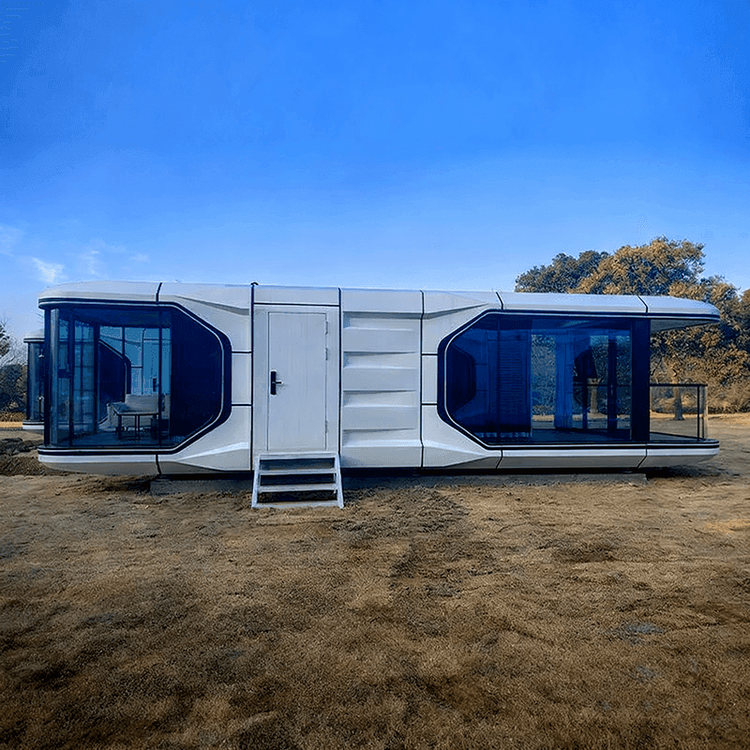
Xining Prefabricated Housing
Xining prefabricated housing is a green building system developed for plateau environments, featuring strong technical adaptability and significant ecological benefits. It has become an important solution for infrastructure construction in cold regions.
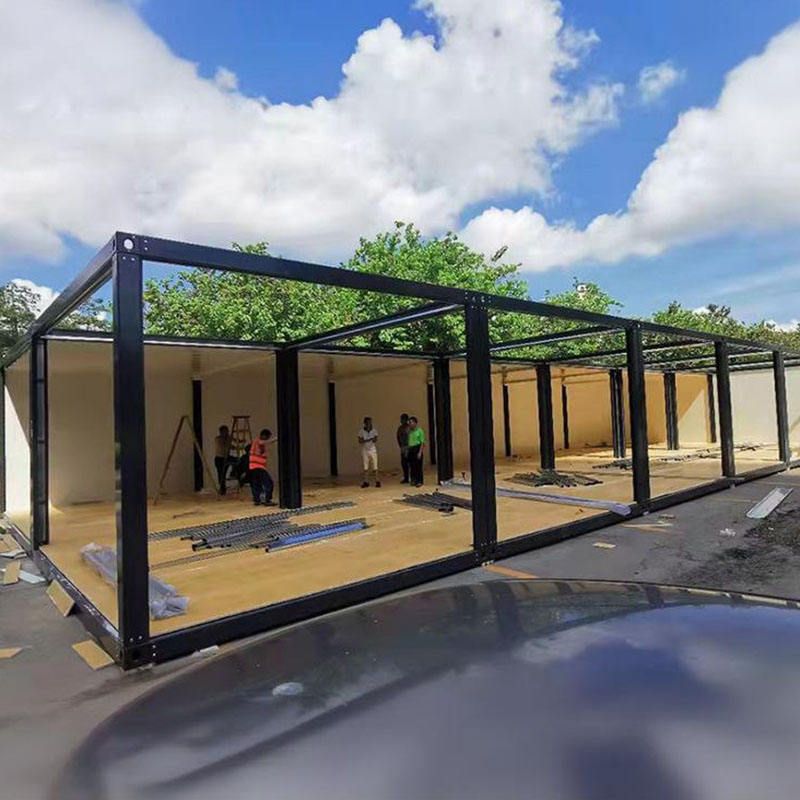
I. Technical Characteristics and Material Innovation
Xining prefabricated housing is designed to address the challenges of high altitudes, intense sunlight, and large temperature variations between day and night. It employs thickened polyurethane insulation layers and UV-resistant coatings, combined with high-strength cold-formed thin-walled steel, ensuring that the buildings remain crack-free and deformation-free at temperatures as low as -20°C. The modular design is produced using high-precision molds, with component tolerances controlled to the millimeter level. It integrates structural, insulation, and utility systems, reducing construction time by over 60% compared to traditional buildings. Some products use fluorocarbon coatings and low-emissivity glass to enhance weather resistance, and utilize locally sourced sand and gravel to produce lightweight concrete sandwich panels, reducing transportation costs while improving material adaptability.
II. Performance Standards and Ecological Adaptation
The houses incorporate high-density insulation layers (such as rock wool or polyurethane), combined with passive solar utilization technology, significantly reducing winter heating energy consumption. Airtight design and flexible seismic structures meet seismic fortification intensity requirements of 8 degrees, with a fire resistance rating of Class A and an insulation coefficient below 0.3 W/(m·K). For example, ecological protection projects around Qinghai Lake employ modular houses with built-in solar heating systems, addressing residential challenges in areas far from urban utility networks. Factory products pass cold-resistance and wind-pressure resistance tests, adapting to extreme plateau climates.
III. Application Scenarios and Industrial Layout
Prefabricated housing is widely used in herdsmen settlements, plateau outposts, ecological monitoring stations, tourist camps, and industrial support housing. Qinghai Hengxin Integrated Construction Co., Ltd., as the first professional enterprise on the Qinghai-Tibet Plateau, achieves a product disassembly and reuse rate of over 5 times, with products exported to high-altitude regions such as Tibet and Gansu. Local factories have introduced German fully automatic flexible production lines, with an annual capacity of 100,000 square meters, and employ BIM full-process management to optimize panel formulas for freeze-thaw and UV resistance. In 2024, Qinghai launched a pilot program for subsidies on agricultural machinery purchases for prefabricated livestock sheds, promoting the transformation of traditional livestock farming with modular sheds.
IV. Policy Support and Ecological Value
Supported by national ecological protection policies, the Xining prefabricated housing industry has become a carrier for green building practices in cold regions. Its "unified planning and construction" model shortens construction periods and reduces ecological disturbances, as seen in the relocation and resettlement project in Daotanghe Town, Gonghe County, Hainan Tibetan Autonomous Prefecture. The government explicitly requires the priority use of prefabricated buildings in affordable housing projects, seismic retrofitting, and construction around lakes, driving the industry from "pilot" to "systematic" development.