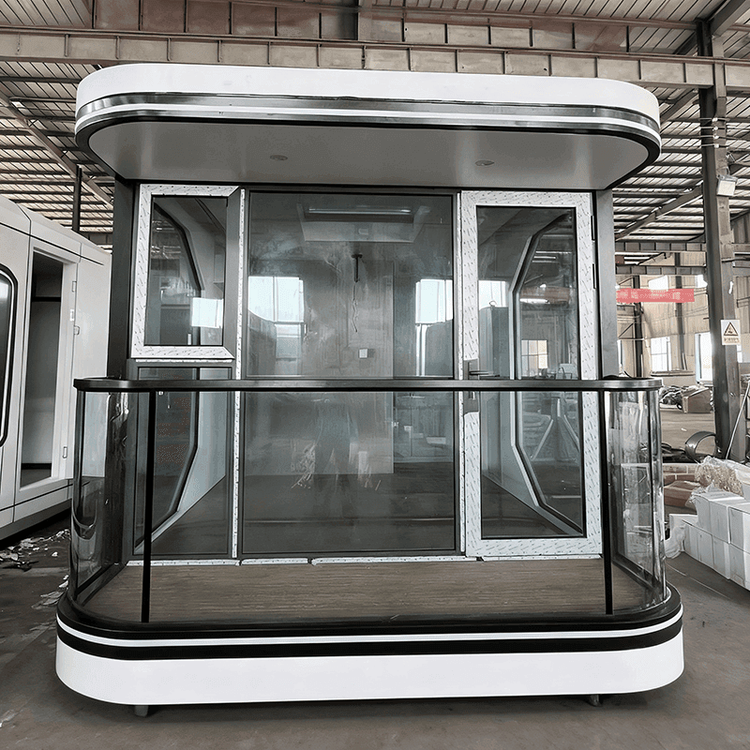
Xiangtan Cement Prefabricated House Construction
The construction of cement prefabricated houses in Xiangtan mainly adopts the prefabricated building method, with core processes including industrial production, modular assembly, and the application of green technologies. Specifically, it can be divided into three key stages: component production, on-site assembly, and process details.
1. Industrial Production: Standardized Component Manufacturing
The production of components for cement prefabricated houses is a fundamental part of the construction process, typically completed in factories. Taking the heavy steel villa project by Hunan Guofa Residential Construction Co., Ltd. in Xiangtan as an example, its core steps include:
- Component Processing: Standardized processing of materials such as steel bars and concrete is carried out using industrial machinery to produce building components like floor slabs, wall panels, and stairs. For instance, steel bars are cut and welded to form frameworks, which are then combined with concrete to create prefabricated wall panels; stairs are molded to ensure dimensional accuracy.
- Quality Inspection: During component production, strict inspections of indicators such as strength and flatness are required. For example, pressure tests are conducted to verify the compressive strength of concrete, preventing potential safety hazards during later assembly.
- Transportation Protection: Prefabricated components are transported to the construction site using specialized vehicles. During transportation, fixed measures are taken to prevent deformation or damage to the components, such as using wooden blocks to separate wall panels and steel cables to secure stairs.
2. Modular Assembly: Rapid On-Site Installation
After the components are transported to the site, they need to be assembled into a whole using reliable connection methods. The core steps include:
- Foundation Construction: First, foundation pouring is completed to ensure that the ground flatness meets the assembly requirements. For example, in heavy steel villas, anchor bolts are pre-embedded to provide fixed points for the subsequent installation of steel components.
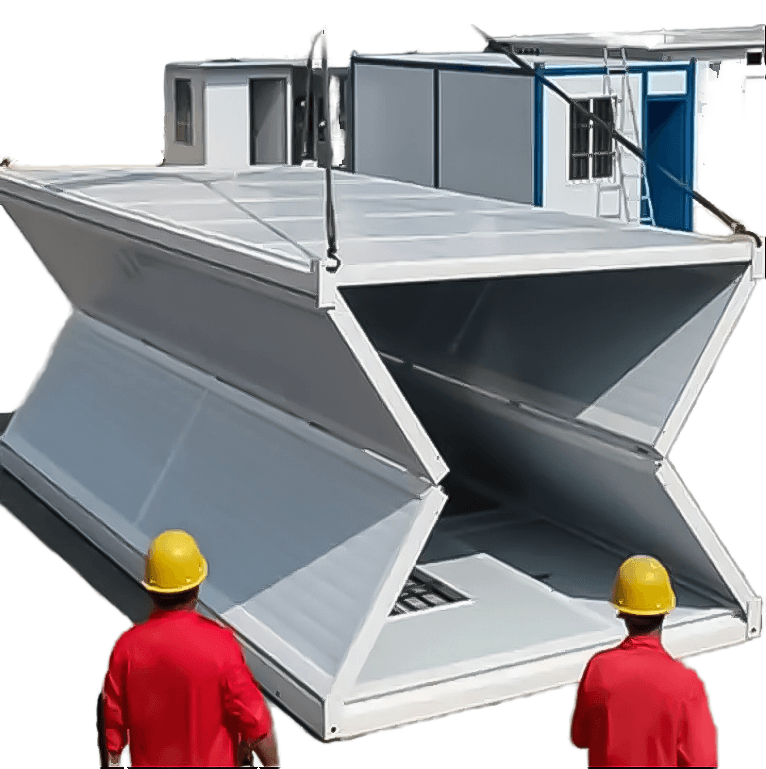
- Component Hoisting: Cranes are used to lift the prefabricated components to their designated positions. For example, the bottom-layer wall panels are installed first, followed by the layer-by-layer stacking of floor slabs, and finally the installation of the roof structure. During hoisting, the inclination angle of the components must be controlled to avoid collisions.
- Connection and Fixing: Reliable connections between components are achieved through methods such as bolting, welding, or grouting. For example, the steel beams and columns of heavy steel villas are connected using high-strength bolts, while wall panels and floor slabs are anchored through grouting of pre-embedded steel bars to ensure overall stability.
3. Process Details: Specialized Operations for Prefabricated Cement Houses
In the new rural villa process in Xiangtan, the production process of prefabricated cement houses places greater emphasis on industrial machinery operations. Key steps include:
- Steel Bar Processing: Steel bars are cut, bent, and welded to form frameworks. For example, the steel bars for wall panels are welded into a mesh shape to enhance the adhesion of the concrete.
- Mold Assembly: A release agent is sprayed on the inner walls of the molds to prevent concrete adhesion. Then, the steel bar frameworks are placed into the molds, and pre-embedded parts such as electrical conduits and wire boxes are fixed.
- Concrete Pouring: Vibrating tables are used to vibrate the concrete to expel air bubbles and improve compactness. After pouring, the concrete needs to be covered and moisturized for curing to prevent cracking.
Through the above process, the construction of cement prefabricated houses in Xiangtan has achieved an efficient model of "factory production + on-site assembly", shortening the construction period by more than 30% compared to traditional construction methods while reducing construction waste emissions, in line with the development trend of green buildings.