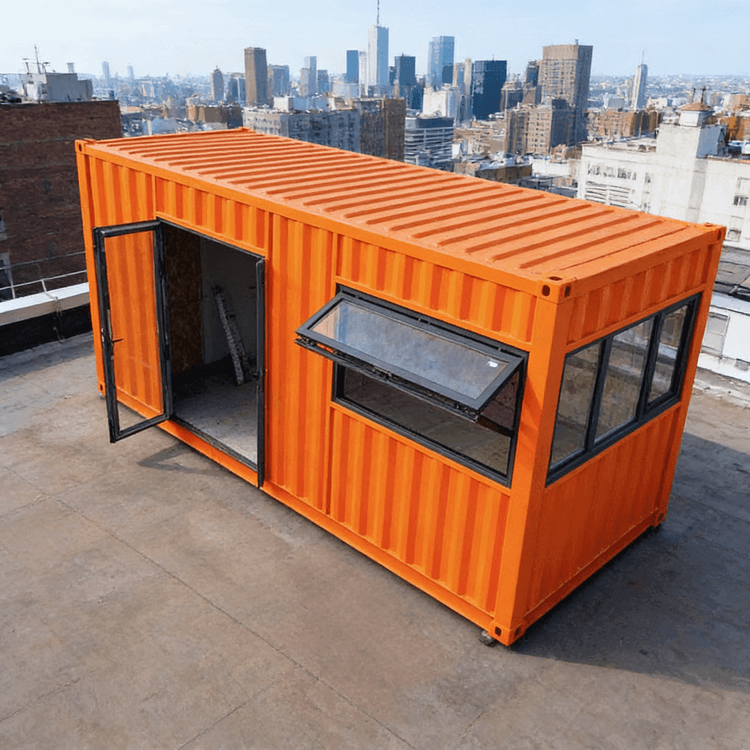
Winter Mobile Toilet
Winter mobile toilets can be used, but targeted insulation and maintenance measures are required to ensure normal operation and extend equipment lifespan.

Insulation Measures
The key issue for mobile toilets in winter is heat loss. Door and window sealing is crucial; air leaks should be sealed with draft stoppers or thick curtains to reduce cold air infiltration. A low-power heater (recommended power below 500W) can be installed inside, fixed away from flammable materials, with daily circuit safety checks. In extremely cold northern regions (e.g., below -20℃), explosion-proof electric heaters are recommended, with surface temperatures strictly controlled below 60℃ to prevent burns or fire risks. Professional winter-model mobile toilets with double-layer insulated walls can effectively reduce heat loss and improve insulation efficiency.
Pipe Anti-Freezing
Pipe freezing is a common winter issue, requiring multi-layer protection to reduce risks. Pipe insulation should involve wrapping with 3cm-thick rubber-plastic insulation cotton, covered with waterproof tape to prevent moisture. In northern China, heating cables are recommended, automatically activating when temperatures drop below -5℃. If pipes are already frozen, do not pour boiling water directly, as this can cause pipe bursts. Instead, use warm water below 40℃ for gradual flushing or specialized pipe thawing agents (e.g., calcium chloride solution) to melt ice layers.
Cleaning Management
Cleaning in low temperatures must balance anti-freezing and hygiene. Cleaning water temperature should be maintained at 20-30℃, with anti-freezing cleaning agents added to enhance stain removal. After cleaning, immediately use an absorbent mop to dry floors, preventing water accumulation and freezing; if necessary, spread eco-friendly de-icing agents (e.g., magnesium chloride-based). Cleaning frequency should be increased to at least twice daily, focusing on toilets, drains, and other areas prone to residue buildup to prevent odors.
Ventilation and Humidity Control
Winter ventilation must balance air circulation and heat retention. It is recommended to open windows during warmer periods (10:00-14:00 daily) for no more than 15 minutes at a time to avoid rapid indoor temperature drops. Indoor humidity should be maintained at 40%-60%, adjustable by hanging damp towels or using small humidifiers to prevent dry air from causing static electricity or equipment aging.
Additional Maintenance Recommendations
Metal components (e.g., locks, hinges) should be lubricated weekly with anti-freezing lubricant (silicone-based preferred) to prevent freezing-induced jamming or breakage. In extreme weather (e.g., below -20℃), it is advisable to suspend use and empty water tanks to prevent freezing damage. Professional winter-model mobile toilets with electric trace-heated piping systems and anti-slip floors further reduce maintenance complexity.