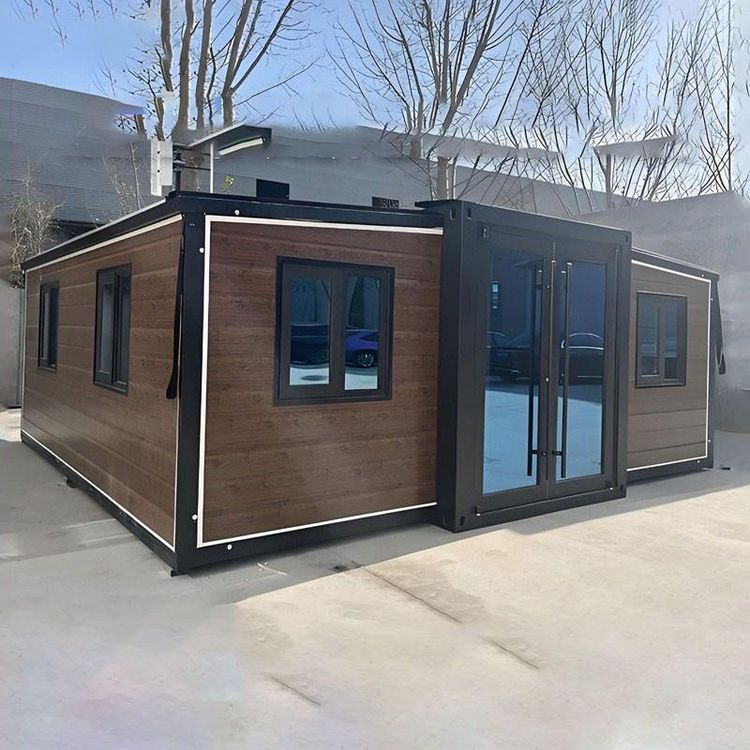
Why Container House Prefabricated Matter: A Quick Guide
The importance of prefabricated container houses lies primarily in their flexibility, durability, rapid deployment capabilities, cost-effectiveness, portability, and eco-friendly features, enabling them to meet diverse scenario demands and drive sustainable construction development.

1. Flexibility and Customized Design
Prefabricated container houses adopt a modular structure, supporting fully customized layouts, dimensions, and interior finishes. By combining multiple units, different functional spaces such as residences, dormitories, hotels, or commercial buildings can be quickly constructed. This flexibility allows them to adapt to scenarios like urban renewal, temporary resettlement, or post-disaster reconstruction, meeting personalized needs.
2. Durability and Resistance to Harsh Weather
The main frame is made of galvanized steel, paired with waterproof sandwich panels and optional weathering steel (Corten Steel), providing corrosion resistance, moisture resistance, and waterproofing properties. The structural design is engineering-optimized to withstand extreme weather conditions such as strong winds, heavy rain, and earthquakes, ensuring long-term structural stability and extending service life.
3. Rapid Deployment and Efficient Installation
Key components (such as roofs and floors) are pre-assembled in the factory, requiring only simple assembly on-site, reducing installation time by more than 50% compared to traditional buildings. This "plug-and-play" model significantly shortens the construction cycle, making it particularly suitable for scenarios with high time requirements, such as emergency rescue, temporary offices, or event venues.
4. Significant Cost-Effectiveness
Standardized factory production ensures consistent quality, reducing material waste and labor costs; at the same time, economies of scale lower unit prices. The diverse product range (such as expandable and luxury models) can match different budget requirements. In the long run, their low maintenance costs and high durability further enhance economic efficiency.
5. Portability and Transportation Convenience
Sliding folding and detachable designs enable the houses to be easily transported using standard transportation equipment (such as trucks and container ships). This feature supports cross-regional reuse, such as relocating temporary exhibition halls to new venues or providing mobile medical stations in remote areas, improving resource utilization.
6. Environmental Protection and Sustainability
The leak-proof, moisture-resistant, and waterproof designs reduce resource consumption, with some materials being recyclable. The modular production model reduces on-site construction pollution, complying with green building standards. Additionally, their detachable nature avoids the construction waste problem associated with traditional building demolition, promoting the development of a circular economy.
Through technological innovation and functional optimization, prefabricated container houses provide efficient, flexible, and sustainable solutions for modern construction, becoming important tools for addressing urbanization, climate change, and resource constraints.