
Where Is It Legal for Container Houses
Container houses may be legal in the following scenarios, and corresponding procedures need to be completed according to their usage and local policies:
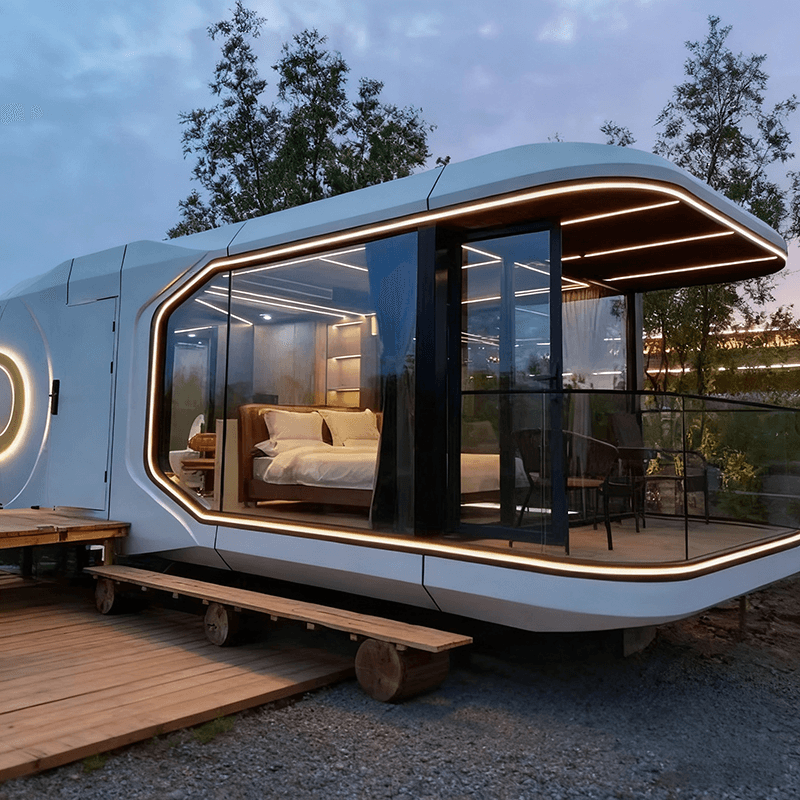
1. Temporary Buildings in Compliance with Regulations
In scenarios such as construction sites, if container houses are used as temporary buildings, two core conditions must be met: obtaining temporary land use permits and completing relevant approval procedures. For example, a 2024 enforcement case by a local natural resources bureau clarified that a container house on unhardened ground without water and electricity supply, used solely for storing agricultural supplies, may not be considered an illegal structure as it does not alter the land's nature or result in permanent occupation. For such uses, it is essential to ensure that the house does not damage the original land condition and that its usage period complies with temporary building regulations.
2. Permanent Buildings with Legal Procedures
If container houses are intended for permanent residential or commercial use, they must undergo formal construction procedures and obtain necessary permits, including construction land planning permits and construction project planning permits. For instance, a company in Hangzhou legally built staff dormitories using containers after obtaining approval for prefabricated construction. Such uses must meet building structural safety standards and comply with local urban and rural planning requirements; otherwise, they may be deemed illegal structures.
3. Specific Uses in Specific Regions
- Temporary Storage on Farmland/Roofs: Placing container houses on the edge of one's own farmland or on rooftops for temporary storage of agricultural supplies, without hardening the ground or connecting to water and electricity, and using standard 20-foot containers (6 meters long), may be allowed upon application to the village committee and in accordance with village regulations. Such uses must avoid impacting the land and surrounding environment.
- Commercial Uses (Homestays, Shops): Using container houses on commercial or cultural tourism land requires procedures such as land use approval, planning filing, and fire safety permits, and their structural safety must comply with the Technical Specification for Modular Combined Container Houses (CECS 334:2013). For example, coastal cities like Shanghai and Shenzhen have introduced special policies to encourage the use of container buildings in the cultural tourism and commercial sectors, subject to strict adherence to local regulations.
- Policy Support in Coastal Cities: Coastal regions such as Shanghai and Shenzhen have issued special policies for container buildings, clarifying their legality in the cultural tourism and commercial sectors, provided they meet requirements related to land use nature, planning approval, and safety standards.
Summary: The legality of container houses depends on their usage, procedures completed, and local policies. Temporary uses should avoid altering land properties, permanent uses require complete documentation, and specific uses must comply with local regulations. It is advisable to consult local planning, natural resources, or housing and construction departments before use to ensure all procedures are in order.



