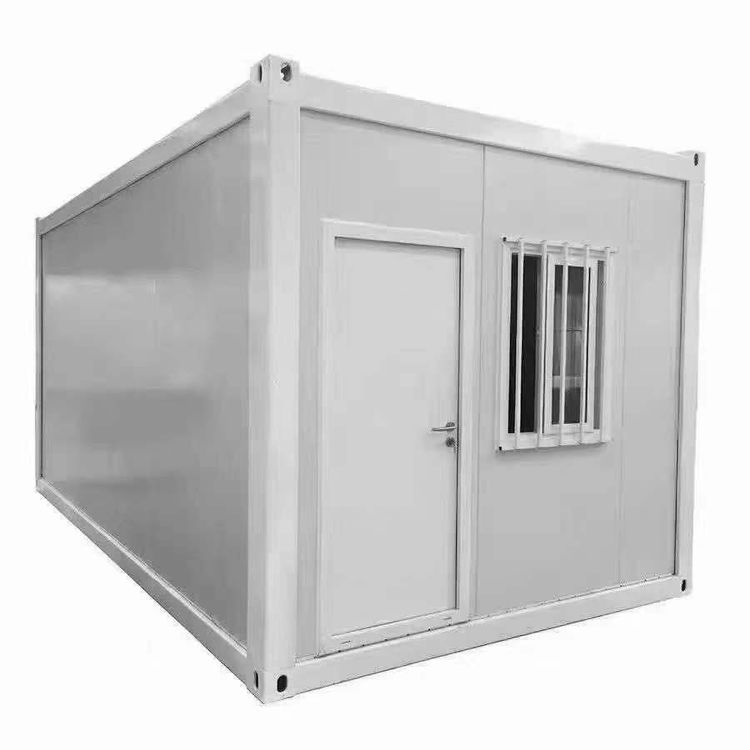
What to Do If a Prefabricated House Makes Noise
If a prefabricated house makes noise, targeted measures should be taken according to different causes.

Due to Thermal Expansion and Contraction
- Lay Elastic Surface Materials: Lay elastic surface materials such as carpets and rubber floors on the floor slab. This can effectively reduce impact energy, lower floor vibration and the resulting impact noise, and improve the sound insulation performance of the floor against impact noise, especially with significant effects on reducing mid- and high-frequency impact noise.
- Adopt Floating Floor Construction: First, lay a layer of sound insulation and shock absorption pads on the reinforced concrete base floor slab, and then make a hard floor surface layer on top. The elastic core between the base and the floor surface layer can reduce the impact vibration generated by the floor surface layer, thereby reducing the noise radiated by the base floor slab to the lower floors. At the same time, a certain width of gap should be left between the floor surface layer and the walls around it, and filled with elastic materials to prevent the walls from becoming sound bridges.
- Install Sound Insulation Ceilings: Making a ceiling below the floor slab can provide sound insulation against airborne and impact noise. The sound insulation effect is related to the surface density of the ceiling, the spacing between the ceiling and the floor slab, and the rigidity of the ceiling hanger rods. The greater the surface density, the higher the sound insulation level; the spacing is generally kept at 10 - 20 cm, and filling with porous sound-absorbing materials such as glass wool and fiber sound-absorbing cotton can further improve the sound insulation level; the hanger rods between the ceiling and the floor slab should avoid rigid connections, and spring shock absorbers can be installed to increase the sound insulation effect.
Due to Deformation of Decoration Materials
Decoration materials in the home, such as wood and wooden boards, can undergo slight deformation with environmental changes (temperature variations, humidity levels, wind strength, etc.), resulting in noise. Professional personnel can be invited to check whether the ceiling surface is flat and has no sagging, the ceiling material, and the room humidity to determine if cracks due to alternating dry and wet conditions or improper installation are causing the noise.
Due to Old Components of the House
If the abnormal noise is caused by old components of the house, such as doors, windows, and pipes, consider replacing these components to eliminate the noise. Old or damaged doors and windows may cause abnormal noise. New doors and windows can be installed, or additional sealing strips can be added to reduce noise.
Due to Abnormal Operation of Water Pipes and HVAC Systems
Abnormal operation of water pipes or HVAC systems may cause abnormal noise. Check these systems for leaks, blockages, or other issues and repair them promptly.