What Materials Do Prefabricated Buildings Actually Need?
Building change starts with building materials. The Guiding Opinions of the General Office of the State Council on Vigorously Developing Prefabricated Buildings set out eight requirements and clearly call for raising the share of green building materials in prefabricated construction, promoting high-performance energy-saving doors and windows, and phasing out materials that fail energy-saving and environmental standards or that have poor quality and performance. So what materials do prefabricated buildings actually need?

Wide use of new building materials
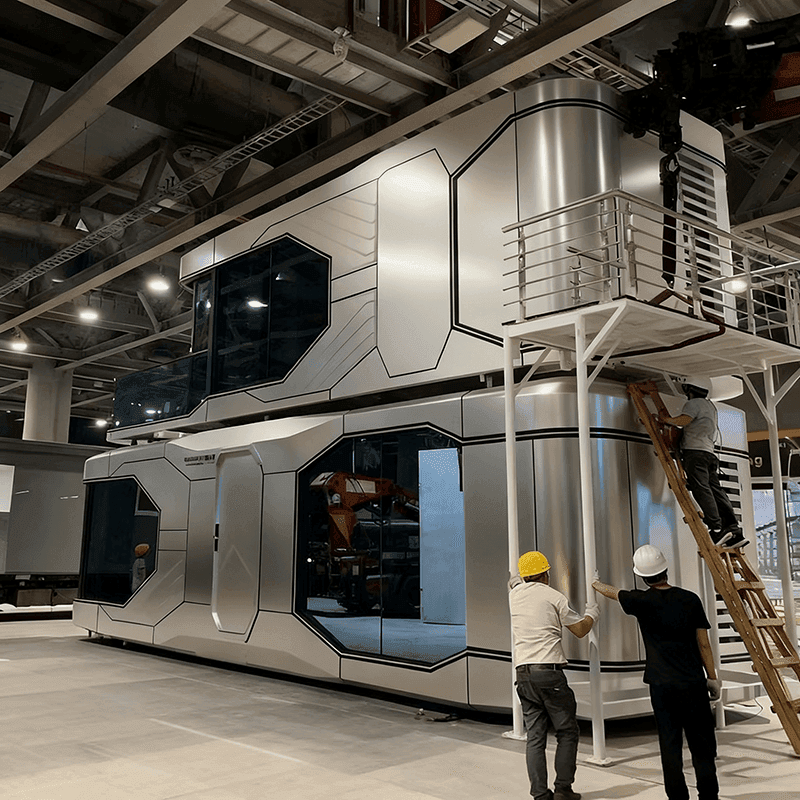
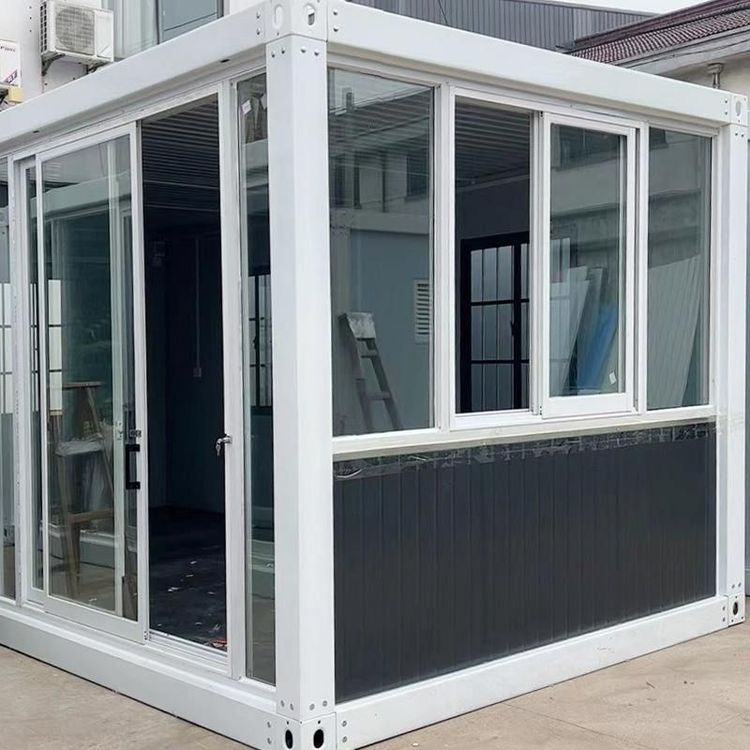
Prefabricated buildings are the visible face of assembly-based construction within building industrialization: buildings assembled on site from factory-made parts and components. The full process should cover standardized design, factory production, assembly construction, integrated finishing, information-based management, and smart applications. Prefabricated buildings offer stable quality, lower energy use and pollution, higher productivity, fewer safety incidents, lower labor intensity, and better working conditions.
To deliver those advantages, material selection must be taken seriously. Building-materials use now faces stricter safety demands and, equally, stronger expectations for environmental protection and green energy saving than in the past. New lightweight, high-strength materials emerged in this setting, where architectural aesthetics, practical economics, and environmental goals meet. Against China's rapid urbanization, these materials offer more choice and innovation than traditional products and better express modern technology's low-load, low-cost building agenda.
One example is the Vanke New Milestone project in Shanghai in 2008—China's first line-based production residential project. Its exterior walls used a full PC (precast reinforced concrete) system: wall panels made in the factory and assembled on site into standard modular units. Construction resembled a production line. Materials included low-pollution, low-VOC products, thermal insulation, ultra-high-strength concrete, and ultra-high-strength rebar.
Prefabricated methods and new materials also brought breakthrough gains. According to a Vanke housing industrialization survey, after large-scale factory work, reuse of steel formwork and similar items rose, construction waste fell 83%, material loss fell 60%, recyclable materials rose 66%, and building energy savings exceeded 50%. Replacing traditional masonry partitions with light-gauge steel stud walls also increased usable floor area (about 0.6 m2 more usable area per 70 m2). On-site crews shrank sharply: work that once needed hundreds of workers now needs only 20-30, with on-site labor cut by as much as 89%, sharply lowering accident rates. Vanke has built a fairly complete prefabricated technology set in its industrialization program and is already benefiting from it.
Beyond single new materials, composites also shine in prefabricated construction—for example prefabricated walls. Following national guidance to develop green building materials and move beyond traditional clay brick and tile, prefabricated walls aim to save energy, cut dust, lower cost, speed construction, reduce labor, and raise wall quality. High-strength glass-magnesium boards form the faces, light-gauge steel studs form the frame, and the core is cast from lightweight, non-toxic, flame-retardant fill. That keeps walls flat while improving integrity, sound insulation, and seismic strength—fully in line with wall-material trends and highlighting light weight, energy saving, and environmental performance.
Wide use of new materials not only sharpens the strengths of prefabricated buildings; it also pushes building materials toward finer specialization and higher technology.
Systems drive a greener materials landscape
Growth in prefabricated buildings has sparked another round of change in wall materials—starting with walls and then branching into more specialized niches.
As early as the 1940s and 1950s, developed countries in Europe and North America began shifting wall materials: from small units to large wall products, then toward lightweight boards and composite panels. After half a century, countries have formed basic building systems and matching leading wall products. Japan, for example, has done extensive work on prefabricated structural systems and has built many such projects in recent years. That global shift has also spurred China's prefabricated sector.
Driven by domestic prefabricated construction, building systems have upgraded and pulled along many related industries: exterior composite panels, interior partition boards, floor slabs, roof panels, beams, columns, and other special-shaped member equipment. With research and design in the lead, technology as support, and the market as guide, producers make components and related construction products for different housing types, then assemble houses on site—changing outdated value ideas and practices.
Development of prefabricated structural systems shows mainly in these areas. First, industrial restructuring that raises overall building technology content. Second, industrialization that replaces outdated methods and opens a new construction space. Third, higher labor productivity and year-round balanced work even in cold regions. Fourth, energy saving, environmental protection, seismic performance, and economy that deliver large social benefits. Fifth, systems that are advanced, competitive, and sustainable—aligned with national industry policy and market demand. Product positioning stresses diverse building forms; multi-story and high-rise systems with large-span frames and frame-shear walls; steel and fully prefabricated assembly; coordinated materials and products; commercial supply; and assembly construction. Wall materials move from single materials toward composite walls.
Under prefabricated systems, material use must meet higher safety bars and clearer green and energy-saving gains. New lightweight, high-strength materials offer more options and innovation than traditional products and better embody high-tech, low-load, low-cost building ideas.
As basic building elements, materials should combine core performance with green health, energy saving, and environmental fitness. Nano antibacterial materials and products that purify air, cut noise, block radiation, or generate negative ions also play a strong role in prefabricated buildings.
As science and technology advance, society's demands on buildings have moved from quantity first, to quantity plus quality, to quality first, and then to personalized diversity. People keep advancing building technology and the industry, using resources wisely, protecting ecosystems, and raising living quality.
Building industrialization is a worldwide trend and an urgent reform need for China's construction and building-materials industries. Both are already foundation and pillar sectors of the national economy; prefabricated growth will drive a major shift in how the field produces. Cutting energy use, improving seismic resilience, protecting ecology, and raising work and living quality remain hot topics. Using new materials and processes, raising quality and productivity, cutting pollution and waste, and achieving civilized construction are key markers of technical progress.
Address: No. 1777 Hualong Road, Shanghai
Website: www.ourcompany.com
Phone: 021-60760737
Mobile: 17721310336
Email: marketing@ourcompany.com
24H premium customer service hotline: 400-716-6557