
What is a Mobile Environmental Toilet
A mobile environmental toilet is a public sanitation facility designed based on new materials and water-saving technologies, which is movable and has resource recycling capabilities. The following provides a detailed introduction from four aspects: technical types, water-saving design, structural features, and application scenarios.
Diverse technical types: There are various types based on sewage treatment methods. The circulating water-flushing type is equipped with intermittent aerobic and anaerobic sewage treatment devices for feces. It adds biological strains and uses biofilm technology to accelerate decomposition, and the treated water can be recycled for flushing. The dry packing type has no water-flushing device; feces are collected by biodegradable plastic bags, which are automatically replaced and collected for centralized treatment after use. In addition, there are foam-blocking types, packing types, water-saving flushing types, water-free rechargeable types, microbial types, and other technical types. For example, the microbial degradation type can convert feces into harmless gases and water, and the packing type uses biodegradable bags to pack feces and transport them directly away.
Significant water-saving effects: Smart water-saving ecological toilets can achieve a flushing effect of about 0.46 liters of water per person by automatically collecting urine and hand-washing water and adding water-saving special agents. Some advanced models can also recycle hand-washing water, saving 90% more water than traditional toilets and greatly reducing water consumption.
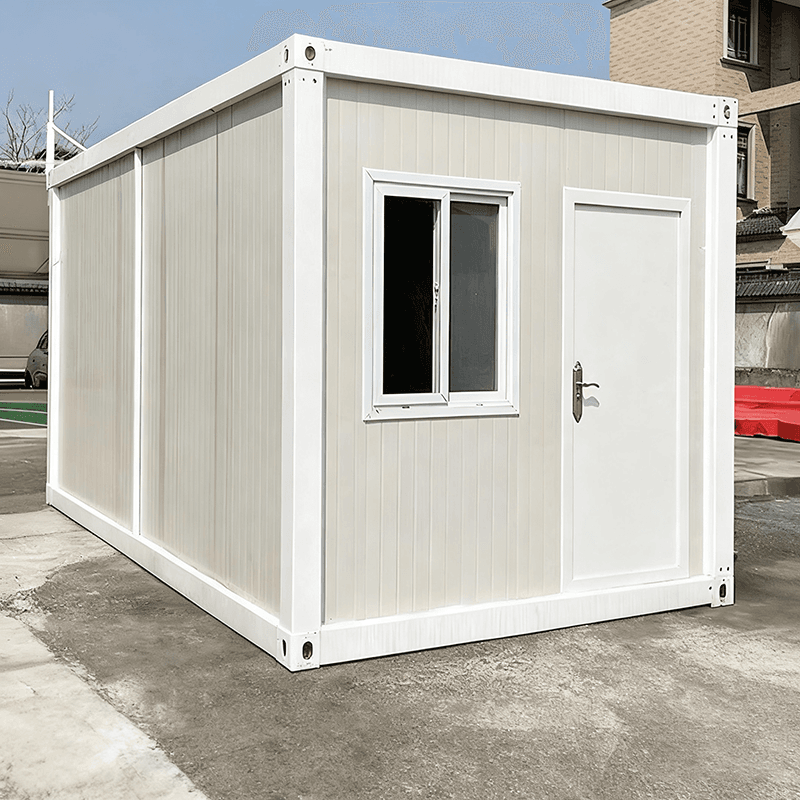
Prominent structural features: The exterior wall materials can be selected according to customer requirements or the surrounding environment of the use location, including color steel plates, metal carved plates, anti-corrosion wood, stainless steel plates, aluminum-plastic plates, etc. The main structure is welded with national standard light steel keels to meet the requirements of overall hoisting. Standard configurations include toilet bowls (urinals), hat and coat hooks, vanity mirrors, paper baskets, lighting fixtures, exhaust fans, door locks, occupied/unoccupied indicator lights, etc. Optional configurations include heating and cooling air conditioners, air purifiers, anti-freezing systems, heating systems, background music, hand-washing basins, water-saving faucets, etc. Most of the materials used are environmentally friendly panels with recycling value. The main materials have a long design life, occupy a small area, have low land dependence, have a short construction period, and can be reused.
Wide application scenarios: The application of mobile environmental toilets has covered public places such as scenic spots, service areas, and rural areas. When used temporarily at construction sites, they are half the cost of building fixed toilets. In the event of disasters, they can be quickly transported to disaster areas to provide necessary sanitation guarantees for the affected people.



