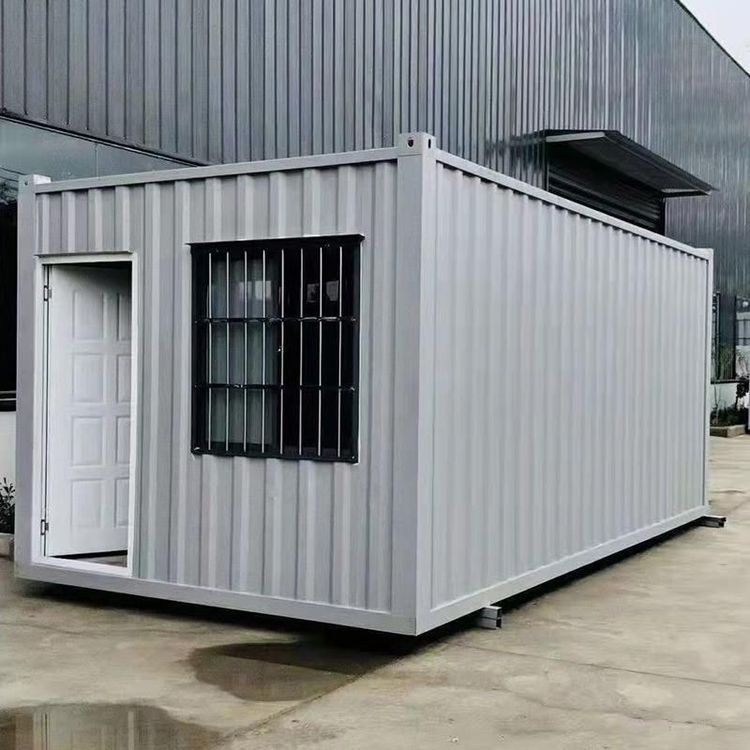
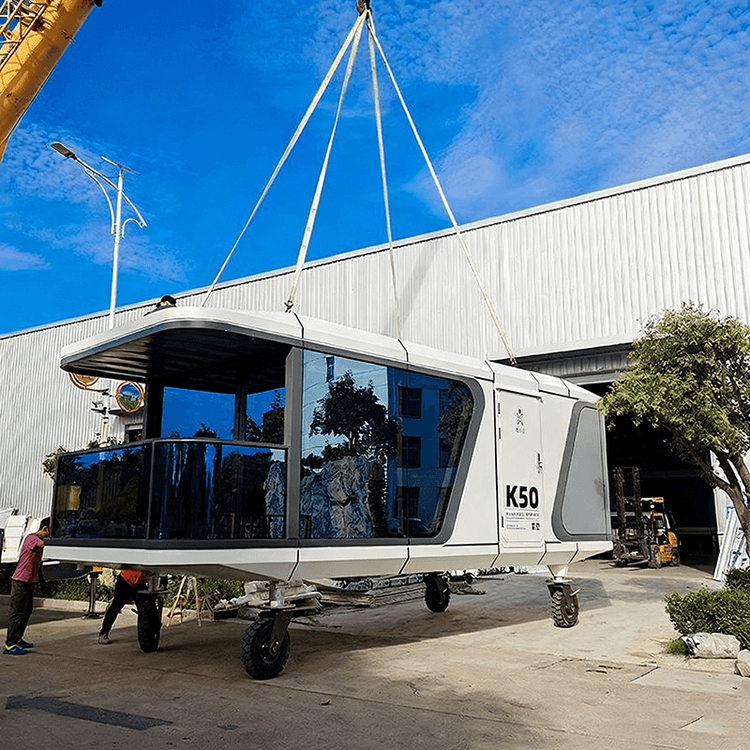
What Are Container Houses
Container houses have characteristics such as flexible adaptability, cost control, structural stability, reusability, and ease of transportation and installation.

Flexible adaptability: Container houses can meet the needs of various scenarios, whether for temporary offices, accommodations, event support, or commercial pop-up stores, and can achieve functional adaptability through customized designs. For example, in commercial pop-up store scenarios, special structures such as curved walls and floor-to-ceiling glass windows can be customized according to brand requirements, with an internal space utilization rate of over 90%.
Cost control: Compared to traditional buildings, container houses have significant advantages in terms of material and construction costs. They are produced in factories, reducing on-site wet work and minimizing labor and material waste. Additionally, due to their reusability, long-term usage costs are significantly reduced.
Structural stability: High-quality container houses use a full steel structure frame, providing excellent wind and earthquake resistance. For example, the container houses from Suzhou Zhongnan Steel Structure Co., Ltd. have a maximum frame deformation of only 2mm under 12-level strong winds, well below the national standard limit of 10mm, ensuring safety during use.
Reusability: Container houses can be disassembled and reassembled multiple times, with no significant decrease in structural stability after each disassembly. For example, the fast-assembly container products from Suzhou Zhongnan can be disassembled and reassembled more than 15 times, with no significant decrease in structural stability after each disassembly, and the cost per use is only one-third of that of a new product.
Ease of transportation and installation: Foldable container houses have a small volume when folded, making them easy to transport. For example, the folding containers from Suzhou Zhongnan Steel Structure Co., Ltd. have a volume of only one-fifth of their expanded state when folded, with each standard freight truck able to carry 20 sets, reducing transportation costs by 40% compared to non-foldable products. At the same time, their installation efficiency is high, with a single module taking only a few hours from arrival to completion of assembly, significantly shortening the project preparation time.