How to Install Mobile Toilets in Weifang
The installation of mobile toilets in Weifang should be carried out step by step according to the toilet type (split-type or integrated), with core processes including positioning and foundation treatment, main body installation, functional debugging, and acceptance. Details are as follows:

I. Positioning and Foundation Treatment
Determine the installation location based on site planning, which should meet the requirements of solid ground and smooth drainage. If the ground is uneven or the soil is soft (such as muddy land or backfilled soil), hardening treatment (such as pouring concrete) or laying steel plates should be carried out in advance to ensure the stability of the main structure after installation. This step is the foundation for subsequent installation, and improper foundation treatment may lead to toilet tilting or damage.
II. Main Structure Installation
1. Split-type Mobile Toilets
- Chassis Installation: Use a forklift or manual labor to place the prefabricated steel structure chassis steadily, and adjust it to a horizontal state with a leveling instrument to avoid difficulties in installing subsequent facilities due to tilting.
- Wall Panel and Roof Installation: Insert the sandwich panel wall panels into the chassis slots and fix them with bolts or buckles; then install the roof panels and seal the connections (such as by applying sealant or adding sealing strips) to prevent rainwater leakage.
- Internal Facility Connection: Install partitions, toilets, flushing systems, sinks (if any), lighting, and ventilation equipment. The water and electricity pipelines adopt a modular quick-connector design, which can shorten the connection time. Note that the pipeline routing should be neat to avoid cross-entanglement.
2. Integrated Mobile Toilets (Box-type Toilets)
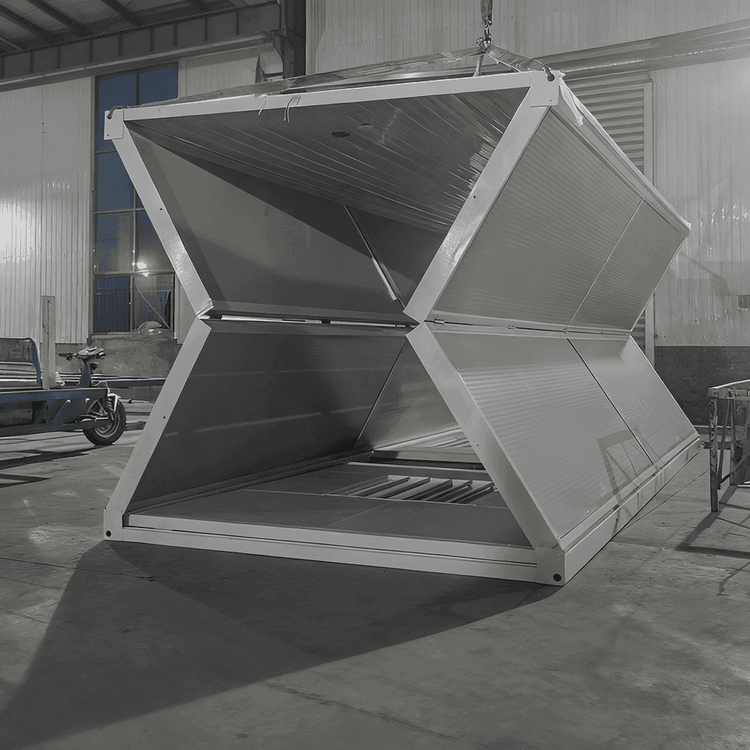
The factory has completed the interior decoration and equipment integration. On site, simply use a crane to lift the entire unit to the designated location and then connect the water, electricity, and sewage pipelines. The installation time for this type of toilet is relatively short, with an overall time of about 2-4 hours, making it suitable for emergency use scenarios.
III. Functional Inspection and Debugging
- Basic Function Testing: Conduct flushing tests (check water pressure and drainage smoothness), circuit checks (ensure lighting and ventilation equipment are working properly), and seal checks (focus on checking for air and water leakage at wall panel joints and door and window edges).
- Supplementary Installation of Foot Pedal Devices (if applicable):
- Foot Pedal Pack: Locate the reserved holes on the side or bottom of the barrel, insert the iron rod and connect the link rod, ensure the roller is engaged in the lid track, and fix the connection points with pins or screws.
- Foot Pedal Valve: After cleaning the water supply pipe, reserve an inlet and outlet distance of 75±3mm, wrap with Teflon tape, screw it into the pipe joint, adjust the outlet direction and fix the outlet pipe, and finally tighten the inlet and outlet connections with a wrench to ensure no leakage.
IV. Testing and Acceptance
- Foot Pedal Testing: Step on the foot pedal device multiple times to check if the lid opens and closes smoothly and if the link rod roller slides along the track without jamming.
- Leakage Inspection: After turning on the water supply, observe whether there is leakage at the valve connections (such as inlet and outlet ports and nut connections). If problems are found, retighten or replace the sealing parts.
- Compliance Inspection: The installation should comply with standards such as the Hygiene Code for Mobile Toilets (GB/T 21239-2023) to ensure that hygiene indicators and structural safety meet the standards.
Notes: The installation time is affected by the toilet type and on-site conditions. The wall panel installation of split-type toilets takes about 1-2 hours, and the overall installation of integrated toilets takes about 2-4 hours. If there are issues such as mismatched holes, damaged parts, or operational difficulties, it is recommended to contact the manufacturer or professional maintenance personnel for handling.