
Waterborne Mobile Public Toilet
Although there are currently no mature cases directly targeting 'waterborne mobile public toilets', their technical feasibility has been established by combining the existing technical characteristics of mobile toilets with the needs of waterborne scenarios.
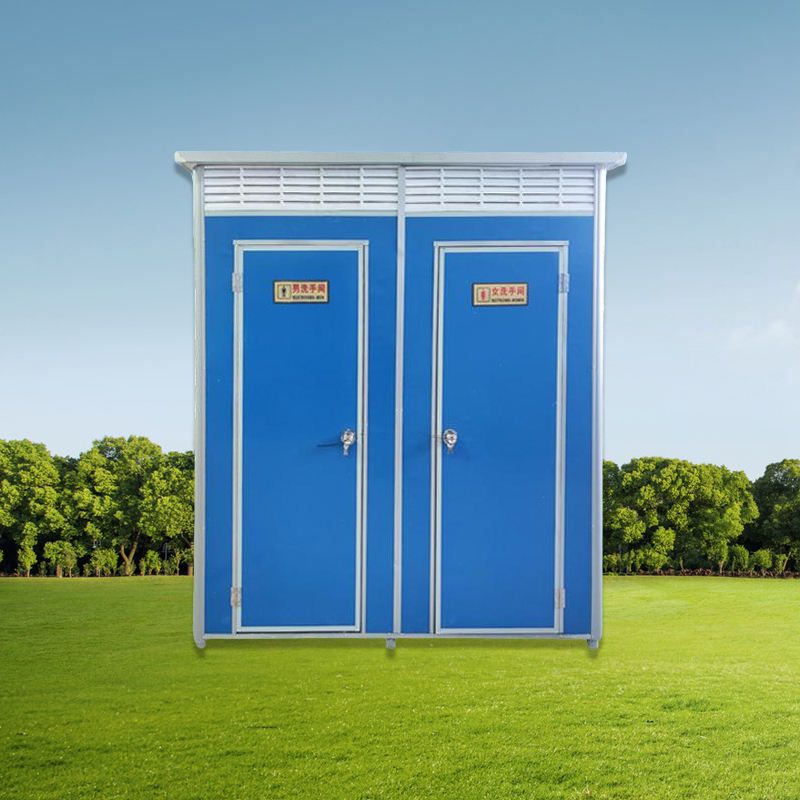
1. Structural adaptability is the foundational support
The frame design of mobile toilets focuses on lightweight and high strength, typically using national standard steel for welding. The bottom employs channel steel or I-beams, while the columns are square steel, enabling the overall structure to withstand the impact of lifting and transportation. By adding buoyancy devices (such as buoys or hull structures) on this basis, they can be transformed into waterborne platform-style toilets. For example, small buoys can provide approximately 1000 kilograms of buoyancy per cubic meter. By reasonably distributing the number and position of buoys, the overall stability of the toilet can be ensured, meeting the usage requirements in still water or low-flow environments.
2. Sewage treatment technology is the core breakthrough
Waterborne scenarios lack fixed sewage discharge pipes and rely on independent treatment systems.
- Waterless flushing/dry packing type: Excreta is treated through microbial degradation or sealed sewage storage tanks, eliminating the need for water flushing and preventing direct discharge of sewage into water bodies. For example, the sewage storage tanks of some dry-packing toilets can hold up to 500 liters, with a single filling capable of serving 500 people, making them suitable for waterborne scenic spots or temporary event scenarios.
- Recirculating water flushing type: A triple-filtration system (coarse filtration, biological degradation, and fine filtration) is used to reuse hand-washing wastewater, achieving a water resource utilization rate of over 90%. For example, a certain model of recirculating water flushing toilet only requires 10 liters of water replenishment per day to maintain operation, significantly reducing the frequency of waterborne resupply.
3. Modular design enhances deployment efficiency
The standardized components of mobile toilets (such as sewage storage tanks, ventilation equipment, and wall modules) support rapid disassembly and assembly, allowing transportation to waterborne areas by ship and subsequent assembly. For example, Wuchuan County in Inner Mongolia has achieved the transportation and installation of a single set of equipment within 3 hours, and this technology can be transferred to waterborne scenarios. If a foldable frame design is adopted, the transportation volume can be further compressed, reducing logistics costs.
4. Application scenarios are showing an extended trend
Mobile toilets have covered the细分品类 (sub-category) of marine-use types, with some products optimized for features such as ship摇晃 (rocking) and narrow spaces with non-slip floors and compact layouts. Additionally, their rapid deployment capability in emergency scenarios (such as the construction of 50 toilets in 2 hours in the earthquake-stricken area of Yunnan) has also validated the feasibility of transferring this technology to temporary waterborne activities. In the future, it will be necessary to further optimize waterborne applicability by combining waterproof sealing technology (such as IP67-level protection) with anti-corrosion materials.



