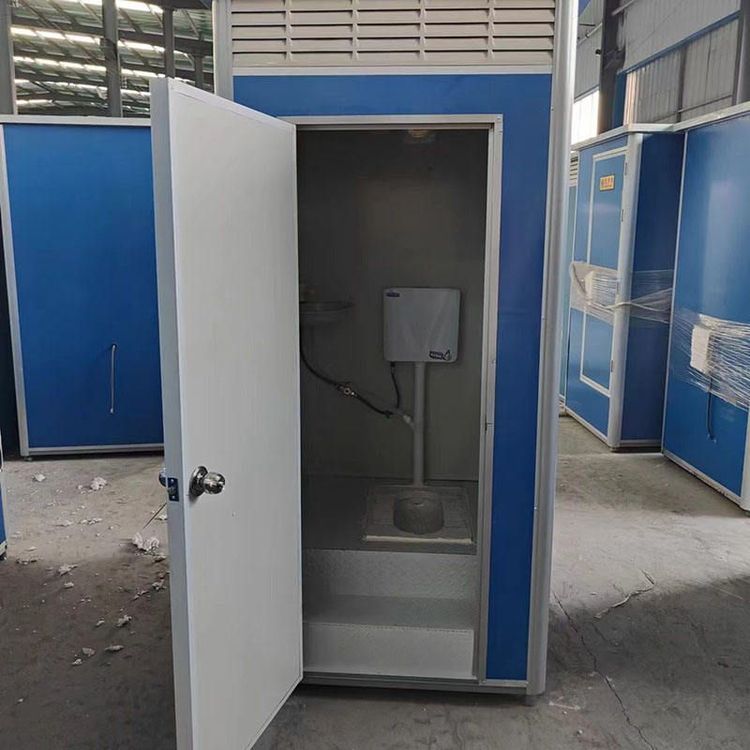
Walking Mobile Toilet
A walking mobile toilet is a facility that can be moved as a whole and provides toilet services to the public. It is commonly found in places such as stations, docks, and tourist attractions, offering both flexibility and environmental friendliness.

Core Functions and Design Features
The walking mobile toilet achieves overall mobility through modular design, with its core function being to provide sanitation services for temporary or mobile scenarios. The fecal sewage storage or disposal device is a key component. Some models adopt a microbial degradation system, which decomposes organic matter through specific bacterial strains, reducing sewage discharge and minimizing odors. Other models are equipped with vacuum foam squatting toilets, which use foam to cover the toilet surface, reducing water consumption (only 0.5 liters per flush) and effectively blocking odors. Sanitary ware includes squatting toilets, sitting toilets, or urinals. Some high-end models are also equipped with sinks, hand dryers, and other facilities to enhance the user experience. The mobile devices are divided into two categories: lifting and handling types rely on forklifts or cranes for transfer, suitable for short-distance, low-frequency movements; powered and towed types achieve autonomous movement through towing vehicles or built-in engines, suitable for cross-regional, high-frequency use scenarios.
Movement Methods and Applicable Scenarios
According to the movement method, walking mobile toilets can be divided into two categories: lifting and handling types are usually smaller in size and simpler in structure, loaded and unloaded by forklifts or cranes, suitable for construction sites, temporary exhibitions, and other scenarios. Their advantages lie in low cost and quick deployment, but the frequency of movement is limited. Powered and towed types are equipped with solid tires or towing devices, which can be towed by vehicles or move on their own. They are commonly found in tourist attractions, large event venues, and other places that require frequent relocation. Their advantage is strong flexibility, but they have a complex structure and higher cost. For example, towed mobile environmentally friendly smart public toilets can be quickly transferred by towing vehicles to meet the toilet demands during peak tourist flows at scenic spots during holidays.
Environmental Protection and Durability Optimization
To adapt to outdoor environments, walking mobile toilets mostly use solid tires, avoiding the drawbacks of inflatable tires such as easy punctures and the need for maintenance, while enhancing puncture resistance and extending service life. The microbial degradation system maintains decomposition efficiency by regularly adding bacterial strains, converting feces into harmless fertilizers and achieving resource recycling. The vacuum foam technology reduces sewage production by decreasing water consumption, alleviating the treatment burden. In addition, some models use stainless steel or high-strength plastic materials to improve corrosion resistance and structural stability, ensuring normal operation under harsh weather conditions or high-frequency use.