
Walkable Mobile Toilet
Walkable mobile toilets mainly include two types: towable mobile environmental protection smart public toilets and autonomous mobile toilet robots.
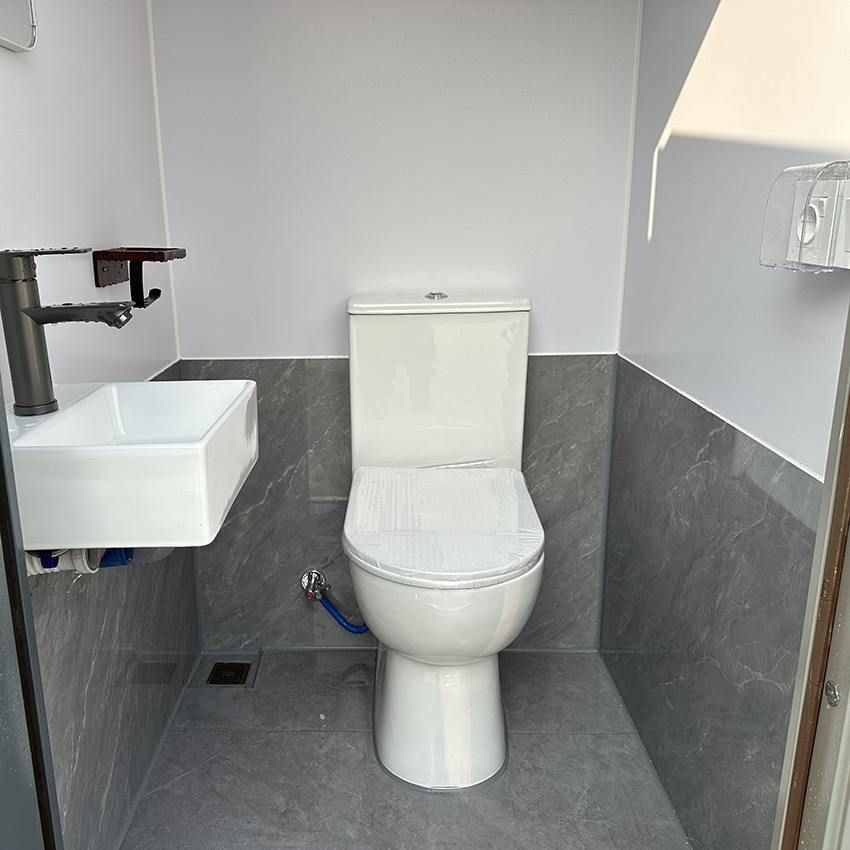
Towable Mobile Environmental Protection Smart Public Toilets: The core design of this type of mobile toilet lies in its towability. Through the towing device at the bottom, it can be towed by vehicles anytime and anywhere, offering extremely high flexibility. Its width is approximately two meters. This size design not only ensures relatively spacious interior space but also facilitates transportation under various road conditions. In terms of technical configuration, it adopts an advanced microbial degradation system. This system can effectively decompose and treat excrement, reducing odors and pollution to achieve environmental protection goals. At the same time, each squatting position employs vacuum foaming technology, which can significantly reduce water consumption. While conserving water resources, it also provides a good flushing effect to keep the interior of the toilet clean and hygienic. In addition, this public toilet is equipped with a management room and an equipment room. The management room can be used to store cleaning tools, management supplies, etc., facilitating daily maintenance and management by staff. The equipment room centrally houses various treatment equipment and control devices to ensure the stable operation of the entire toilet system.
Autonomous Mobile Toilet Robots: This is a type of mobile toilet specifically designed for care scenarios, especially suitable for home-based elderly care or people with mobility impairments. It has the ability to move autonomously and can automatically move to a designated location according to preset programs or user instructions, providing convenient toilet services for users. This design fully takes into account the special needs of people with mobility impairments and solves the problem of their difficulty in moving during the toilet process. Its internal structure and functions are also optimized for care scenarios. For example, it may be equipped with auxiliary facilities such as handrails and safety belts to ensure the safety of users during the toilet process. At the same time, it may also have automatic cleaning and disinfection functions to maintain a hygienic interior environment.



