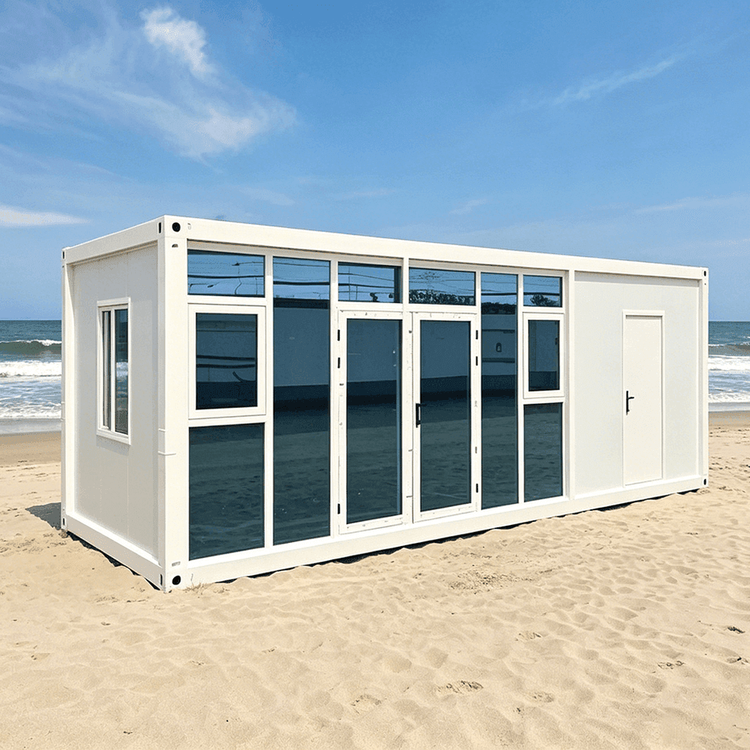
US Mobile Toilet Cleaning Jobs
Mobile toilet cleaning jobs in the US mainly include manual cleaning and robotic cleaning, and there is a standardized process for daily cleaning.

Manual Cleaning Jobs
Manual cleaning of mobile toilets is a strenuous and dirty task. On one hand, ordinary manual cleaning requires driving a truck, using a hose to extract the contents of the mobile toilet, followed by water cleaning and adding deodorizing water. On the other hand, in the field of autonomous taxis, third-party companies like Transdev US recruit 'robot taxi operators.' Their job responsibilities rotate daily, and sometimes involve tasks such as cleaning up feces. The recruitment process is fast-paced, with workers being eliminated based on their ability to keep up with the process and adapt quickly.
Robotic Cleaning Jobs
The 'Somatic' toilet cleaning robot is involved in the cleaning work. Its 'wage' is approximately $5.68 per hour, which is lower than the US minimum wage of $7.25. The robot supports remote control, allowing staff to use VR devices for simulated operation or let it clean autonomously. Staff only need to show the robot the locations for cleaning, disinfecting, vacuuming, and drying in advance. It operates within the restroom using spatial sensing technologies such as LiDAR and vision, and can replenish required chemicals and open doors on its own without physical assistance in the real world, cleaning for up to eight hours a day. Currently, it is planned to be rented out during the trial phase to airports, casinos, office spaces, and other facilities with large commercial restrooms at a price of approximately $1,000 per month.
Standardized Process for Daily Cleaning
There is a standardized operating procedure and precautions for the daily cleaning of mobile toilets. Preparation involves getting tools such as a high-pressure washer and a long-handled brush, and wearing personal protective equipment like rubber gloves. In the area-by-area cleaning process, external cleaning involves using a high-pressure water gun to wash the exterior walls, while internal deep cleaning of the toilet involves using biological enzyme solutions to break down stains. Disinfection standards require the use of chlorine-containing disinfectant tablets for high-frequency contact surfaces. Special situation handling, such as vomit disposal, involves using an adsorption gel to solidify it first. Quality inspection uses an ATP fluorescence detector to verify the disinfection effect, and common operational mistakes are also mentioned.
You may also like
Standard Portable Toilet Specifications Model Dimensions: What to Know
Read More
House Reviewed: Best Picks & Tips
Read More
Portable Toilet Eco-Friendly Specifications Sizes & Dimensions: A Complete Guide
Read More