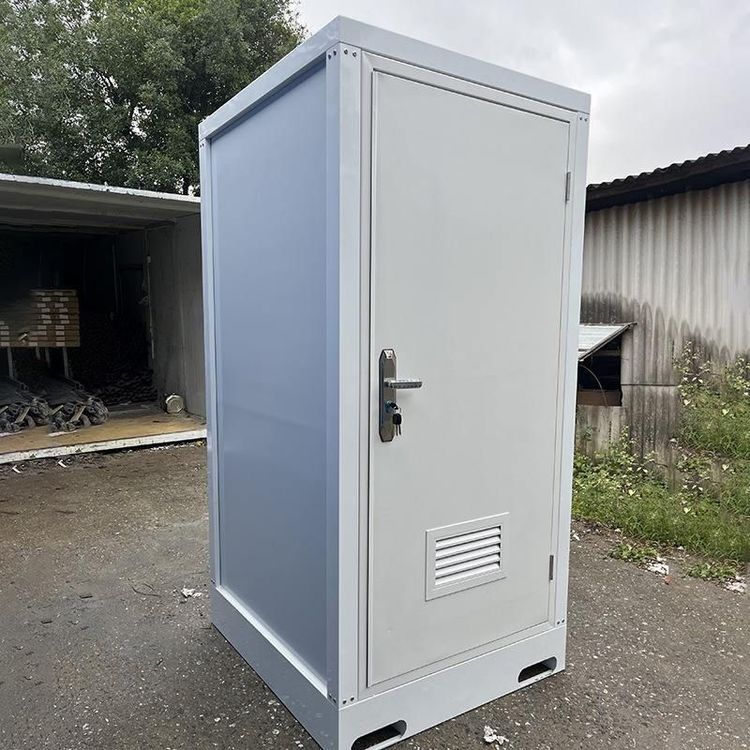
Urban Mobile Toilet Production
Urban mobile toilet production covers multiple aspects such as product types, manufacturers, production technologies, and design principles.

Product Types
Urban mobile toilets come in a rich variety of types to meet different scenarios and needs. The common urban modern type is usually designed in a simple and stylish manner, conforming to the aesthetic requirements of modern cities, and is suitable for places like commercial districts and squares. The antique-style series has a strong classical flavor, complementing the environments of historical and cultural blocks and areas around ancient buildings. The ordinary type series focuses more on practicality and cost-effectiveness, and is suitable for construction sites, temporary event venues, etc.
Manufacturers
Numerous manufacturers are involved in the production of urban mobile toilets. For example, Chengdu Fengtai Environmental Protection Engineering Co., Ltd. offers a variety of mobile toilet products, such as microbial mobile toilets and outdoor environmental protection public toilets, with prices ranging from 159.6 to 646.0 yuan. Chengdu Guya Integrated Housing Co., Ltd. also has multiple products, such as outdoor mobile toilets for scenic spots, with prices ranging from 133.0 to 931.0 yuan. Sichuan Zhongshunjiaye Environmental Protection Engineering Co., Ltd. has products like outdoor mobile toilet restrooms in the new Apple Pod style, priced at 300.0 yuan. In addition, Beijing Zhongjiehui Sanitation Equipment Co., Ltd. is a modern environmental protection enterprise specializing in the integrated R&D, production, sales, leasing, and after-sales service of sanitation products, producing various products such as partitioned mobile toilets.
Production Technologies
Smart toilet suppliers upgrade traditional sanitation facilities into intelligent nodes that can perceive in real-time and adjust autonomously by integrating Internet of Things sensors, environmental monitoring modules, and automated control units. For example, they can monitor the occupancy status of toilet stalls, making it convenient for users to quickly find available stalls. In terms of resource management, they can accurately measure water and electricity consumption to achieve energy conservation and emission reduction. Mobile toilets are generally composed of fecal sewage storage tanks (or fecal sewage treatment devices), floor slabs, sanitary ware, walls, washing equipment, water tanks, roofs, mobile devices, etc., and can be classified in various ways according to structural forms, mobile methods, and sewage treatment methods.
Design Principles
The design of mobile toilets should follow the principles of being mobile and convenient, economical and durable; being environmentally friendly and beneficial to the environment; improving efficiency and promoting humanitarianism. The overall structure should be light, durable, and sturdy, with controlled height and width, and the mobile devices should be complete and reasonable to ensure easy movement and installation in different scenarios.