
Two-Story Container House with Wooden Structure
If a two-story container house needs to incorporate wooden elements, it usually requires customized design or post-construction renovation. Directly using wood as the main structure for a double-story container house is rare, but combining containers with wood is feasible.
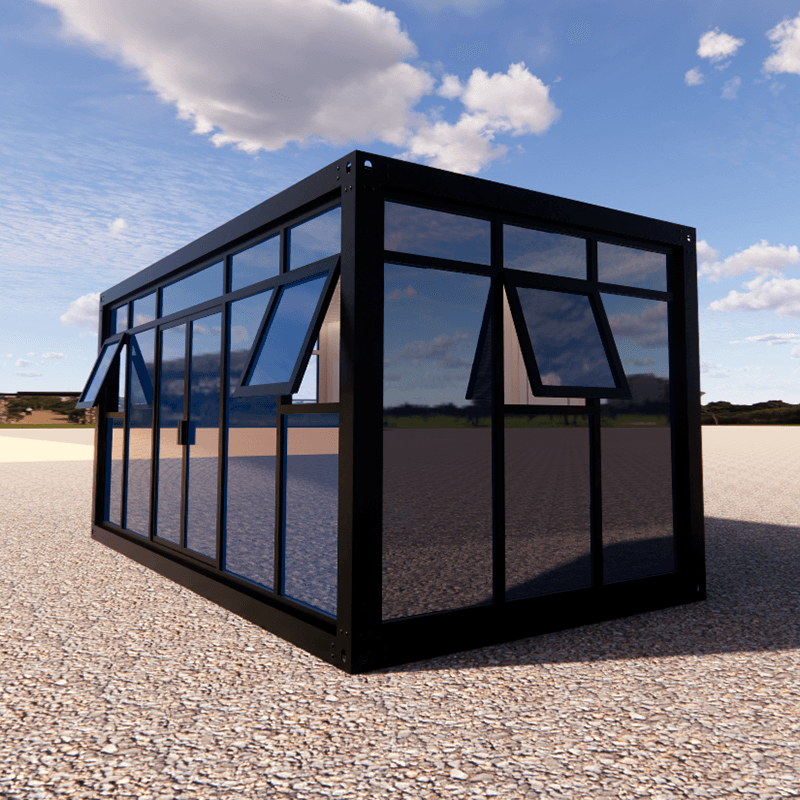
1. Conventional Materials and Structural Characteristics of Container Houses
Traditional double-story container houses are based on shipping containers as the foundational framework, with the main structure made of high-strength steel. They are standardized, modular, and can be quickly assembled. Their advantages include structural stability, durability, and compliance with international transportation standards. However, their appearance and interior space flexibility are limited. If wood is used as the main structure, key issues such as load-bearing capacity, fire resistance, and moisture resistance must be addressed. The metal frame of the container already provides these functions, so wooden structures are typically used as auxiliary or decorative materials.
2. Implementation Methods for Wooden Elements in Container Houses
Customized Design Products such as custom-made wooden double-story container houses for construction sites exist in the market. The core logic is to use containers as the skeleton and wooden materials for filling or decoration. For example, the ground floor can use containers for load-bearing, while the upper floor expands space through wooden frames or uses wooden panels to cover the container's exterior, creating a metal-wood hybrid structure. Such designs require adjusting proportions based on specific needs to ensure structural safety and functionality.
Post-Construction Renovation For already-built metal container houses, wooden elements can be incorporated through interior renovation or exterior decorative additions. For example:
- Interior: Use wooden floors, wall panels, and furniture to enhance living comfort.
- Exterior: Install wooden fences, awnings, or decorative strips to soften the cold, hard feel of metal. This approach offers high flexibility and relatively low cost but requires attention to moisture and corrosion resistance of wooden materials to prevent deformation or damage due to environmental factors.
3. Case Studies and Feasibility Analysis
Ultra-Luxury Double-Story Villa Case A case exists where six shipping containers were used to build a double-story villa with spacious interior space and self-sufficient functions (such as solar power and rainwater collection systems). Although wooden structures were not explicitly mentioned, such projects typically use a significant amount of wood in interior renovation to create a warm living atmosphere.
Market Product Validation The existence of container houses with wooden double-story structures proves that combining containers with wood is technically feasible, but the following conditions must be met:
- Structural Safety: Wooden parts must be securely connected to the metal frame to prevent detachment due to load or vibration.
- Fire Compliance: Wooden materials must meet building fire safety standards or undergo flame-retardant treatment to reduce risks.
- Durability: Choose wood that is resistant to decay and insects (such as Scots pine or teak) and perform regular maintenance.
4. Summary and Recommendations
If you plan to build a two-story container house with wooden elements, customized design is recommended first, clearly defining the scope of wooden use (such as decoration only or partial load-bearing) and entrusting a professional team for structural calculations and construction. If the budget is limited, wooden elements can be gradually added through post-construction renovation, but attention must be paid to material selection and daily maintenance to ensure the long-term safety and aesthetics of the house.



