
Trend of Intelligent Mobile Toilets
The trend of intelligent mobile toilets is primarily reflected in four aspects: modular production, low-carbon environmental protection, upgraded customization demands, and the application of intelligent technologies.
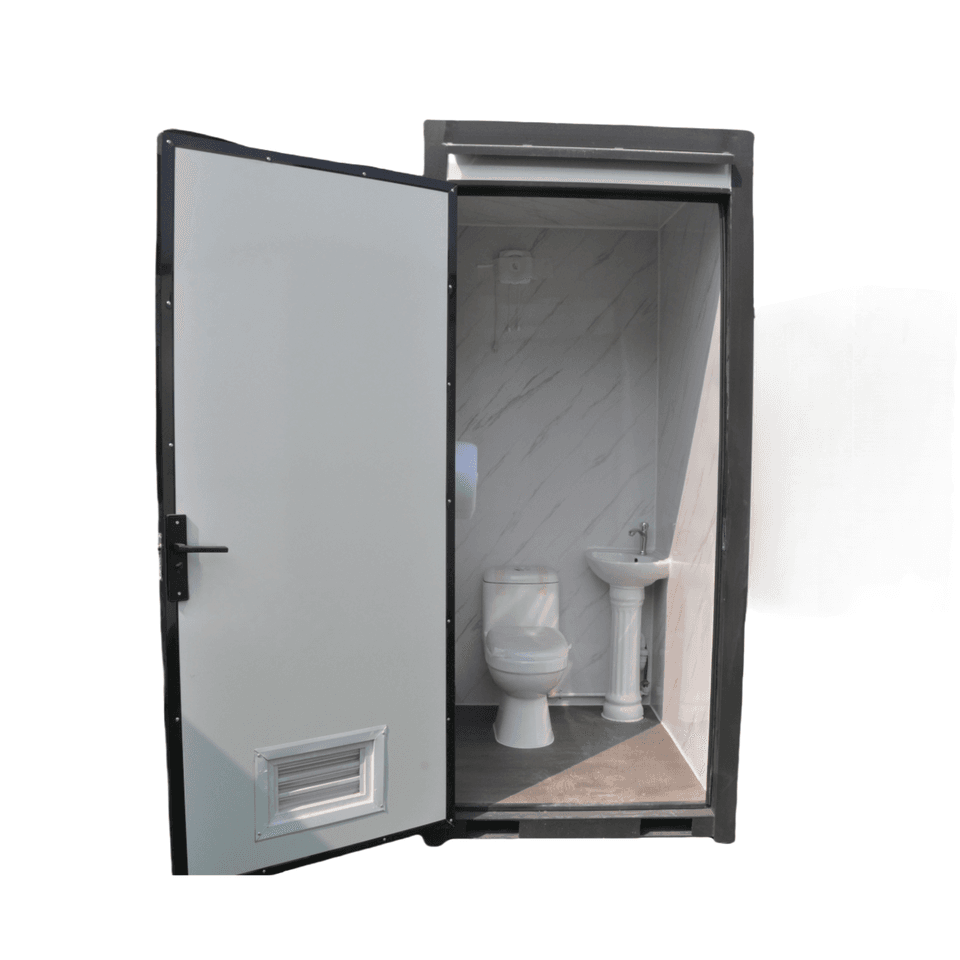
Modular Production Becomes Mainstream: As the duration of outdoor and temporary projects shortens, the demand for faster delivery of mobile toilets continues to rise. Modular production involves breaking down products into standardized components for mass prefabrication, enabling simple on-site assembly and immediate use. This approach not only significantly shortens project deployment cycles but also reduces the complexity of on-site construction. Additionally, modular design allows for flexible adjustment of product scale and configuration based on customer needs, accommodating different site conditions and meeting diverse usage requirements.
Low-Carbon Environmental Protection Becomes a Rigid Requirement: Driven by dual-carbon policies, low-carbon environmental protection has become a crucial consideration in the procurement of public sanitation facilities. Prefabricated mobile toilets are manufactured in factories, with no construction waste generated during on-site installation. Moreover, after use, the entire unit can be disassembled, and its components can be recycled, greatly reducing resource consumption and environmental impact. Compared to traditional fixed toilets, prefabricated mobile toilets have lower carbon emissions throughout their lifecycle, from production to demolition, fully meeting the requirements of current green development. Environmental performance has become an important criterion for customers when selecting suppliers.
Customization Demands Continue to Upgrade: The application scenarios of mobile toilets are continuously expanding, extending from traditional engineering infrastructure to cultural tourism attractions, municipal emergencies, event exhibitions, new energy power stations, and other fields. Different scenarios have vastly different requirements for product materials, appearance, functionality, and environmental standards, necessitating that companies possess rapid product iteration capabilities to tailor solutions to the pain points of various scenarios. Companies that can provide scenario-specific customization services will gain a competitive edge in future market competition.
Intelligent Technologies Are Deeply Applied: Some high-end mobile toilets now integrate IoT monitoring, automatic cleaning, and energy consumption management functions. Sensors are used to monitor toilet occupancy, ammonia concentration, temperature and humidity, and remaining consumables in real-time, with data synchronized to management backends or user mini-programs. This not only enables quick toilet finding but also allows for intelligent scheduling of cleaning frequencies based on foot traffic, significantly reducing operational and maintenance costs while improving operational efficiency and service experience.



