
Top Portable Toilet Steel Manufacturers: How to Choose a Factory Partner
Choosing a high-quality portable toilet steel structure manufacturer requires a comprehensive evaluation from five core dimensions: structural reliability, customization capabilities, functional adaptability, production and delivery, and after-sales service:
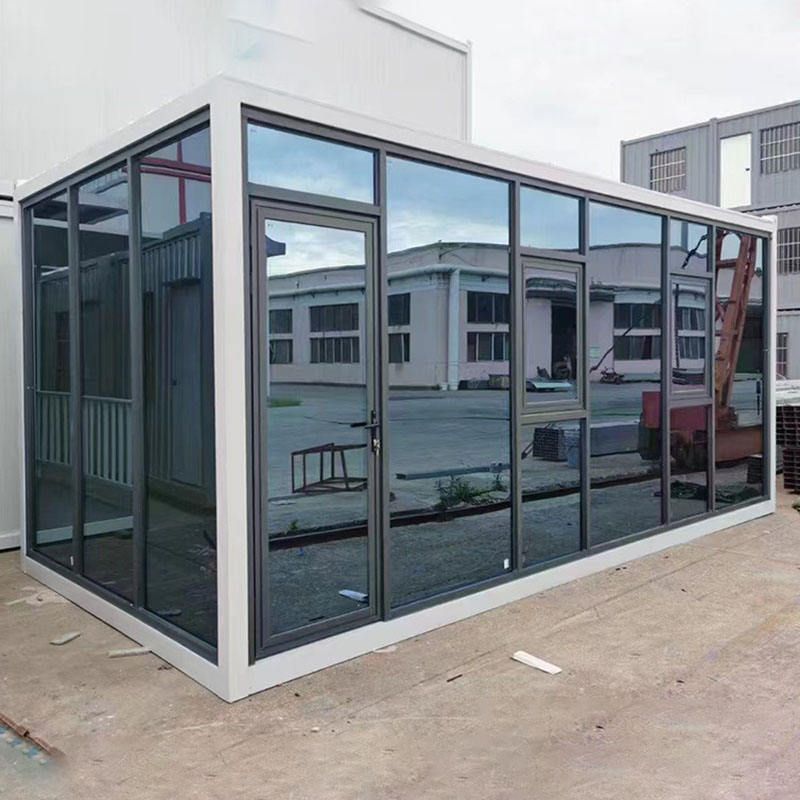
1. Structural Design and Material Reliability
Prioritize manufacturers that use high-strength galvanized or painted steel to ensure a frame lifespan of 7-10 years or more. Verify the steel material certificates, anti-corrosion treatment processes (e.g., hot-dip galvanizing thickness ≥80μm), and the weather resistance rating of enclosure materials (e.g., suitability for outdoor humid and hot environments). Pay special attention to wind and snow resistance capabilities; for example, some products can withstand wind speeds exceeding 220km/h or magnitude 8 earthquakes, making them suitable for extreme climate regions.
2. Customization and Modular Capabilities
Confirm whether the manufacturer supports flexible size adjustments (e.g., adding or reducing the base module dimensions of 1.2m×1.5m×2.5m) and recalculating structural loads to avoid safety hazards due to size mismatches. Modular design enhances installation efficiency (e.g., one person can assemble 7-10 toilets in one hour) and facilitates future relocation. For instance, manufacturers in Qingdao offer standard 20/40-foot container sizes or customized solutions to meet different site requirements.
3. Functional Configuration and Environmental Adaptability
Select flush/non-flush systems and solar power solutions based on usage scenarios (e.g., tourist attractions, parks), and verify the technical feasibility of configurations such as sinks and ventilation. For example, manufacturers in Foshan integrate waterproof, fireproof, and moisture-resistant features, with ISO/CE certifications; manufacturers in Qingdao use rock wool/glass fiber insulation layers with a lifespan exceeding 25 years, suitable for cold or humid regions. Environmental adaptability requires attention to whether wastewater treatment solutions comply with local emission standards.
4. Production and Delivery Capabilities
Evaluate monthly production capacity (e.g., 5,000 units/month vs. 1,000 units/month) and minimum order quantities (MOQ of 1 set or 10 sets) to avoid delivery delays due to insufficient capacity. Confirm delivery timelines (e.g., a commitment to “15-day rapid delivery”) and packaging methods (plastic wrap/wooden frames or standard sea freight packaging) to ensure no damage during transportation. For example, prioritize manufacturers with high monthly capacity for large orders and those with low MOQs and fast delivery for small or urgent orders.
5. After-Sales Service and Certifications
Choose manufacturers offering online technical support, 1-year warranties, or longer-term services to reduce later maintenance costs. Prioritize suppliers certified by ISO, CE, SGS, etc., to ensure products meet international standards. For example, manufacturers in Foshan provide a 1-year warranty plus lifetime technical support, while those in Qingdao are SGS-certified, suitable for export projects.
Practical Recommendations: During the bidding phase, require manufacturers to provide structural calculation reports, material certificates, and configuration lists as contract attachments, and conduct on-site inspections of their past project cases (e.g., applications in tourist attractions or temporary office settings) to verify actual performance matches their claims.


