Top Portable Toilet Material Manufacturers: How to Choose a Factory Partner
When selecting a manufacturer of portable toilet materials as a partner, it is essential to comprehensively evaluate six core elements: material technology, modular design, environmental certifications, scenario adaptability, production capacity, and case reputation.
1. Material Technology and Structural Strength
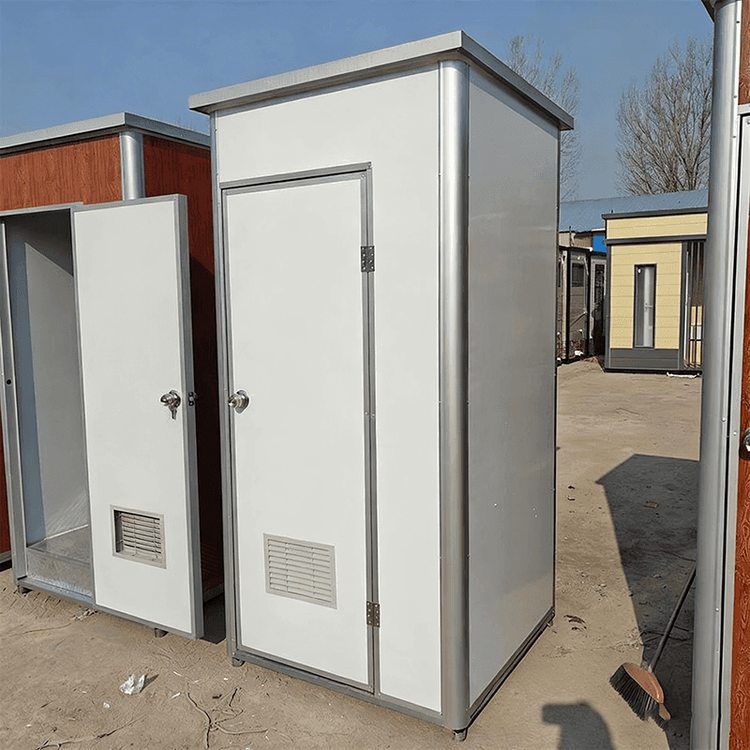
Prioritize manufacturers that utilize high-strength steel frames and composite panels/HDPE plastics. Steel frames provide stable support, and when paired with insulated sandwich panels, they enhance weather resistance, making them suitable for cold or humid environments. HDPE plastic integrated molding technology offers UV resistance, corrosion resistance, and is approximately 30% lighter than traditional metal structures, facilitating easier transportation and installation. For instance, some manufacturers combine steel frames with sandwich panels to extend product lifespan to over 10 years.
2. Modular Design and Customization Capabilities
Look for manufacturers that offer modular rapid assembly solutions. High-quality manufacturers can enable one person to install 7-10 toilet units in one hour, significantly reducing labor costs. Additionally, they should support customization of dimensions, colors, and internal configurations (such as electrical interfaces and storage space) to accommodate various scenarios like construction sites, outdoor events, and emergency rescue operations. For example, some manufacturers use standardized modular designs to quickly adjust the number and layout of toilet units.
3. Environmental and Safety Certifications
Choose manufacturers that have obtained international certifications such as ISO and CE to ensure compliance with fire, water, and environmental standards. For instance, fire-resistant sandwich panels reduce fire risks, anti-freezing piping systems are suitable for low-temperature environments, and temperature-sensitive glass door locks enhance safety. Furthermore, the use of eco-friendly materials (such as biodegradable plastics) minimizes environmental pollution.
4. Scenario Adaptability and Sewage Solutions
Select sewage technologies based on usage scenarios:
- Flush-type: Requires connection to municipal sewage networks or septic tanks, suitable for long-term fixed locations;
- Non-flush type: Utilizes microbial degradation or bagging collection, ideal for temporary sites without water supply and drainage.
High-quality manufacturers offer multiple sewage solutions and optimize designs for extreme climates (such as cold or strong winds), such as increasing wall insulation thickness or conducting wind resistance tests.
5. Production Capacity and Delivery Assurance
Evaluate the manufacturer's monthly production capacity (e.g., 1000 units/month) and packaging and transportation methods (fully assembled or knocked-down) to ensure they can meet large-scale project demands. Additionally, a one-year warranty and online technical support can reduce post-maintenance costs and enhance partnership reliability.
6. Case Studies and Reputation
Refer to the manufacturer's past project cases, especially their practical application effects in extreme climates or complex terrains. For example, in cold regions, verify wall insulation performance, and in strong wind areas, confirm wind resistance design data. Customer reviews and industry reputation can further assess the manufacturer's service level and product quality.
By comprehensively evaluating these elements, you can identify technically mature, service-reliable, and project-appropriate high-quality partners.